Shaun Burd and Miguel Correia awarded 2026 Panofsky Fellowships at SLAC
They will explore proteins that are sensitive to magnetic fields and equations that explain our universe at the smallest and largest scales.
By Chris Patrick
- Shaun Burd and Miguel Correia received the 2026 Panofsky Fellowships at SLAC.
- Burd will study how proteins change their structure in response to magnetic fields and explore potential imaging and biological control applications of these magnetically sensitive proteins.
- Correia will use novel mathematical tools in quantum field theory to try to prove the existence of a new particle and better define the gravitational properties of black holes.
Shaun Burd and Miguel Correia have been named 2026 Panofsky Fellows at the U.S. Department of Energy’s (DOE) SLAC National Accelerator Laboratory. Burd will investigate proteins sensitive to magnetic fields and their potential applications, while Correia will explore the fundamental interactions that govern the universe.
The Panofsky Fellowship, named after SLAC's founding director Wolfgang K. H. "Pief" Panofsky, recognizes exceptional early career scientists who would most benefit from the opportunity to do their research at SLAC and provides funding for five years of research.
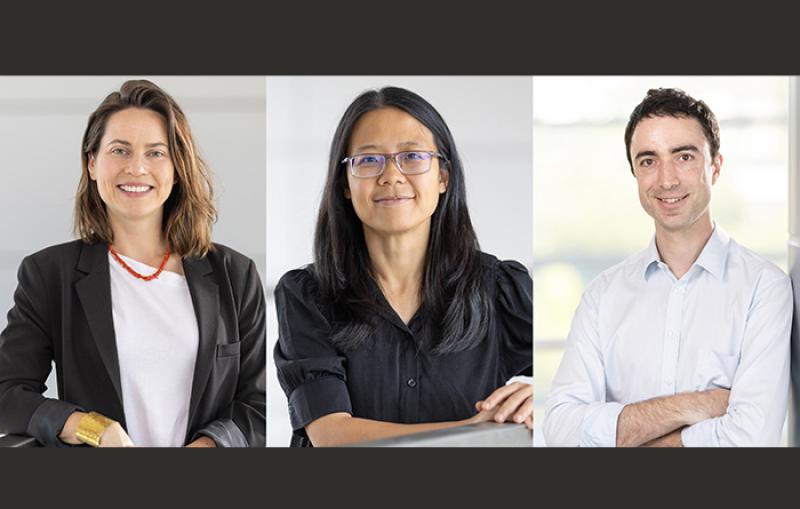
Shaun Burd, 2026 Panofsky Fellow
(Photo courtesy of Nahal Bagheri)

Manipulating proteins with magnetic fields
Growing up in South Africa, Burd was curious about how the world works from a young age. He recalls conducting chemistry experiments in a kitchen pot and building Tesla coils as an elementary schooler. His inquisitiveness never faded. Now he seeks to better understand proteins affected by magnetic fields – and figure out how to use them for new quantum sensing and biological applications.
Birds and other animals have proteins in their eyes that are sensitive to magnetic fields, which allow them to use Earth’s magnetic field for navigation. However, it’s difficult to study these proteins in the lab because they function inside of a living creature. Recently, researchers developed proteins that change the amount of light they emit, or fluoresce, in the presence of a magnetic field, offering a way to probe magnetically-sensitive proteins in the lab.
Building on this, Stanford University and SLAC researchers used a magnetic field to alter the fluorescence of similar proteins inside a live worm. The results, published in Nature in March 2026, suggest that magnetic fields could be tools for manipulating biological processes in living creatures.
“Genetically encoding this protein in this animal enables it to have magnetically-sensitive biochemistry,” said Burd, who was first author of the work. “Even though we're just seeing fluorescence now, it points to possible applications, like neuron activity or gene expression, in the future.”
As a Panofsky fellow, Burd will continue studying magnetically-sensitive proteins to learn more about their structural changes in response to magnetic fields. The powerful tools at SLAC will allow him to observe these changes at the atomic and subatomic level and on different timescales.
X-ray imaging conducted at the Stanford Synchrotron Radiation Lightsource (SSRL) will resolve changes on microsecond to picosecond timescales, while experiments using X-rays at the Linac Coherent Light Source (LCLS) will show shifts on even faster timescales. Additionally, cryogenic electron microscopy at the Stanford-SLAC Cryo-EM Center offers the ability to freeze and examine the structure of the proteins under different magnetic field conditions.
Burd will piece together the results from all three facilities for a fuller picture of how these proteins function.
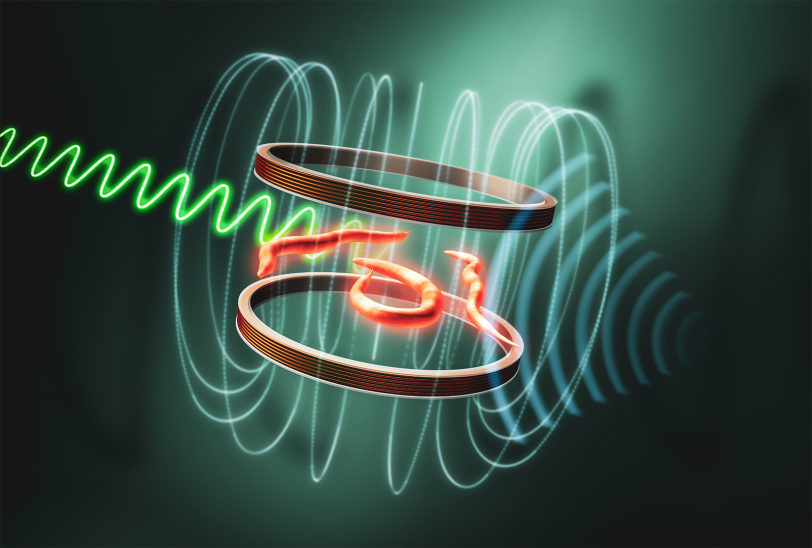
“SLAC has these different facilities that are uniquely suited to do structural biology experiments over these timescales,” Burd said. “Together, they’ll help us to understand how these proteins work at the atomic and subatomic, or quantum, level.”
During his fellowship, Burd will also use this fuller picture of the magnetically sensitive proteins to explore their potential applications, including imaging techniques based on their fluorescence and methods to control biological processes in living creatures with magnetic fields.
Burd first got interested in physics working in a laser lab while earning his undergraduate degree in chemical engineering at the University of the Witwatersrand in South Africa. Then, during his doctorate in physics at the University of Colorado, Boulder, he worked in the lab of David Wineland, who won the 2012 Nobel Prize in Physics for developing methods to study quantum phenomena. Burd continued to focus on the quantum level as a postdoctoral researcher at Stanford in Professor Mark Kasevich’s quantum sensing group. With his current work, he will apply this quantum experience to molecular biology, a lifelong interest.
“Shaun is a brilliant scientist who rose to the top of an exceptionally competitive pool of candidates for the Panofsky Fellowship,” said Roberto Alonso-Mori, senior scientist at SLAC and head of the Biological Sciences Department at LCLS. “We’re thrilled to have him at LCLS, where he can build strong connections with SSRL and Stanford. I’m excited about the impact his work can have across SLAC and the broader scientific community.”
Miguel Correia, 2026 Panofsky Fellow
(Photo courtesy of Miguel Correia)

Describing nature’s fundamental interactions with equations
Like Burd, Correia was interested in science early on. However, he was drawn to equations instead of experiments.
“I remember being very excited about being able to describe a lot of different phenomena with a few equations,” Correia said. Now, as a theoretical physicist, he uses equations to explain how the world works.
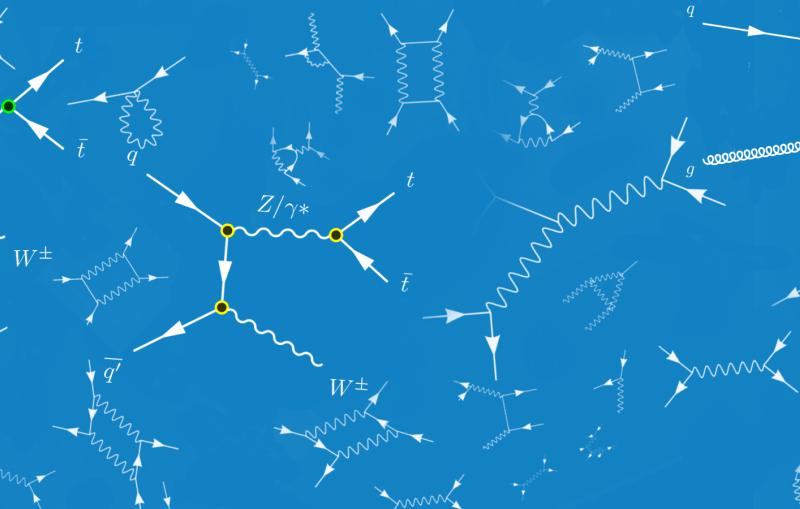
During his fellowship, he’ll focus on a mathematical framework known as quantum field theory, which is particle physicists’ current most basic understanding of the universe. It describes the fundamental interactions that govern matter at its largest and smallest scales.
Working at a blackboard, Correia will apply tools in quantum field theory to explore open questions about two of the fundamental interactions: gravity and the strong interaction. The strong interaction binds together fundamental particles called quarks to form protons and neutrons, which make up atomic nuclei of ordinary matter.
With his work, he hopes to prove the existence of a particle-like concept known as the pomeron.
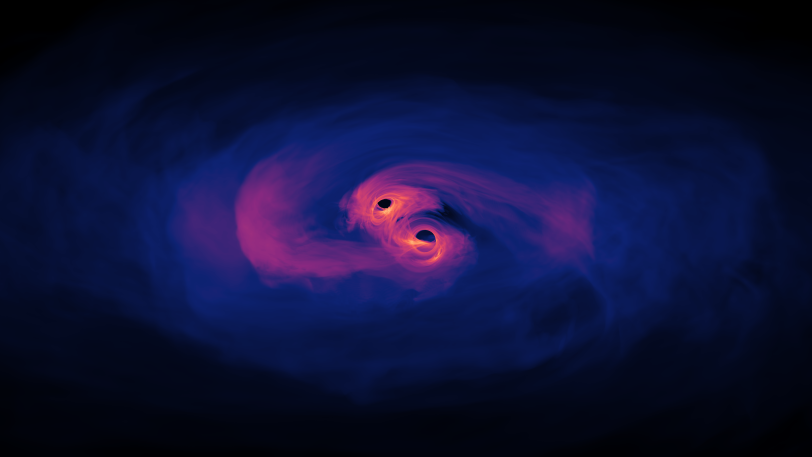
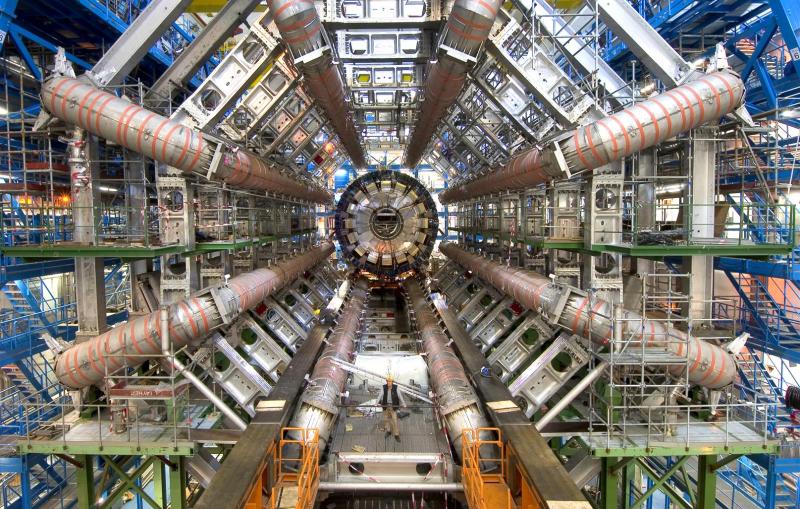
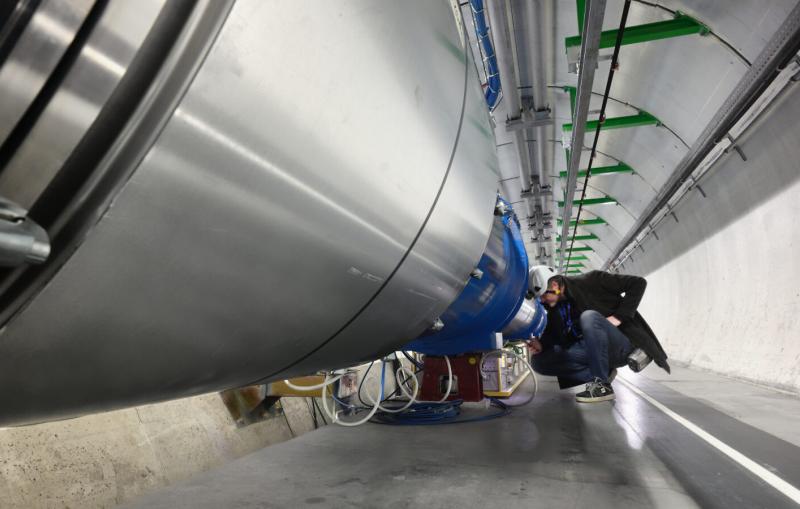
Correia will describe proton collisions that happen in experiments at the Large Hadron Collider at the European Organization for Nuclear Research (CERN). As these particles collide, they interact via the strong interaction to form different particles. At higher collision energies, protons become more likely to interact when they pass close to one another. Researchers can’t explain this increasing signal; it’s too strong for standard quantum field techniques to reckon with.
But a theoretical concept known as the pomeron may be responsible: If it were exchanged like a particle between protons as they collided, it could explain this rising signal. Correia will use new tools that can directly constrain physical observables with the general principles of quantum field theory to try to determine the pomeron’s existence and properties. These tools can be applied to any fundamental interaction, but are especially useful when the interaction is strong, like in this case.
Zooming out to a larger scale, he will also apply these new tools to gravity, specifically black holes. Correia wants to better understand the event horizon, the boundary where the black hole’s gravitational pull becomes inescapable to anything, even light.
“I’ll try to understand the tidal properties of the event horizon,” he said. “How it stretches and wiggles and absorbs energy when hit by a gravitational wave or affected by an external gravitational field from a nearby black hole, for example.”
Correia’s fellowship work will build on his previous research studying the interplay of black holes and gravitational waves, which are ripples in the fabric of space and time caused by massive accelerating objects.
“Miguel is an incredibly inventive and versatile theoretical physicist whose work has had great impact on the theory of elementary particle scattering and in understanding the interactions between black holes and gravitational waves,” said Lance Dixon, professor emeritus of particle physics and astrophysics at SLAC and Stanford. “It will be exciting to have Miguel at SLAC and to see what new directions he develops.”
Correia first began studying black holes during his master’s program at the Instituto Superior Técnico at the University of Lisbon in Portugal. He had majored in engineering physics during his bachelor’s at the same school, but black holes pulled him in. Later, during his Ph.D. at the Swiss Federal Institute of Technology Lausanne (EPFL), he pivoted to using quantum field theory to study the strong interaction while working at CERN. He eventually put all these together into a broader research program – involving black holes, the strong interaction and quantum field theory – as a postdoctoral researcher at McGill University in Canada.
Correia was attracted to SLAC because it offers both theory and experimental groups, and he’s looking forward to continuing working alongside experimentalists.
“One day, I hope that predictions made using my theoretical tools can be tested experimentally,” he said. “That motivates me a lot.”
LCLS and SSRL are DOE Office of Science User Facilities. The Stanford-SLAC CryoEM Center is supported by the National Institutes of Health Common Fund Transformative High Resolution Cryo-Electron Microscopy program.
Citation: Burd et al., Nature, 18 March 2026 (https://doi.org/10.1038/s41586-026-10282-4)
For media inquiries, please contact media@slac.stanford.edu. For other questions or comments, contact SLAC Strategic Communications & External Affairs at communications@slac.stanford.edu.
About SLAC
SLAC National Accelerator Laboratory explores how the universe works at the biggest, smallest and fastest scales and invents powerful tools used by researchers around the globe. As world leaders in ultrafast science and bold explorers of the physics of the universe, we forge new ground in understanding our origins and building a healthier and more sustainable future. Our discovery and innovation help develop new materials and chemical processes and open unprecedented views of the cosmos and life’s most delicate machinery. Building on more than 60 years of visionary research, we help shape the future by advancing areas such as quantum technology, scientific computing and the development of next-generation accelerators.
SLAC is operated by Stanford University for the U.S. Department of Energy’s Office of Science. The Office of Science is the single largest supporter of basic research in the physical sciences in the United States and is working to address some of the most pressing challenges of our time.
Related stories