Steven M. Kahn Named Director of LSST
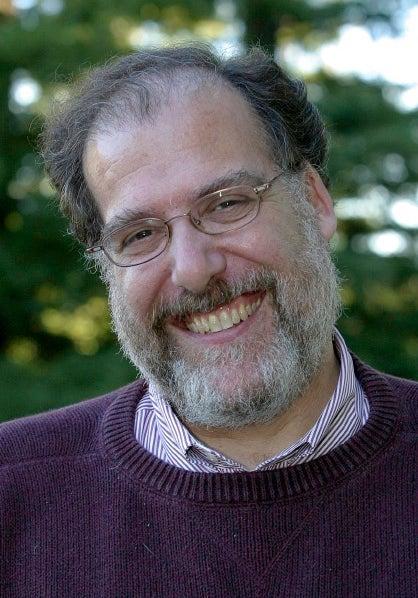
The Association of Universities for Research in Astronomy (AURA) announced today that Dr. Steven M. Kahn will assume the role of Director of the Large Synoptic Survey Telescope (LSST) Project effective July 1, 2013.
Association of Universities for Research in Astronomy press release
The Association of Universities for Research in Astronomy (AURA) announced today that Dr. Steven M. Kahn will assume the role of Director of the Large Synoptic Survey Telescope (LSST) Project effective July 1, 2013. Dr. Kahn will succeed Dr. Sidney C. Wolff and retain his current affiliation with SLAC and Stanford.
LSST is the top-ranked large-scale ground-based project for the next decade as recommended by the National Research Council’s Astronomy and Astrophysics decadal survey (Astro2010). By digitally imaging the sky for a decade, the LSST will address the most pressing questions in astronomy and physics, drive advances in big-data science and computing and create opportunities for transformative STEM education.
In announcing the appointment, Dr. William Smith, President of AURA, said, "Steve brings a unique blend of relevant management and scientific experience to this position. He will inherit a strong team and will lead LSST into the construction phase. We will complement the management team in the future by bringing on individuals reflecting the broad range of astronomical capabilities that LSST can address."
Read the full announcement from AURA: http://www.aura-astronomy.org/news/news.asp?newsID=319
Visit LSST's home page: http://www.lsst.org
Contact
For questions or comments, contact the SLAC Office of Communications at communications@slac.stanford.edu.
Related stories
Seagull Nebula through the eyes of NSF–DOE Vera C. Rubin Observatory Commissioning Camera



Seagull Nebula through the eyes of NSF–DOE Vera C. Rubin Observatory Commissioning Camera
Containing multitudes: SLAC scientist collaborates to create scalable qubits