An Impressive and Growing Array of Lasers at SLAC
In less than a decade, SLAC has built up an impressive array of dozens of laser systems – and a team of laser scientists and engineers – with capabilities that make it one of the most cutting-edge national laboratories under the U.S. Department of Energy.
By Glenn Roberts Jr.
In less than a decade, SLAC has built up an impressive array of dozens of laser systems – and a team of laser scientists and engineers – with capabilities that make it one of the most cutting-edge national laboratories under the U.S. Department of Energy.
Lighting the way
SLAC's newfound laser focus took shape with the 2005 hire of Bill White, a laser expert who had worked at Lawrence Livermore National Laboratory and in private enterprise. White was hired to help the lab prepare for the 2009 launch of the Linac Coherent Light Source, a unique X-ray laser with ultrabright, ultrashort pulses that requires more conventional lasers for most experiments.
The lab's inventory of 135 high-power optical lasers includes 40 lasers that can be used in LCLS experiments. Another 18 lasers are installed at the LCLS injector, where they produce the beam of electrons that is converted into X-ray pulses.
There are 25 laser facilities at SLAC, and their laser systems serve in a variety of roles in experiments: aligning molecules in the same direction and orientation, shocking and compressing matter, switching magnetic states and exciting chemical reactions, as examples.
The lasers often incorporate off-the-shelf commercial components, though SLAC's specialization in studying ultrafast processes, which can be measured in trillionths to quadrillionths of a second, requires customization, White said.
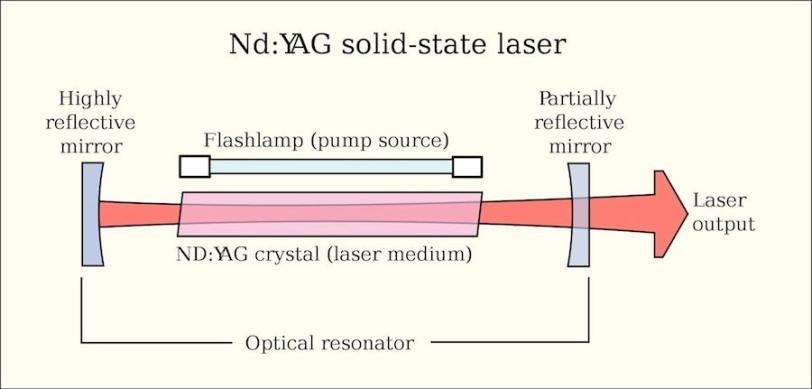
SLAC’s laser systems, at their core, represent “controlled energy that can interact with matter in countless ways,” said Alan Fry, deputy director of SLAC's Laser Science and Technology Division. “They allow us to stimulate very specific changes in materials and to probe and measure those changes with extreme precision.”
White grew SLAC's laser team from a staff of three into a division with 15 full-time staff, including laser scientists, laser engineers and engineering physicists; as well as several full-time students and post-doctoral researchers. The student researchers benefit from in-house laser expertise, Fry said.
The bulk of the growth was in the past three years, since LCLS began operating, and the laser team will grow more with the LCLS-II project, which will multiply SLAC's X-ray laser experiments.
Growing role, recognition for laser group
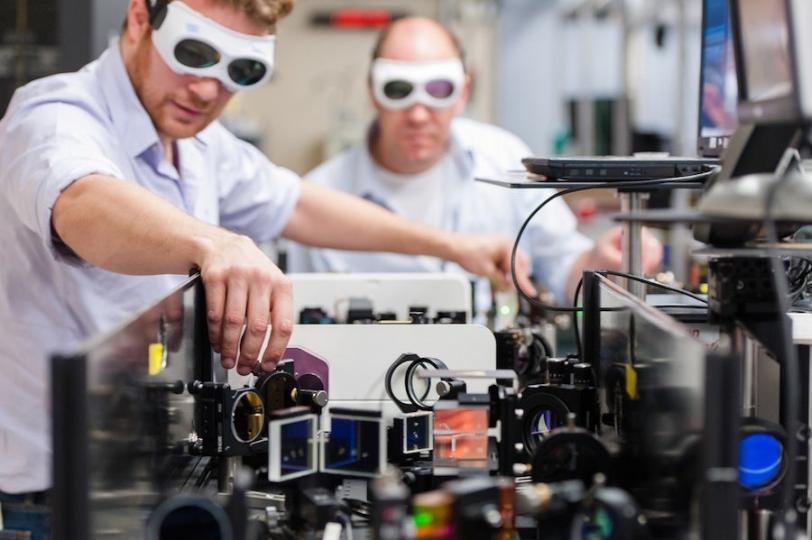
While the laser division supports all of the LCLS-related lasers, its role in designing, installing, tuning, operating, maintaining and repairing lasers extends across the lab and Stanford, and even to other research facilities.
SLAC All Access: Laser Labs
From the start, the laser group has had a mission to "support laser science anywhere that needed it" at SLAC, White said. The lab’s laser specialists have collaborated in laser research and development work at Lawrence Berkeley and Argonne national labs, among others.
In July 2012, a U.S. Department of Energy review committee commended SLAC's laser program for its scientific depth, technical and engineering quality, safety controls and user support, and stated that these achievements are "even more impressive in light of the fact that this is a relatively young program that has been initiated from scratch in a laboratory without a history or tradition of laser research."
Laser division managers are now working to extend SLAC’s unique laser expertise and make its laser systems available to an even broader community of researchers.
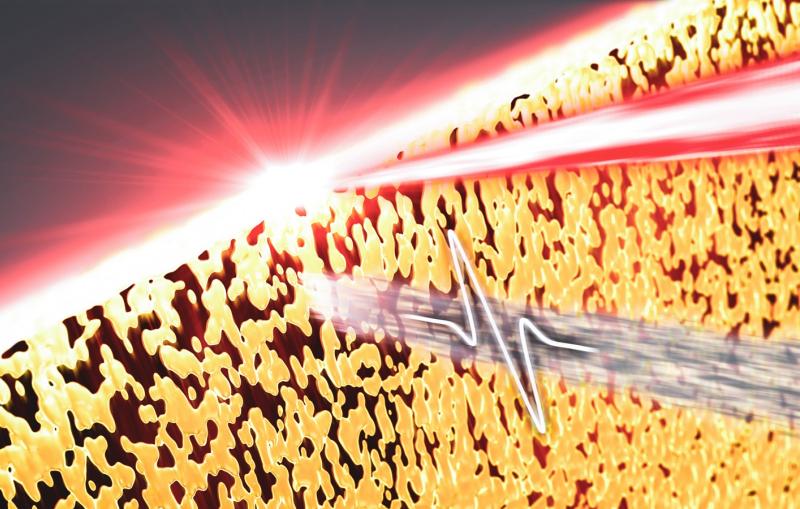
SLAC's most energetic laser system is a two-beam long-pulse laser installed last year at LCLS to create superhot condensed matter. And this year the laser crew will help build the lab’s highest-power laser – with a peak power of 10 trillion watts – to test next-generation accelerator technologies.
Lasers on demand
Mike Minitti, group leader for LCLS-related lasers, said scientists who use the LCLS "take a strong interest" in the lab's laser systems, which are integral to about 70 percent of all LCLS experiments. Users communicate regularly with laser staff about their needs for upcoming experiments, and in some cases undergo the extensive training required to operate lasers.
And the laser staff pride themselves on serving the science needs of LCLS users. "I have yet to see an experiment be denied because we can't deliver a laser parameter," Minitti said.
Most lasers at LCLS are used in "pump-probe" experiments, in which a laser beam induces a change in a sample that can be probed with another laser. Most critical to the function of LCLS’ laser systems are timing and synchronization with the X-ray laser pulses, he said.
"It's pretty awesome to see things work as well as they do," he said, including synchronizing lasers that are a mile and a half apart to fire within quadrillionths of a second of each other.
"Some lasers need other lasers to run," Minitti added, like a Russian nesting doll, with one laser embedded in another and functioning as a single laser system..
Tuning and automation
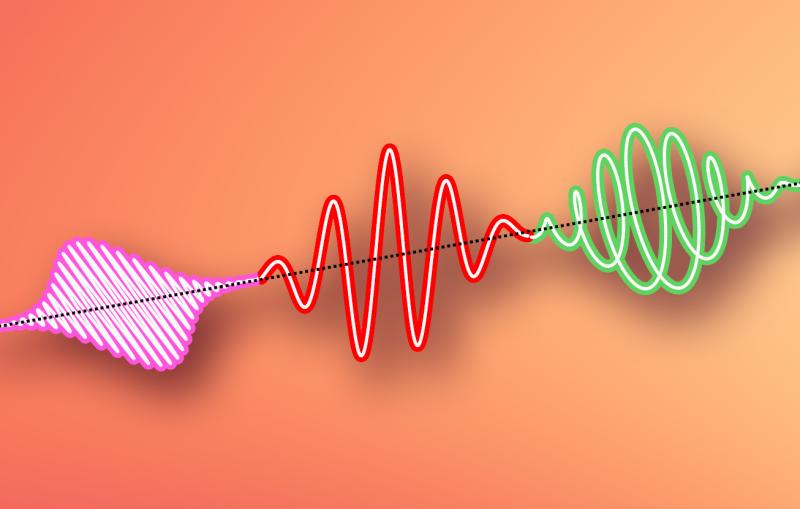
The type of laser light required for experiments at SLAC can cover the full spectrum, from visible light into infrared, ultraviolet and terahertz wavelengths. Philippe Hering, group leader for accelerator laser systems, said tuning a laser's wavelength is "kind of like a radio at home: you can change to different stations." Hering's team works with lasers that generate the electron beam used to produce the X-ray pulses.
Staff at SLAC's Main Control Center can monitor and remotely control how those source lasers are functioning in real time, Hering said, and "They can change the laser spot size and pulse energy to optimize the electron beam produced," with built-in redundancies to minimize down time.
"Lasers are now a core competency at LCLS, and are centrally important to many areas of the lab's mission, from accelerator science to X-ray science to materials science and chemistry," said Fry, "and we look forward to building on that expertise."