News releases

Browse the full collection of SLAC news releases and stay up to date on the latest scientific advancements at the laboratory.
Discovery paves the way for new synthesis of antibiotics

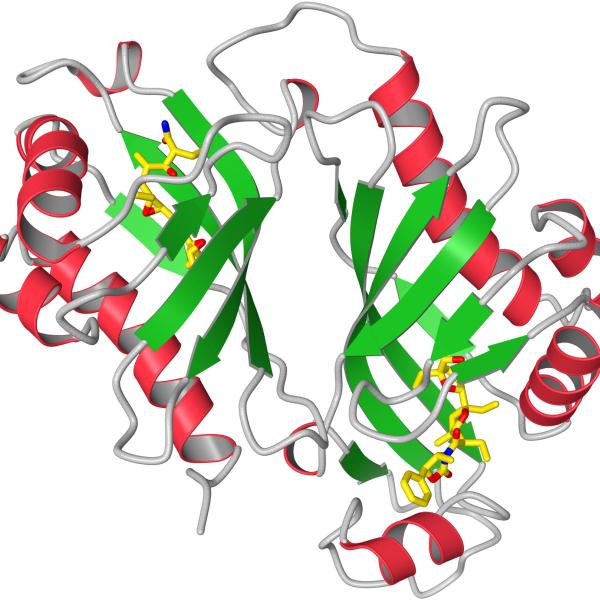
A ribbon diagram of the protein Lsd19

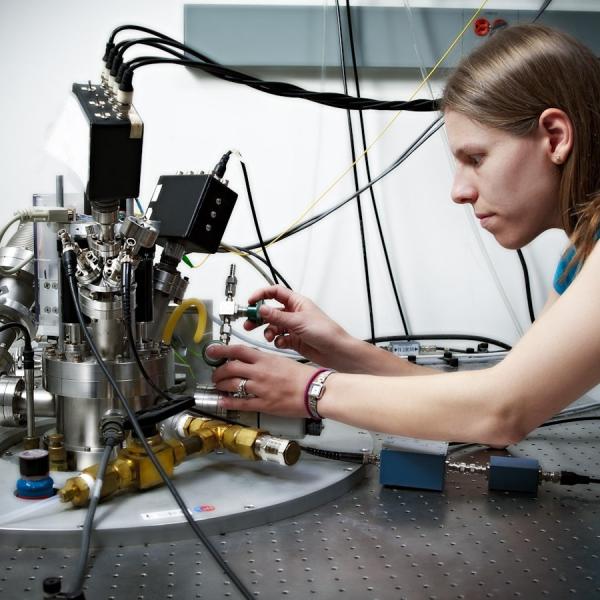
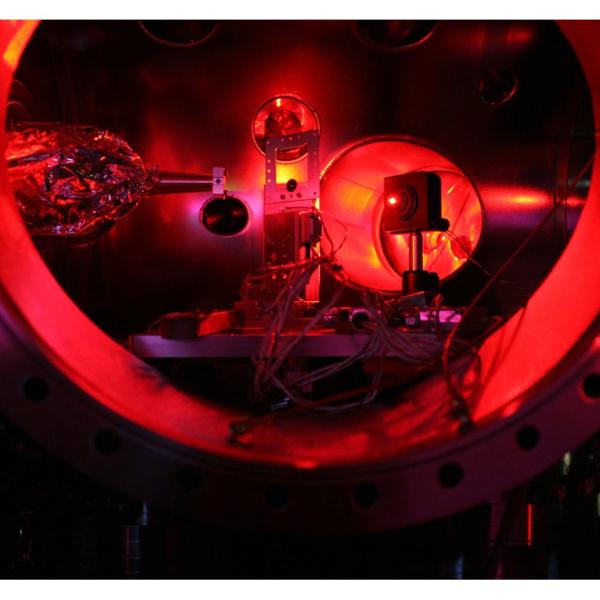
Menlo Park, Calif. — Researchers working at the U.S. Department of Energy’s (DOE) SLAC National Accelerator Laboratory have used the world’s most powerful X-ray laser to create and probe a 2-million-degree piece of matter in a controlled way for the...

The interior of an LCLS chamber set up for an investigation into hot, dense matter.

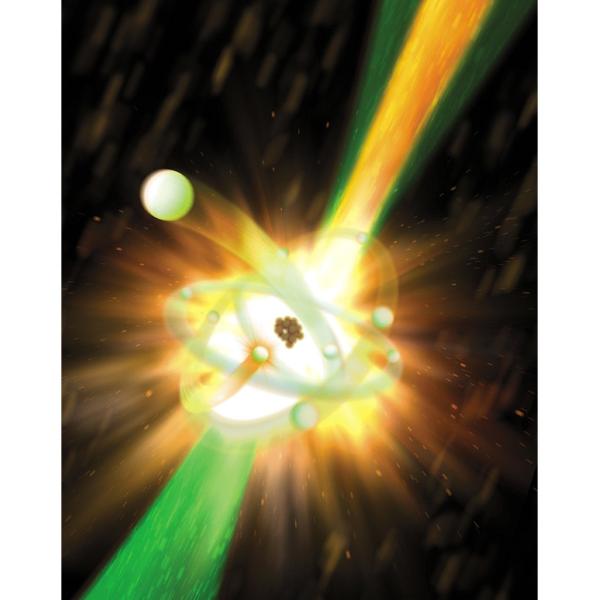
Menlo Park, Calif. — Scientists working at the U.S. Department of Energy’s (DOE) SLAC National Accelerator Laboratory have created the shortest, purest X-ray laser pulses ever achieved, fulfilling a 45-year-old prediction and opening the door to a new range of...

Atomic X-ray Illustration

Menlo Park, Calif. — If we could make plant food from nitrogen the way nature does, we’d have a much greener method for manufacturing fertilizer – a process that requires such high temperatures and pressures that it consumes about 1.5...

SLAC Physicist Uwe Bergmann

Stanford University announced today that Persis S. Drell, director at SLAC National Accelerator Laboratory, has decided to return to her position as a faculty member.

Persis Drell, SLAC Director

Menlo Park, Calif. – Scientists have reached a crucial milestone that could lead to a new class of materials with useful electronic properties.

Julie Bert, a graduate student at SIMES

Menlo Park, Calif.--Scientists report today that they have taken a big step in determining what the first birds looked like more than 100 million years ago, when their relatives, the dinosaurs, still ruled the Earth.

calcium distribution in Confuciusornis sanctus

Menlo Park, Calif.—Glass, by definition, is amorphous; its atoms lack order and are arranged every which way.

Diamond Anvil Cell Like That Used to Squeeze Samples of Metallic Glass

Scientists have engineered a cheap, abundant alternative to the expensive platinum catalyst and coupled it with a light-absorbing electrode to make hydrogen fuel from sunlight and water.

Tiny Silicon Pillars

Scientists have found the strongest evidence yet that a puzzling gap in the electronic structures of some high-temperature superconductors could indicate a new phase of matter.

The Pseudogap in a High-temperature Superconductor