Awards presented at the 2026 Bay Area Light Sources Joint Users' Meeting
A series of awards were presented at the 2026 Bay Area Light Sources Joint Users' Meeting.
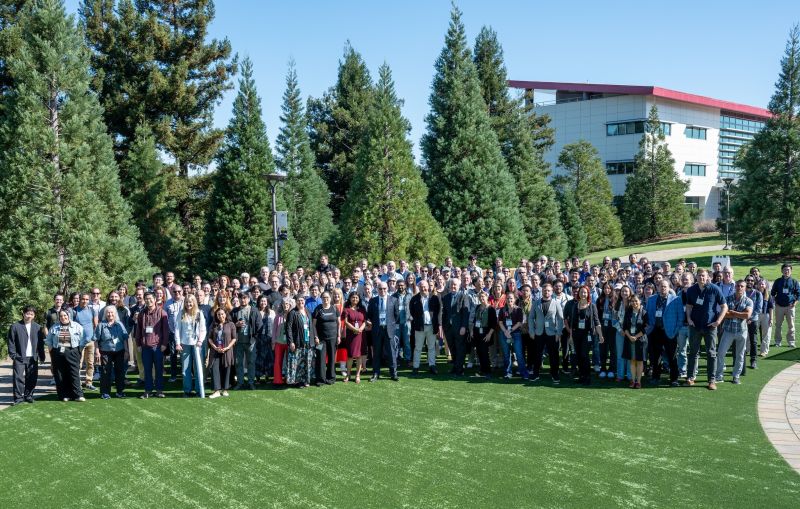
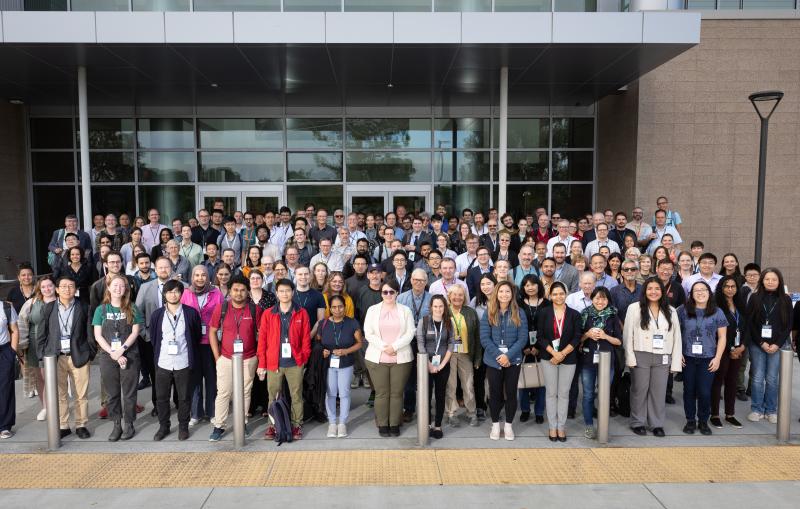
The 2026 Bay Area Light Source Joint Users' Meeting included a series of awards that recognize top research accomplishments among experienced and early-career researchers alike.
Stanford Synchrotron Radiation Lightsource (SSRL) Awards
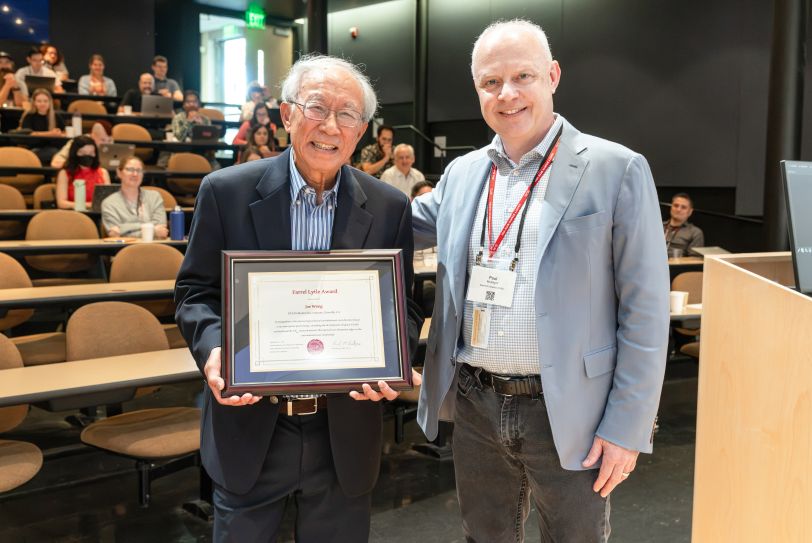
SSRL Farrel W. Lytle Award
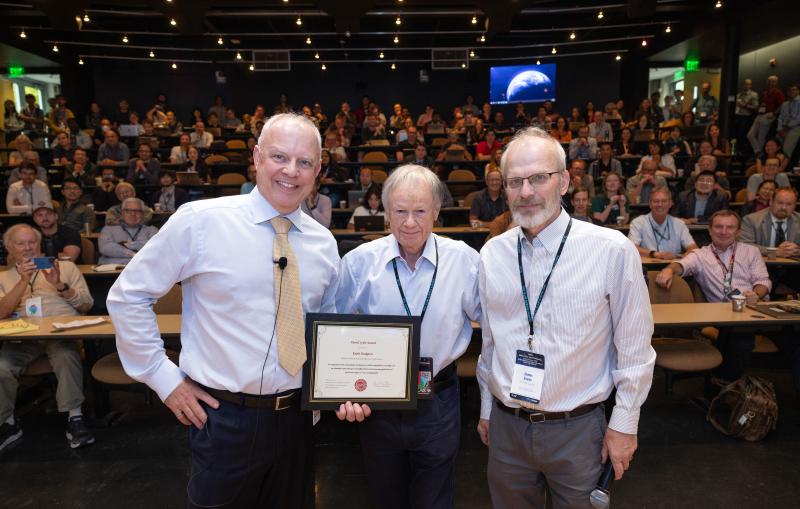
Joe Wong, Lawrence Livermore National Laboratory, retired
The Lytle Award recognizes important technical or scientific accomplishments in synchrotron radiation-based science at the SSRL. The award is named for Farrel Lytle, a scientist who pioneered extended X-ray absorption fine structure spectroscopy (EXAFS), a technique applying X-ray beams to atoms to obtain structural information.
Wong was chosen for his four-decade record of technical and scientific leadership in synchrotron radiation-based science at SSRL. In 1976, he began working alongside Lytle himself to advance EXAFS spectroscopy at SSRL. He went on to help pioneer Quick-EXAFS, allowing for faster data recording, and the application of novel yttrium boride crystals to filter X-ray light – a breakthrough that improved analysis of magnesium, aluminum and silicon chemistry.
His career-defining experiment was mapping the full phonon-dispersion curves of plutonium using high-resolution synchrotron inelastic X-ray scattering, ending a 50-plus year quest for this fundamental data for the element since its discovery in 1941. He was elected as a Fellow of the American Physical Society in 2005.
He later founded the EXAFS Materials company, whose reference foils, filters and calibration standards are now used at nearly every X-ray absorption spectroscopy facility in the world, improving data quality and beamtime efficiency. Alongside this technical legacy, Wong has invested in the next generation of scientists, establishing the Joe Wong Poster Awards at SLAC in 2016 to recognize outstanding student and postdoctoral presentations at the SSRL/LCLS Users' Meeting.
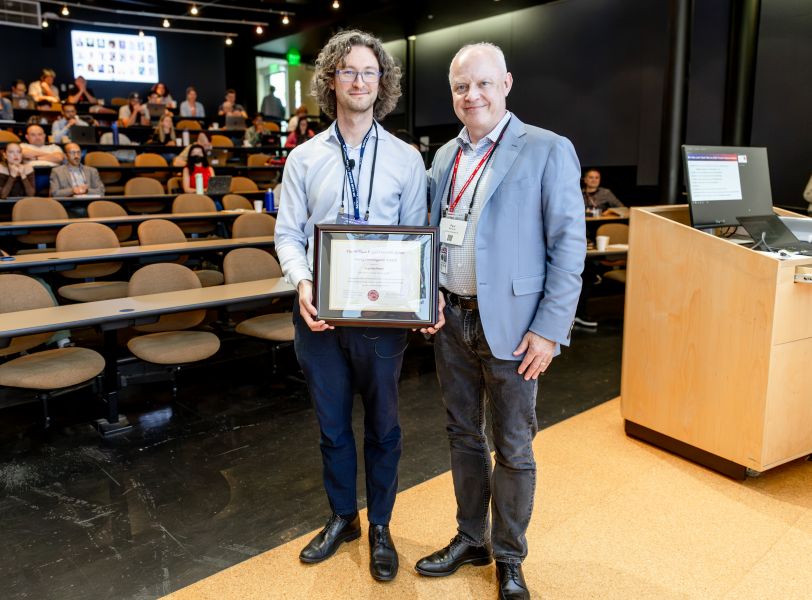
SSRL William E. and Diane M. Spicer Young Investigator Award
Augustin (Gus) Braun, postdoctoral research scientist in the Department of Chemistry at Columbia University
This award recognizes new investigators who have made important technical or scientific contributions benefitting SSRL or the light source community overall.
Braun received the award in recognition of his exceptional versatility as an early career synchrotron scientist, applying hard and soft X-ray spectroscopy, diffraction and total scattering in his research. During his PhD at Stanford, he investigated the structure and reactivity of the active site in iron and copper enzymes. Defining these structures has applications in industrially relevant reactions, such as using metals to facilitate the conversion of methane to methanol for natural gas storage and transport. At Columbia, he has developed X-ray diffraction methods for studying the growth of diamond and used soft X-ray spectroscopy to establish quantum confinement in nanodiamonds. His collaborators note his rare combination of technical range, independent scientific judgment and generosity as a mentor and collaborator.
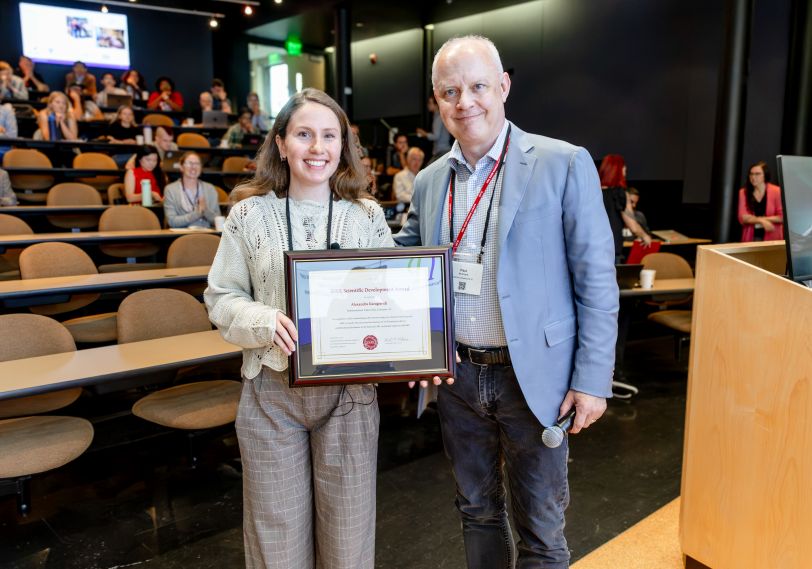
SSRL Scientific Development Award
Alexandra Karagiaridi, doctoral candidate in the Department of Molecular Biosciences at Northwestern University
The award recognizes outstanding research accomplishments by new investigators and promotes dissemination of research results based on work performed at SSRL.
Karagiaridi received the award for synchrotron-enabled structural biology carried out in Heather Pinkett's laboratory at Northwestern. Karagiaridi taught herself cryogenic electron microscopy (cryoEM) and used it to solve novel structures of a bacterial ABC transporter involved in shuttling vital nutrients across the cell membrane using ATP. Her work revealed conformational changes that regulate protein-protein interactions between the transporter’s substrate-binding protein and the membrane complex during the catalytic cycle of transport, findings with implications for future antibacterial drug design. She complemented her structural work with collaborations that included molecular dynamics simulations, single-molecule fluorescence-based measurements, and computational structural analysis. Beyond her research, she co-founded an outreach program to bring local high school students into the lab. Her mentors describe her as a resourceful, independent scientist with the technical range and initiative to lead her own research program.
Linac Coherent Light Source (LCLS) Awards
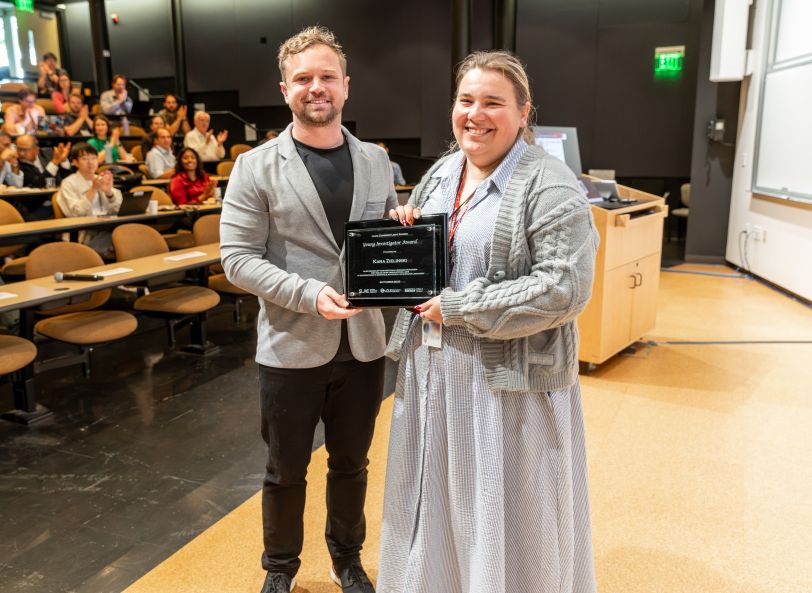
Young Investigator Award
Kara Zielinski, postdoctoral researcher, University of California, San Francisco
The LCLS Young Investigator Award recognizes contributions from scientists in the early stages of their research career for exceptional research performed with SLAC’s LCLS X-ray free-electron laser.
At LCLS, Zielinski has designed, fabricated and operated microfluidic mixers for time-resolved experiments. This platform, made of glass capillaries, allows sample macromolecules such as proteins or RNA to react uniformly with a substrate in a thin stream that is exposed to the X-ray laser.
Zielinski has applied the platform to study increasingly complex biomolecules. Her recent study of RNA folding resolved angstrom-scale RNA dynamics and tracked millisecond folding from single strand to triplex. She also contributed to a crystallography study of how the drug sulbactam inhibits a tuberculosis bacterial enzyme. In both experiments she controlled technical elements – sample delivery, mixing and timing – that decide whether a beamtime at the X-ray free-electron laser (XFEL) succeeds. She brings deep experience from other light sources as well, and some of her protocols are now standard tools across the community.
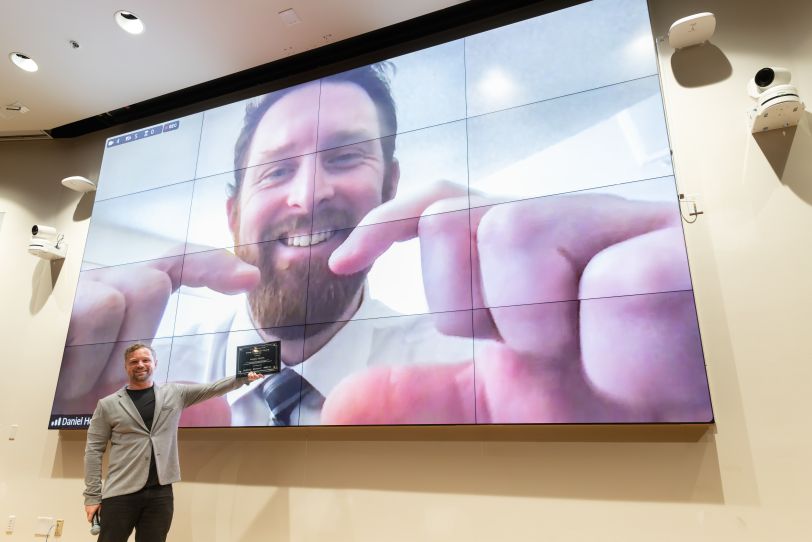
Runner-up: Daniel Hodge, graduate student in physics, Brigham Young University
Daniel Hodge recently defended his doctorate and has led analysis for several LCLS campaigns that resulted in highly cited publications.
He developed novel imaging techniques at the LCLS Matter in Extreme Conditions instrument, including single-shot X-ray contrast imaging to study void collapse. These experiments use a long-pulse green laser to generate a shock wave that compresses the sample, while ultrashort X-ray pulses capture images of the material as it responds to compression. Further processing then determines how the material density changes throughout the void collapse process. These experiments provide insights into the behavior of materials relevant to inertial fusion energy research and help validate models of shock compression. His colleagues describe him as extremely diligent and a valuable contributor to collaborative research involving SLAC, Brigham Young University and Los Alamos National Laboratory.
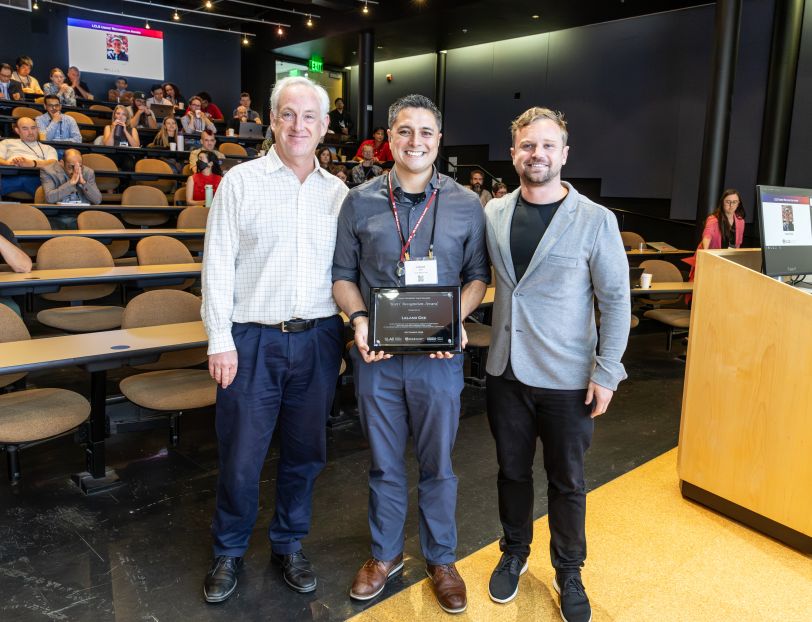
LCLS Users’ Recognition Award
Leland Gee, SLAC staff scientist and instrument lead for the Macromolecular Femtosecond Crystallography (MFX) instrument at LCLS
The LCLS Users’ Recognition Award recognizes LCLS facility staff who have made significant contributions to the user community by supporting experiments or advancing the facility through their scientific area of research, instrumentation or capability development.
Gee received the Users’ Recognition Award for his consistent help with experiments at MFX. Gee frequently assists users to ensure their experimental setups run as smoothly as possible, adjusting the beamline for different kinds of sample delivery and experimental geometry. He also trains new users with patience and created a YouTube video overview of the instrument so that users arrive at the facility prepared. Gee works alongside users and staff to resolve issues quickly and safely. His group of instrument scientists at MFX has become a well-integrated team thanks to his efforts. He has also explored areas to expand and push the capabilities of the instrument.
More broadly, he has driven the development of code that enables novice users to process time-resolved X-ray spectroscopy data collected at LCLS on any hard X-ray beamline. Gee’s colleagues note that his sustained, user-facing excellence demonstrates the qualities LCLS Users’ Recognition Award is meant to honor.
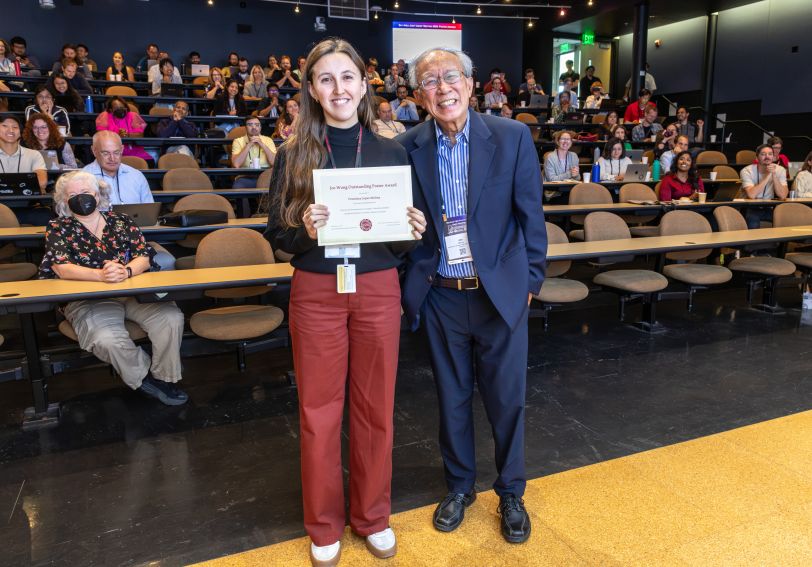
SSRL/LCLS: Joe Wong Poster Award
First place: Francisca Lopez Molina, University of Saskatchewan
Runner-up 1: Sathya Narayanan Jagadeesan, SLAC National Accelerator Laboratory
Runner-up 2: Sophie Barthel, University of Michigan
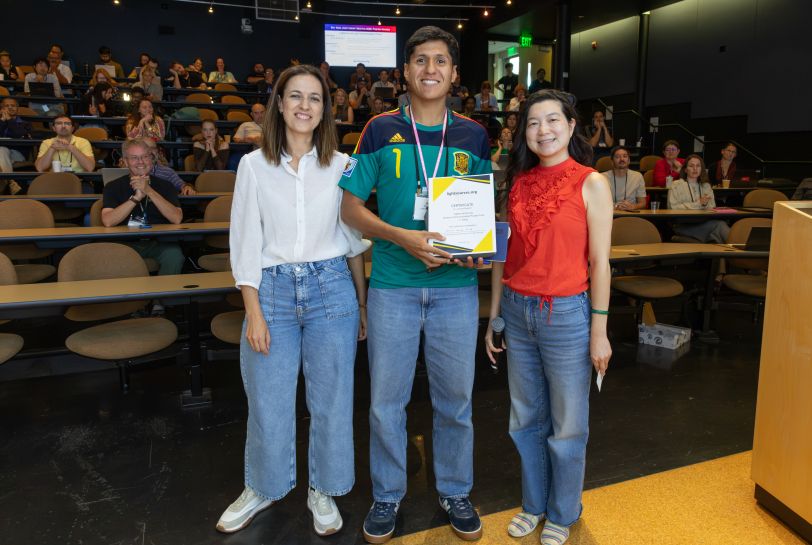
Lightsources.org Communication Prizes
- First place: Bruno Nunez Perez, University of Saskatchewan
- Second place: Seonju You, Pohang University of Science and Technology
- Third place: Alexander Lemmens, Stanford PULSE Institute
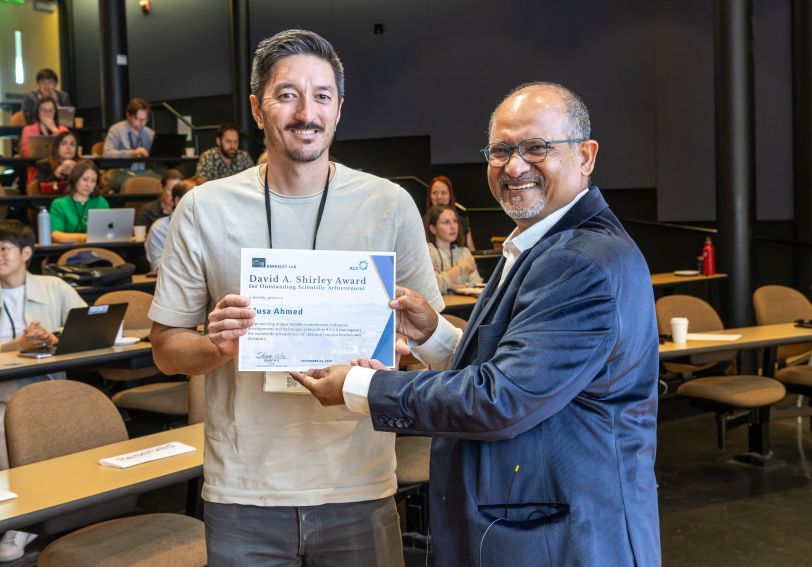
Advanced Light Source Awards
See all awards selected and presented by Lawrence Berkeley National Laboratory ALS.
Read the story about the 2026 Bay Area Light Source Joint Users' Meeting.
Related stories