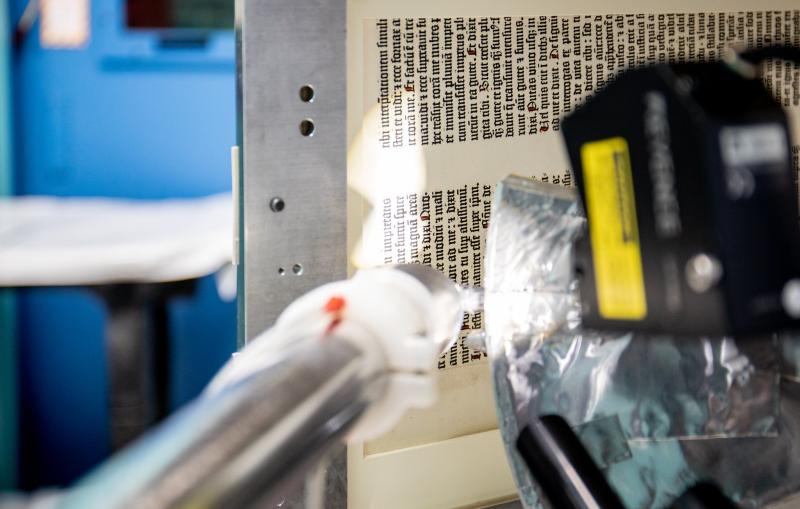
A page of the Gutenberg Bible from 1450-1455 AD is prepped before being scanned at SSRL beamline 7-2.
(Jacqueline Ramseyer Orrell/SLAC National Accelerator Laboratory)
Results obtained with SLAC’s X-ray laser show how tiny magnetic coils can align over a surprisingly broad timescale, inspiring new ideas for microelectronics.
The high-energy upgrade will keep the U.S. at the forefront of X-ray science and technology, allowing researchers to advance fields such as sustainability, human...
Teams at SLAC installed new experimental hutches with cutting-edge instruments that will harness the upgraded facility’s new capabilities and expand the breadth of research...
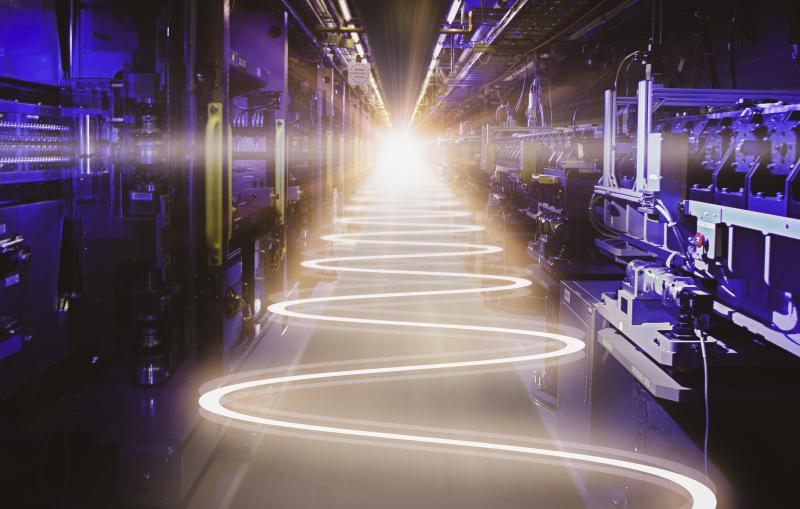
With up to a million X-ray flashes per second, 8,000 times more than its predecessor, it transforms the ability of scientists to explore atomic-scale...
Results obtained with SLAC’s X-ray laser show how tiny magnetic coils can align over a surprisingly broad timescale, inspiring new ideas for microelectronics.
The high-energy upgrade will keep the U.S. at the forefront of X-ray science and technology, allowing researchers to advance fields such as sustainability, human health and quantum information.
Teams at SLAC installed new experimental hutches with cutting-edge instruments that will harness the upgraded facility’s new capabilities and expand the breadth of research done at the facility.
With up to a million X-ray flashes per second, 8,000 times more than its predecessor, it transforms the ability of scientists to explore atomic-scale, ultrafast phenomena that are key to a broad range of applications, from quantum materials to clean...