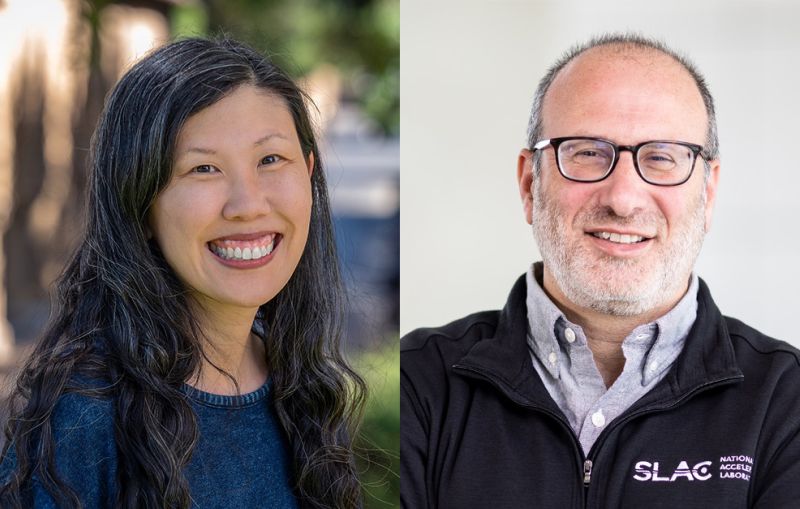
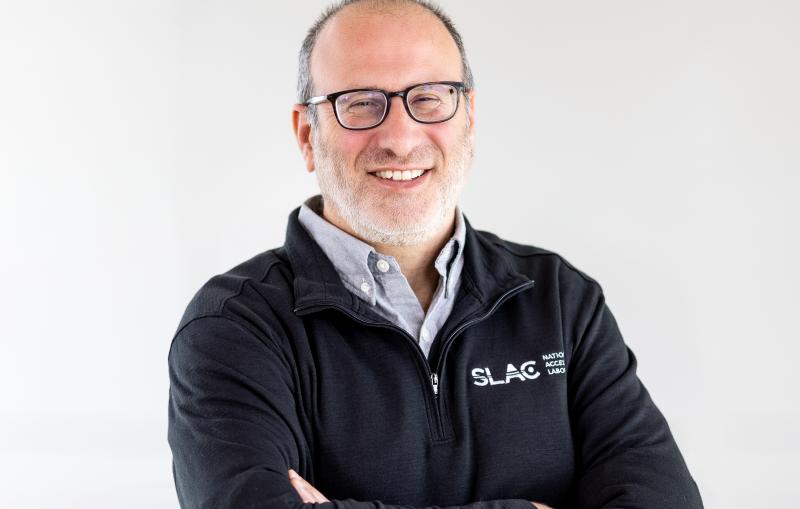
Stanford and SLAC faculty members Wendy Mao and Alberto Salleo have been honored for work in compressed-matter physics and polymer electronic materials.
The lab’s contributions to the national AI initiative are bolstered by its breakthrough scientific tools, unprecedented data and unique partnerships that help illuminate nature...
As QuantISED enters its next phase in its effort to develop quantum technologies capable of exploring some of the universe’s biggest unanswered questions, scientists...
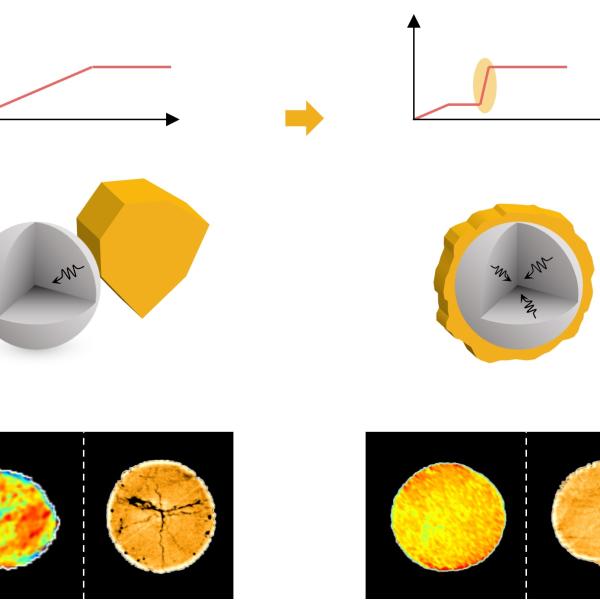
By adjusting the heating process when making lithium-ion cathodes, the team created batteries that retained nearly 93% of their energy after 500 cycles.
Researchers reveal why trace amounts of alloy added to some catalysts keep them performing better over time. The study suggests models that could boost...
Results obtained with SLAC’s X-ray laser show how tiny magnetic coils can align over a surprisingly broad timescale, inspiring new ideas for microelectronics.
Stanford and SLAC faculty members Wendy Mao and Alberto Salleo have been honored for work in compressed-matter physics and polymer electronic materials.
Announced by the DOE today, the funded project will explore the use of Super Intelligence to accelerate our understanding of a process central to energy and chemical production. SLAC will also play a key role in eight other Genesis Mission...
The lab’s contributions to the national AI initiative are bolstered by its breakthrough scientific tools, unprecedented data and unique partnerships that help illuminate nature from the expansion of the universe to the motions of electrons.
As QuantISED enters its next phase in its effort to develop quantum technologies capable of exploring some of the universe’s biggest unanswered questions, scientists reflect on what the first round made possible and what comes next.
By adjusting the heating process when making lithium-ion cathodes, the team created batteries that retained nearly 93% of their energy after 500 cycles.
Researchers reveal why trace amounts of alloy added to some catalysts keep them performing better over time. The study suggests models that could boost manufacturing.
Results obtained with SLAC’s X-ray laser show how tiny magnetic coils can align over a surprisingly broad timescale, inspiring new ideas for microelectronics.