SLAC topics

Department of Energy RSS feed

Browse tagged content below

 Department of Energy headquarters building
News Release

SLAC and Stanford partner with Argonne National Laboratory and others toward a quantum-interconnected world.

A person in a bunny suit examines a wafer
Multimedia

His visit highlighted the breadth of our world-class research and the people and collaborations that make it possible. A key theme of the day...

U.S. Deputy Secretary of Energy Danly watches a simulation of dark matter.
Feature

He met with SLAC staff and toured the lab’s cutting-edge facilities, diving into world-leading research in X-ray and ultrafast science, artificial intelligence, astrophysics and...

Secretary Wright Visit LCLS
Feature

In this Q&A, Arianna Gleason discusses the technologies needed to make commercialized fusion energy a reality and how SLAC is advancing this energy frontier. 

Headshot of Arianna Gleason with graphic representation of a laser shot
Feature

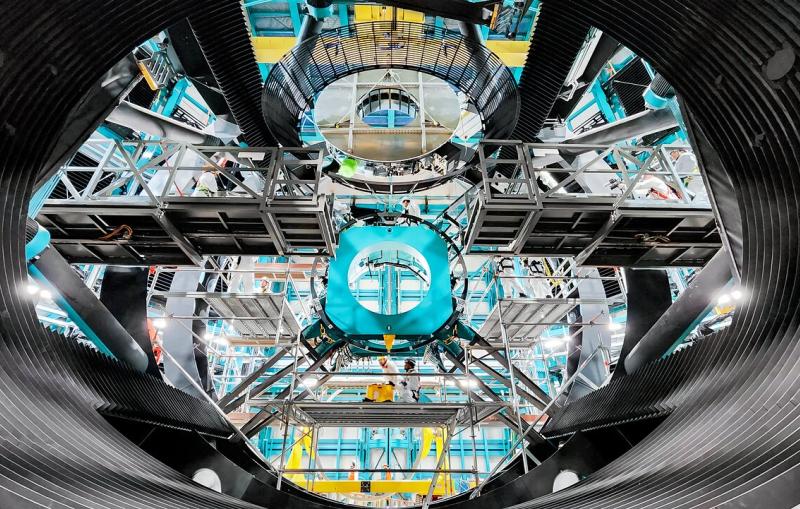
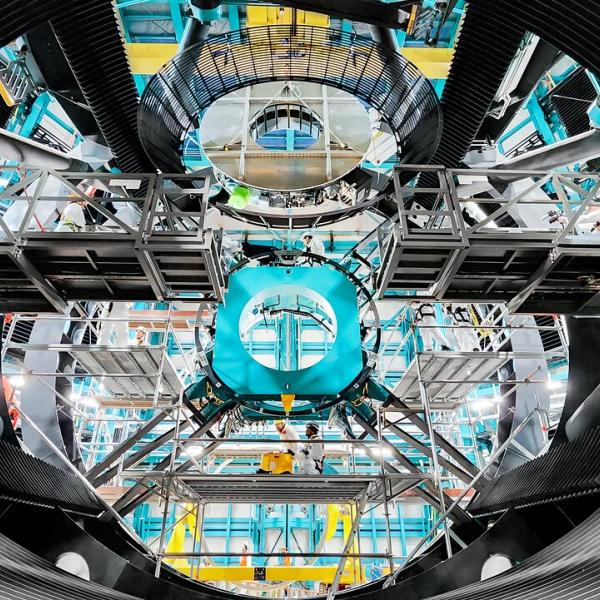
The 3.5-meter  glass mirror is the first permanent component of the Simonyi Survey Telescope's  state-of-the-art, wide-field optical system to be installed and will soon...

A donut-shaped mirror is lowered into a large support apparatus.
Video

Watch this video for an overview of our rich legacy and cutting-edge research. 

stillframe from SLAC overview video
Video
Video

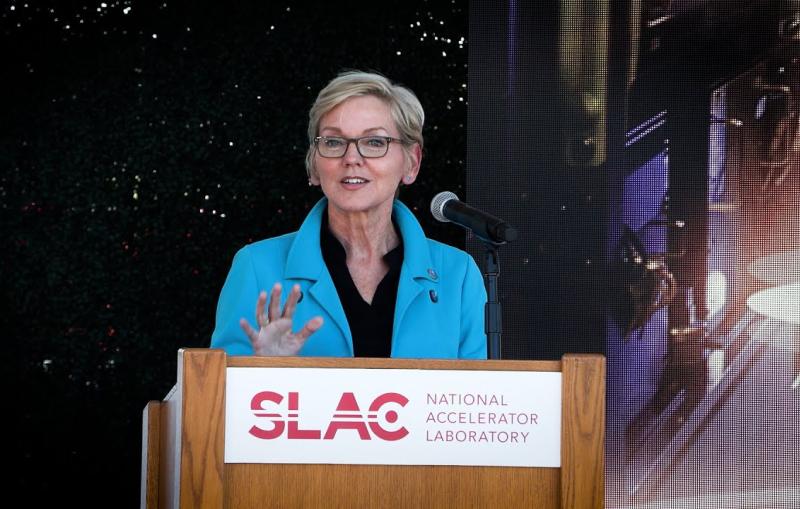
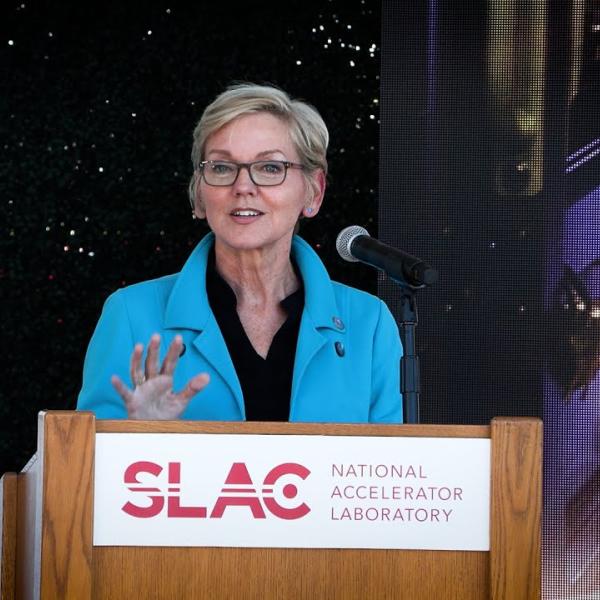
Secretary of Energy Jennifer M. Granholm delivered this speech on the successful completion of the world’s most powerful X-ray laser at SLAC National Accelerator...

Secretary of Energy Jennifer M. Granholm delivering a speech at SLAC
Video
Photograph
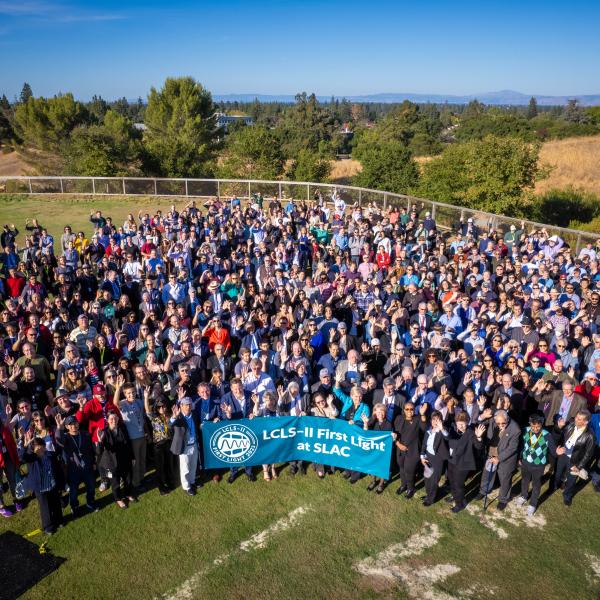
Secretary of Energy Jennifer M. Granholm joins 600 SLAC staff and collaborators in celebrating LCLS-II first light.
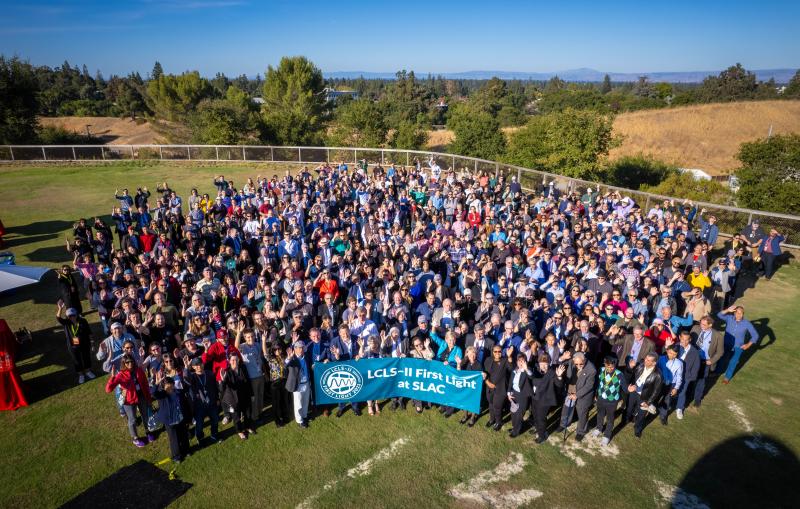
LCLS-II First Light Celebration group photo
News Release

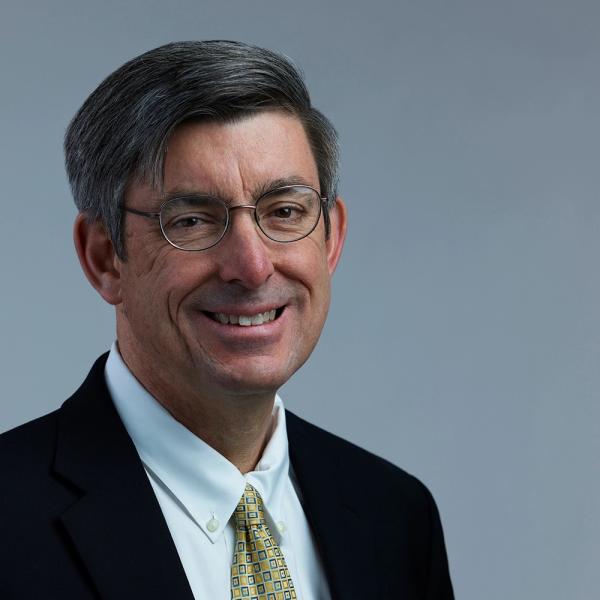
Physicist and scientific leader Sarrao will become SLAC’s sixth director and succeeds X-ray scientist Chi-Chang Kao, who stepped down after 10 years in the...

Headshot of John Sarrao
News Release

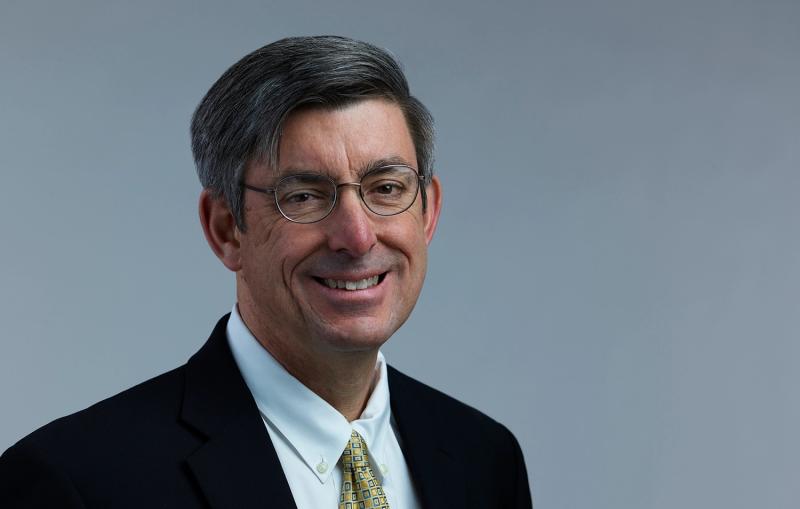
Under his 10-year leadership, the lab has significantly expanded its research and impact.

Chi-Chang Kao