Tiny microbes and molecular machines have an outsized impact on human health, and they play key roles in the vast global cycles that shape climate and make carbon and nitrogen available to all living things.
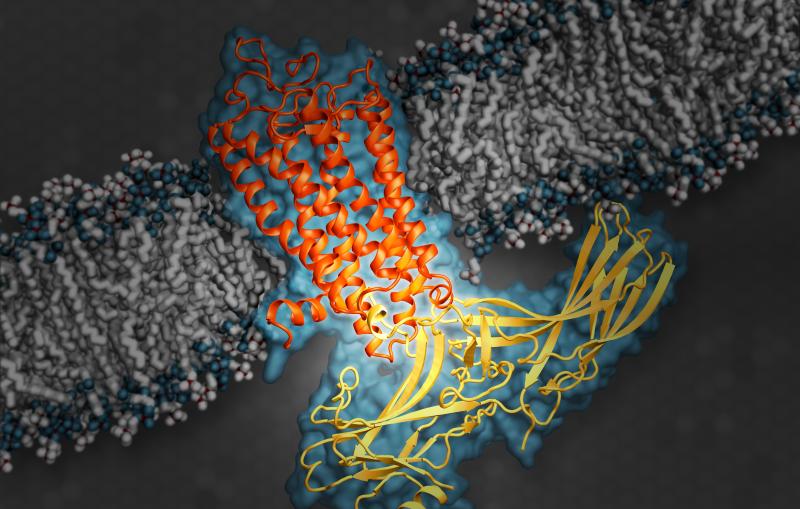
This illustration shows arrestin (yellow), an important type of signaling protein, while docked with rhodopsin (orange), a G protein-coupled receptor.
(Greg Stewart/SLAC National Accelerator Laboratory)
SLAC Deputy Director for Science and Technology Alberto Salleo's lab at Stanford is creating artificial synapses to replicate the brain’s efficiency and learning capacity...
Oxidizing chemicals break this cellular power plant into useless bits, leading to Parkinson’s disease, ALS, heart disease, diabetes, cancer and more. A small molecule...
An associate scientist at SSRL, Richardson studies plant growth to find ways to enhance nutrient uptake in plants, especially in challenging conditions – such...
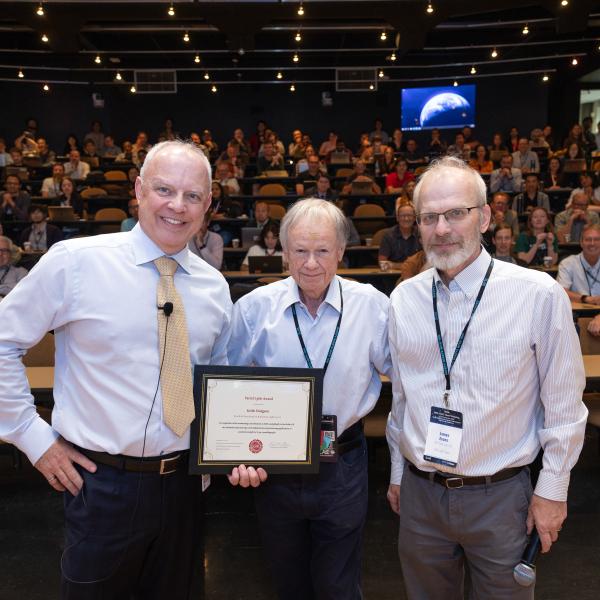
For nearly 50 years, Hodgson has illuminated the synchrotron radiation community through his pioneering research, innovations, leadership, advocacy and mentorship at the Stanford Synchrotron...
SLAC Deputy Director for Science and Technology Alberto Salleo's lab at Stanford is creating artificial synapses to replicate the brain’s efficiency and learning capacity in computing systems.
Oxidizing chemicals break this cellular power plant into useless bits, leading to Parkinson’s disease, ALS, heart disease, diabetes, cancer and more. A small molecule could block the process.
An associate scientist at SSRL, Richardson studies plant growth to find ways to enhance nutrient uptake in plants, especially in challenging conditions – such as higher temperatures, drought, and intense precipitation events – brought about by climate change.
For nearly 50 years, Hodgson has illuminated the synchrotron radiation community through his pioneering research, innovations, leadership, advocacy and mentorship at the Stanford Synchrotron Radiation Lightsource.