SLAC National Accelerator Laboratory
    • About

      Learn about our science, people, facilities and partners. Discover our history and vision for the future.

    • OUR STORY
      • Mission, vision, values
      • History
    • LAB OVERVIEW
      • SLAC at a glance
      • Lab organization
      • Our partnerships
    • OUR PEOPLE
      • Leadership
      • Meet our teams
      • Faculty
    • VISIT SLAC
      • Public tours
      • Contact us
    • Resources
      • Images, videos & more
      • Brochures & fact sheets
    • Connect With Us
      • Facebook
      • Flickr
      • Instagram
      • LinkedIn
      • Twitter
      • YouTube
    video

    Who we are

    We explore radically new ideas with an entrepreneurial mindset.

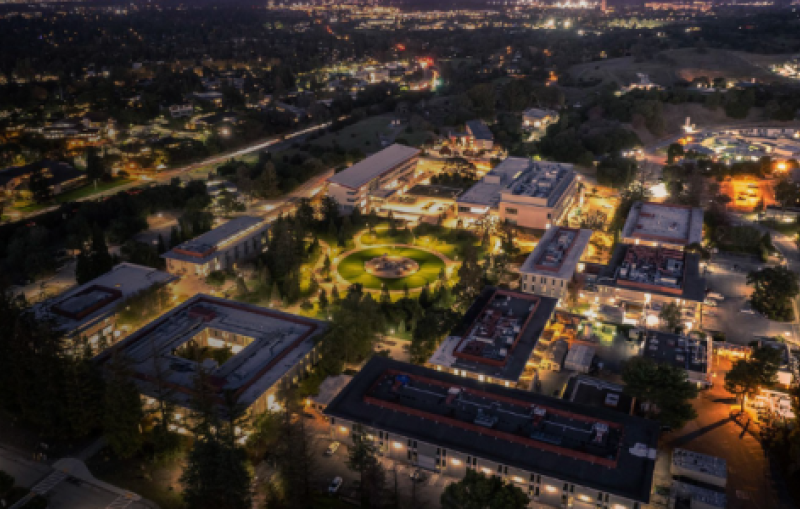
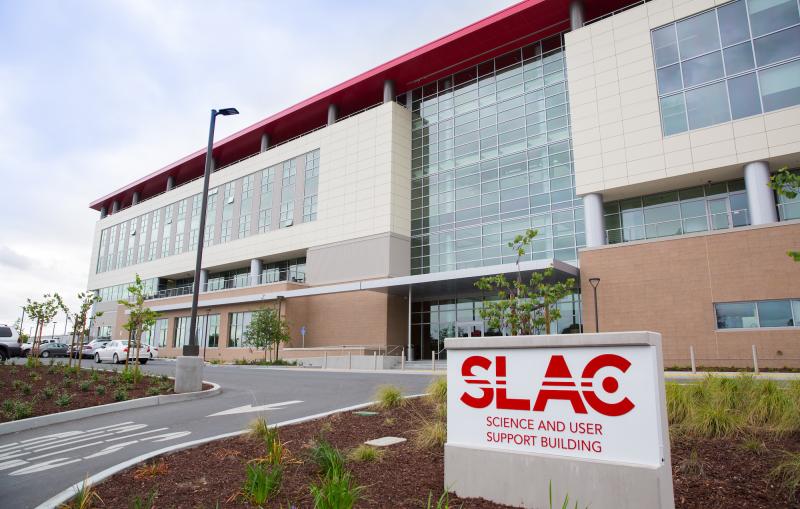
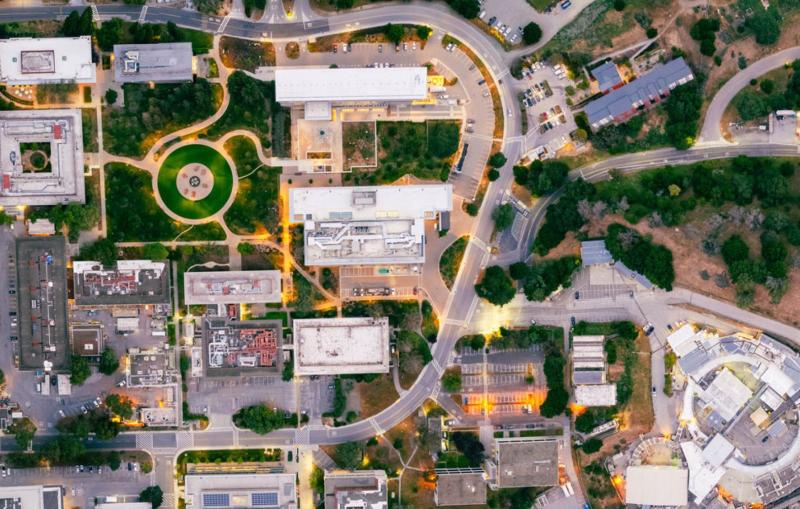
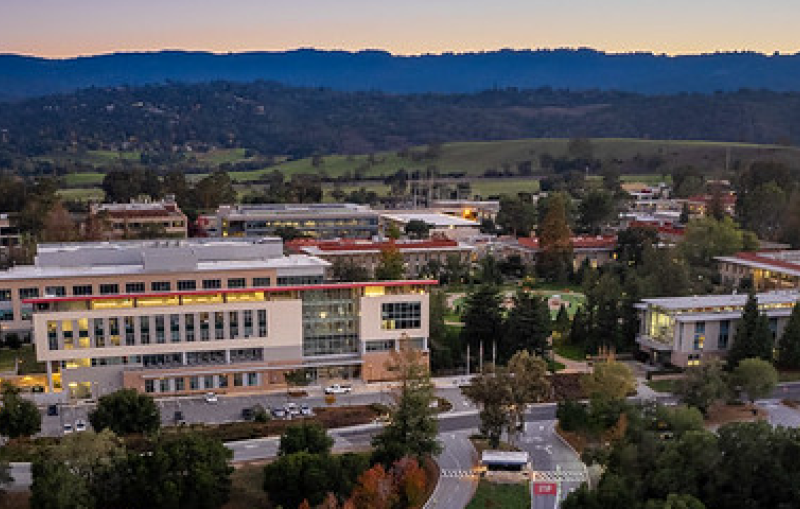
    Science and User Support Building to the left and Arrillaga Science Center building to the right from above the Main Quad at SLAC's campus.
    • Research

      Get an overview of research at SLAC: X-ray and ultrafast science, particle and astrophysics, cosmology, particle accelerators, biology, energy and technology.

    • X-ray and Ultrafast science icon X-ray & ultrafast science

      Revealing nature’s fastest processes with X-rays, lasers and electrons

    • Physics of the universe science icon Physics of the universe

      Studying the particles and forces that knit the cosmos together

    • Advanced Accelerators science icon Advanced accelerators

      Building smaller, faster, more powerful accelerators for all

    • Science of life science icon Science of life

      Understanding the machinery of life at its most basic level

    • New technologies science icon New technologies

      Inventing new tools for science and society

    • Energy sciences science icon Energy sciences

      Finding clean, sustainable solutions for the world’s energy challenges

    Spotlight

    SLAC science explained

    Cut through the jargon while exploring our research.

    SAGE campers have fun experimenting with a Van de Graff generator
    • Facilities & Centers

      Learn more about the places where science happens at SLAC: our major facilities, institutes and centers.

    • SCIENTIFIC FACILITIES
      • LCLS website

        Linac Coherent Light Source

      • SSRL website

        Stanford Synchrotron Radiation Lightsource

      • FACET-II website

        Facility for Advanced Accelerator Experimental Tests

      • CryoEM website

        Cryogenic Electron Microscopy

    • JOINT INSTITUTES & CENTERS
      • SIMES website

        Stanford Institute for Materials & Energy Science

      • KIPAC website

        Kavli Institute for Particle Astrophysics & Cosmology

      • PULSE website

        Stanford PULSE Institute

      • SUNCAT website

        Center for Interface Science & Catalysis

      • SLAC-Stanford Battery Center

    NSF-DOE Vera C. Rubin Observatory LSST

    SLAC & Stanford build the world’s largest digital camera for the Legacy Survey of Space and Time (LSST).

    A drone photo of Rubin Observatory while taking pictures during the First Look observing campaign
    • Work with Us

      Find a career, partner with us or apply to use our tools and facilities.

    • PARTNER WITH US
      • For industry partners
      • Research partnerships & tech transfer
      • Technology Innovation
    • CAREERS AT SLAC
      • Job openings
      • Internships
      • Life at SLAC
    • USE OUR FACILITIES

      Apply to become a user of our scientific research facilities and instruments.

    • COMING TO SLAC
    • BECOME A SUPPLIER

    Careers at SLAC

    Join our united workforce.

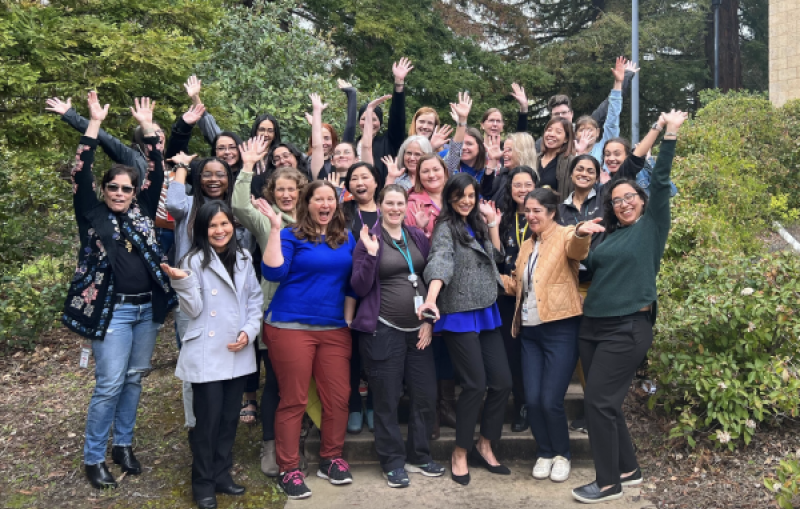
    SLAC staff in main quad
    • News & Events

      Get the latest news about the lab, our science and discoveries. Explore SLAC events and learn how to participate.

    • NEWS CENTER
      • News archive
      • Media resources
      • Images & videos
    • SLAC EVENTS
      • Public lectures
      • Scientific seminars
      • Community events
    • SYMMETRY MAGAZINE

      This joint publication of SLAC and Fermilab is your view into the world of particle physics.

    • EDUCATIONAL PROGRAMS
      • Educational tours
      • Resources for students & educators
    • Connect With Us
      • Facebook
      • Flickr
      • Instagram
      • LinkedIn
      • Twitter
      • YouTube
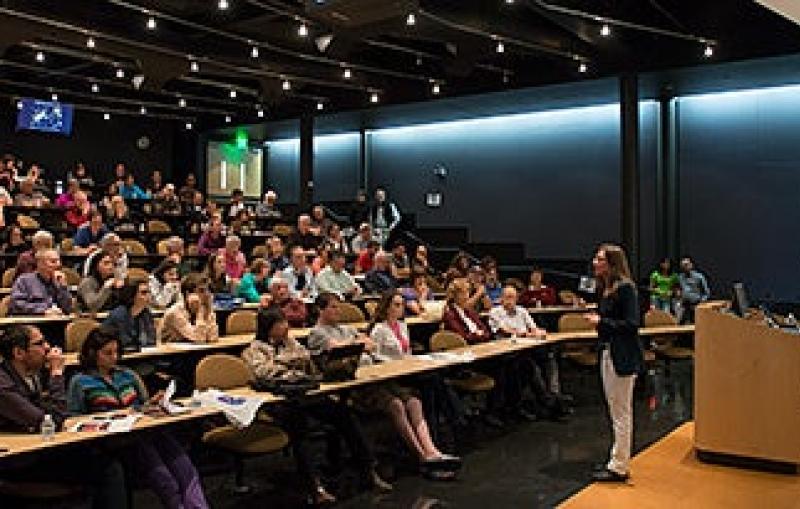
    Recent public lecture

    Reinventing the way we break down plastic waste

    Public Lecture: Ozge Bozkurt
Filter search by
Staff portalStanford directoryComing to SLACResources for…
  1. Home
  2. …
Filter by research area
  • X-ray and ultrafast science (343)
  • Physics of the universe (283)
  • Energy sciences (96)
  • Science of life (87)
  • New technologies (58)
  • Advanced accelerators (41)
Filter by Type
  • News (1782)
  • Image (387)
  • Video (228)
  • Event (158)
  • Page (67)
  • Person (67)
  • resource (64)
  • News Collection (5)
Sort by
2758 results
Display Grid Display List
Research

New technologies

Modern technology creates new opportunities for society: Just think about how artificial intelligence has changed our cars and cell phone apps.

Neural Nets and Gravitational Lenses
News Brief

SLAC-Stanford team develops a better method to create superlattices with a twist

Imaging at SLAC's synchrotron demonstrates the twisted structures’ exotic properties that could benefit the development of superconductors and quantum materials.

January 16, 2026  ·  4 min read
A model of moiré materials
The basics

SLAC science explained

SLAC develops and deploys some of the world’s most advanced scientific tools for exploring how the universe works at the biggest, smallest and fastest scales. Here we explain how they work and the exciting discoveries they make possible.

SAGE campers have fun experimenting with a Van de Graff generator
News Brief
VIA Fermilab

Dark Energy Survey scientists release new analysis of how the universe expands

The latest results combined weak lensing and galaxy clustering and incorporated four dark energy probes from a single experiment for the first time.

January 22, 2026
Photo of the Cerro Tololo Inter-American Observatory (CTIO) in the Chilean Andes at night.
SLAC Science Explained

LSST Camera: A moving picture of the cosmos

The LSST Camera explores cosmic mysteries as part of the Rubin Observatory’s Legacy Survey of Space and Time.

June 1, 2022  ·  7 min read
 The background shows a compilation of the first images taken with the LSST Camera at Rubin Observatory. The overlay shows the LSST Camera in the cleanroom at SLAC before it was shipped to be installed into the NSF-DOE Vera C. Rubin Observatory.
Feature

Lynbrook High claims 2021 SLAC Regional Science Bowl victory

The pandemic forced major changes to the format, but 30 teams from 22 schools still came together online to vie for a slot at...

February 11, 2021  ·  3 min read
A screenshot of competitors and volunteers in a video conference call.
News Brief
Via The University of Manchester

443-million-year-old fossils reveal early vertebrate eyes

Using SSRL, scientists uncovered fossil evidence that the first groups of vertebrates possessed surprisingly advanced eyes. 

January 27, 2026
fossil specimen in gray rock with bright marcations overlain
Links

A–Z index

A Accelerator on a Chip (ACHIP) Admin guide, Stanford All-employee memos Archives, History and Record Office (AHRO) ATLAS Atlas@SLAC 
SLAC logo
SLAC People

Meet our teams

The lab is organized into six scientific directorates, each of which plays an important role in advancing our lab, backed by our core operations teams all supporting our shared mission.

Energy Sciences Directorate team at the Battery500 Quarterly Review Meeting on May 25-26 at SLAC's Main Quad.
Video

LSST Camera explainer

Learn about the 10-year Legacy Survey of Space and Time (LSST), the SLAC-built LSST Camera and NSF-DOE Vera C. Rubin Observatory in this video.

October 4, 2022  ·  00:05:58  runtime
LSST Explainer | Mapping the universe
Video

Aaron Roodman

Deputy Head of Rubin’s Legacy Survey of Space and Time, Professor of Particle Physics and Astrophysics
Aaron Roodman portrait

Adam Bolton

KIPAC Senior Staff Scientist and lead for the Rubin U.S. Data Facility
Adam Bolton portrait
  • Go to previous page
  • Page 1
  • …
  • Page 220
  • Page 221
  • Page 222
  • Page 223
  • Currently on page 224
  • Page 225
  • Page 226
  • Page 227
  • Page 228
  • …
  • Page 230
  • Go to next page

SLAC National Accelerator Laboratory 
2575 Sand Hill Road  
Menlo Park, CA 94025-7015  
650.926.3300

  • Coming to SLAC
  • Connect with us
  • Contact us
  • Facebook
  • Flickr
  • Instagram
  • LinkedIn
  • Twitter
  • YouTube

Sign up for our email

Monthly newsletter for cutting-edge science, SLAC milestones and events.

Sign up

Bold People
Visionary Science
Real Impact

We explore how the universe works at the biggest, smallest and fastest scales and invent powerful tools used by scientists around the globe.

  • About
    • Our story
    • Our people
    • Lab overview
    • Visit SLAC
    • Resources
    • Connect with us
  • Research
    • X-ray & ultrafast science
    • Advanced accelerators
    • New technologies
    • Physics of the universe
    • Science of life
    • Energy sciences
    • SLAC science explained
  • Facilities & centers
    • Scientific facilities
    • Joint institutes & centers
  • Work with us
    • Partner with us
    • Become a supplier
    • Use our facilities
    • Careers at SLAC
  • News & events
    • News center
    • Symmetry Magazine
    • Media resources
    • Events
    • Educational programs
    • Connect with us
  • Staff portal
  • Privacy policy
  • Accessibility
  • Vulnerability disclosure
  • A–Z index
  • Website feedback
Home
  • SLAC home
  • Maps & directions
  • Emergency info
  • Careers

© 2026 SLAC National Accelerator Laboratory is operated by Stanford University for the U.S. Department of Energy Office of Science.

Stanford University U.S. Department of Energy
Top Top
Back to top Back to top