SLAC National Accelerator Laboratory
    • About

      Learn about our science, people, facilities and partners. Discover our history and vision for the future.

    • OUR STORY
      • Mission, vision, values
      • History
    • LAB OVERVIEW
      • SLAC at a glance
      • Lab organization
      • Our partnerships
    • OUR PEOPLE
      • Leadership
      • Meet our teams
      • Faculty
    • VISIT SLAC
      • Public tours
      • Contact us
    • Resources
      • Images, videos & more
      • Brochures & fact sheets
    • Connect With Us
      • Facebook
      • Flickr
      • Instagram
      • LinkedIn
      • Twitter
      • YouTube
    video

    Who we are

    We explore radically new ideas with an entrepreneurial mindset.

    Science and User Support Building to the left and Arrillaga Science Center building to the right from above the Main Quad at SLAC's campus.
    • Research

      Get an overview of research at SLAC: X-ray and ultrafast science, particle and astrophysics, cosmology, particle accelerators, biology, energy and technology.

    • X-ray and Ultrafast science icon X-ray & ultrafast science

      Revealing nature’s fastest processes with X-rays, lasers and electrons

    • Physics of the universe science icon Physics of the universe

      Studying the particles and forces that knit the cosmos together

    • Advanced Accelerators science icon Advanced accelerators

      Building smaller, faster, more powerful accelerators for all

    • Science of life science icon Science of life

      Understanding the machinery of life at its most basic level

    • New technologies science icon New technologies

      Inventing new tools for science and society

    • Energy sciences science icon Energy sciences

      Breaking new ground in securing abundant, affordable and reliable energy.

    Spotlight

    SLAC science explained

    Cut through the jargon while exploring our research.

    A girl experiences static electricity from a Van de Graaff generator at a outdoor SLAC STEM Community Day event, making her hair stand on end.
    • Facilities & Centers

      Learn more about the places where science happens at SLAC: our major facilities, institutes and centers.

    • SCIENTIFIC FACILITIES
      • LCLS website

        Linac Coherent Light Source

      • SSRL website

        Stanford Synchrotron Radiation Lightsource

      • FACET-II website

        Facility for Advanced Accelerator Experimental Tests

      • CryoEM website

        Cryogenic Electron Microscopy

    • JOINT INSTITUTES & CENTERS
      • SIMES website

        Stanford Institute for Materials & Energy Science

      • KIPAC website

        Kavli Institute for Particle Astrophysics & Cosmology

      • PULSE website

        Stanford PULSE Institute

      • SUNCAT website

        Center for Interface Science & Catalysis

      • SLAC-Stanford Battery Center

    NSF-DOE Vera C. Rubin Observatory LSST

    SLAC & Stanford build the world’s largest digital camera for the Legacy Survey of Space and Time (LSST).

    A drone photo of Rubin Observatory while taking pictures during the First Look observing campaign
    • Work with Us

      Find a career, partner with us or apply to use our tools and facilities.

    • PARTNER WITH US
      • For industry partners
      • Research partnerships & tech transfer
      • Technology Innovation
    • CAREERS AT SLAC
      • Job openings
      • Internships
      • Life at SLAC
    • USE OUR FACILITIES

      Apply to become a user of our scientific research facilities and instruments.

    • COMING TO SLAC
    • BECOME A SUPPLIER

    Careers at SLAC

    Join our united workforce.

    SLAC staff in main quad
    • News & Events

      Get the latest news about the lab, our science and discoveries. Explore SLAC events and learn how to participate.

    • NEWS CENTER
      • News archive
      • Media resources
      • Images & videos
    • SLAC EVENTS
      • Public lectures
      • Scientific seminars
      • Community events
    • SYMMETRY MAGAZINE

      This joint publication of SLAC and Fermilab is your view into the world of particle physics.

    • EDUCATIONAL PROGRAMS
      • Educational tours
      • Resources for students & educators
    • Connect With Us
      • Facebook
      • Flickr
      • Instagram
      • LinkedIn
      • Twitter
      • YouTube
    Upcoming

    SLAC on Tap: Night of the Dark Matter

    Wednesday, October 28, 5:30pm

    SLAC on Tap
Filter search by
Staff portalStanford directoryComing to SLACResources for…
  1. Home
  2. …
Filter by research area
  • X-ray and ultrafast science (39)
  • Energy sciences (13)
  • Physics of the universe (5)
  • New technologies (2)
Filter by Type
  • News (86)
  • Event (8)
  • Video (8)
  • Page (7)
  • Image (6)
  • News Collection (2)
  • Person (1)
Sort by
118 results
Display Grid Display List
Feature

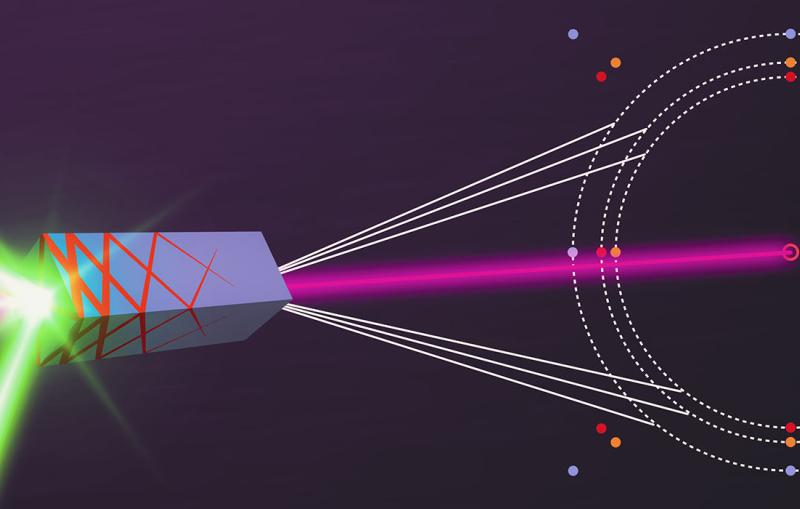
Terahertz radiation technique opens a new door for studying atomic behavior

Researchers have squeezed a high-energy electron beam into tight bundles using terahertz radiation, a promising advance in watching the ultrafast world of atoms unfold.

March 5, 2020  ·  4 min read
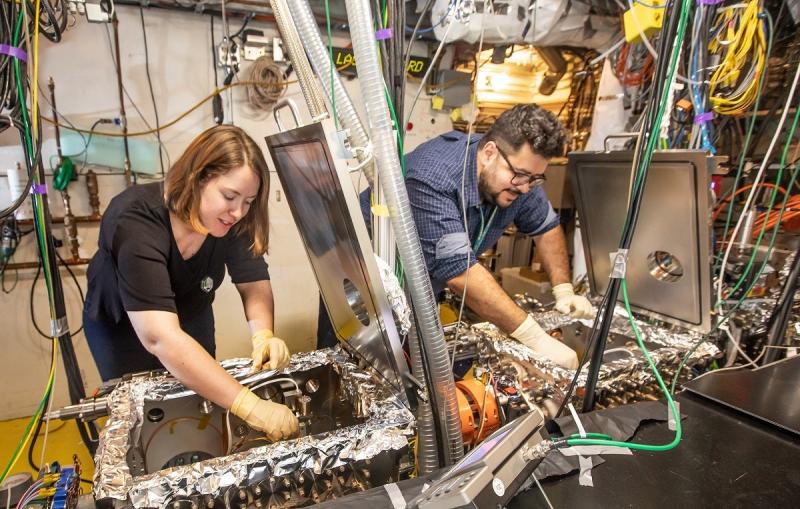
SLAC’s Emma Snively and Mohamed Othman at the lab’s high-speed “electron camera."
News Release

SLAC Celebrates Femtosecond Week

Join us for five days of ultrafast science from April 17 to 21.

April 12, 2017  ·  2 min read
Past Event
Public Lecture

Charging ahead: batteries of the future

Presented by Yi Cui, SLAC/Stanford University. To transform our energy sources to carbon neutrality, we need to power as much of modern society as...

Date Thursday, October 6, 2022
7:00 p.m.  –  8:00 p.m.  PT
Location SLAC National Accelerator Laboratory, in the Panofsky Auditorium in the Science…
public lecture art charging ahead: batteries of the future
Feature

Emma McBride and Caterina Vernieri Receive 2018 Panofsky Fellowships at SLAC

Their work will deepen our understanding of matter in extreme conditions and fundamental particle physics.

July 26, 2018  ·  5 min read
Panofsky Fellows 2018
Feature

SLAC Gears Up for Dark Matter Hunt with LUX-ZEPLIN

Researchers at SLAC are setting up a test stand and liquid xenon purification system for the future LZ experiment, which is scheduled to begin...

May 20, 2015  ·  5 min read
illustration of LUX-ZEPLIN chamber

Connect with us

Interested in keeping up with what’s going on at SLAC National Accelerator Laboratory? We have a variety of ways for you to stay connected with us.

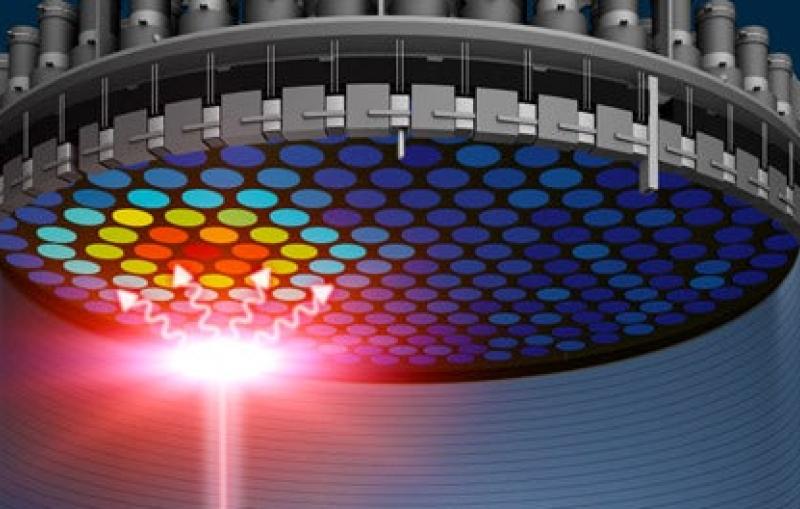
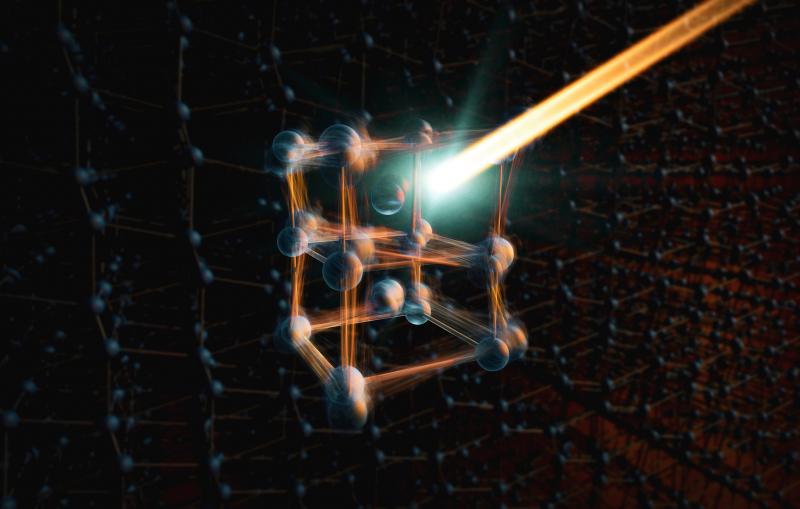
Individual atoms and vibrations respond when a material is hit with light
News Release

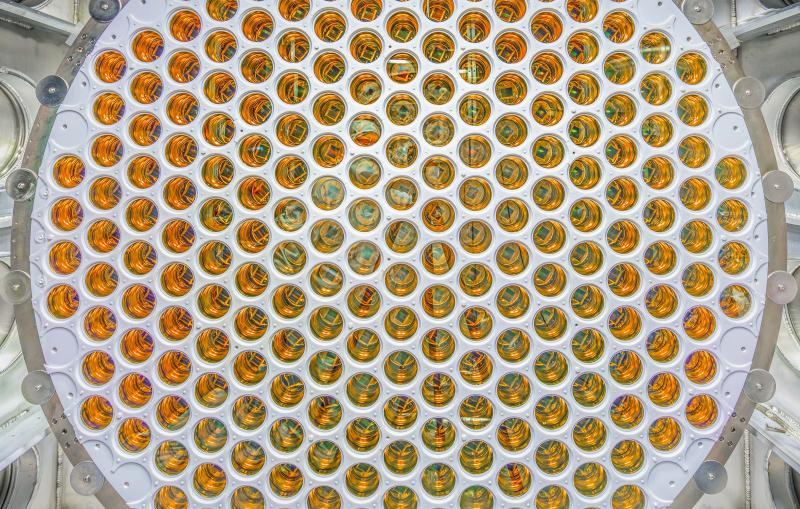
LZ sets a world’s best in the hunt for galactic dark matter and gets a new look at neutrinos from the sun’s core

In the largest dataset ever collected by a dark matter detector, LUX-ZEPLIN's latest results provide the strongest constraints on low-mass WIMPs and detect boron-8...

December 8, 2025  ·  9 min read
Overhead view looking down into a white structure with dozens of orange circular components arranged radially.
Feature

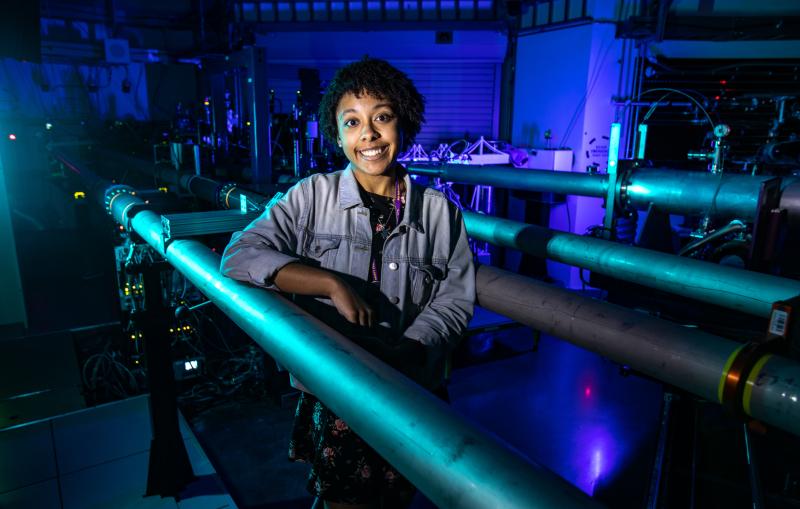
A day in the life of an experiment controls engineer

By tinkering and troubleshooting, Aalayah Spencer helps turn researchers’ ideas into state-of-the-art science experiments.

February 13, 2023  ·  4 min read
Aalayah Spencer inside the Linac Coherent Light Source at the Department of Energy’s SLAC National Accelerator Laboratory. Spencer is a science and engineering associate in Experiment Control Systems at LCLS.
Feature

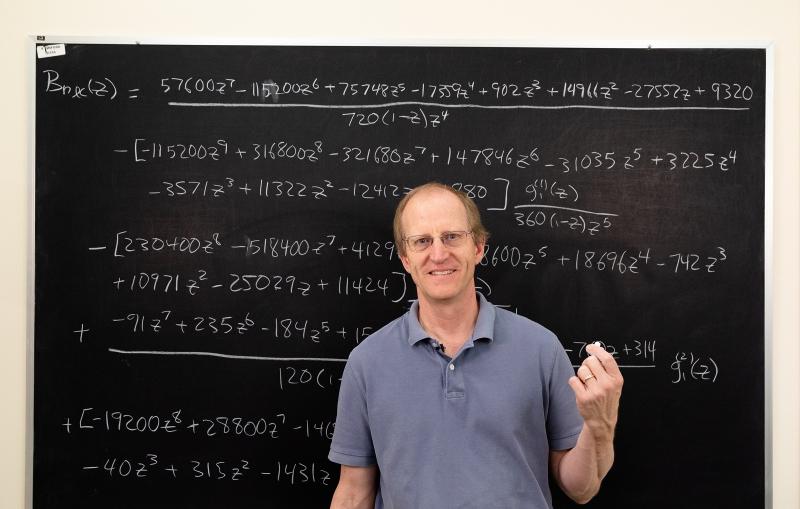
SLAC theorist Lance Dixon receives Galileo Galilei Medal

Together with two long-time collaborators, he is recognized for work that helps us understand the strong nuclear force.

February 16, 2023  ·  4 min read
A man standing in front of a chalkboard.
Feature

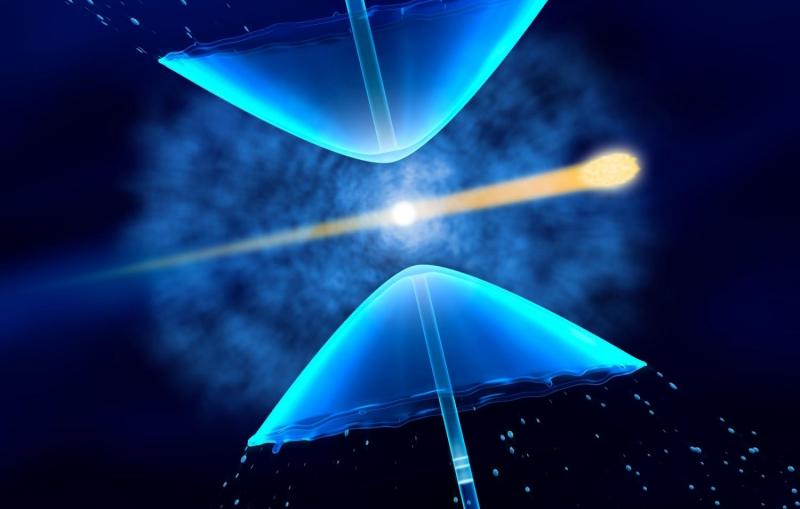
Researchers resolve decades-long debate about shock-compressed silicon with unprecedented detail

They saw how the material finds a path to contorting and flexing to avoid being irreversibly crushed.

October 13, 2022  ·  5 min read
MEC silicon
Research

X-ray & ultrafast science

With their ability to penetrate matter and resolve individual atoms, X-rays and electrons are among scientists’ most useful tools for determining the structure and behavior of molecules and materials.

First microscopic movies of liquids getting vaporized by SLAC’s X-ray free-electron laser LCLS.
Feature

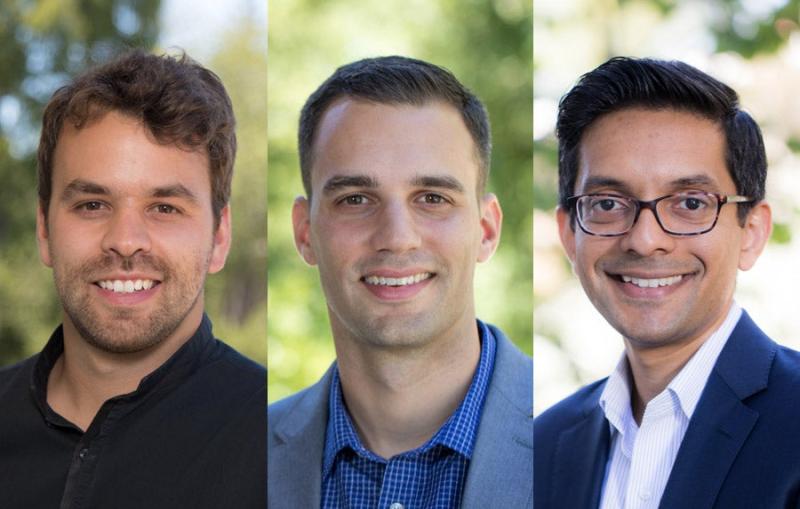
Three SLAC Scientists Receive DOE Early Career Research Grants

Zeeshan Ahmed, Frederico Fiuza and Emilio Nanni will each receive about $2.5 million over five years to pursue cutting-edge research into cosmic inflation, plasma...
August 10, 2017  ·  8 min read
SLAC's 2017 DOE Early Career Award winners
  • Go to previous page
  • Page 1
  • …
  • Page 2
  • Page 3
  • Page 4
  • Page 5
  • Page 6
  • Page 7
  • Currently on page 8
  • Page 9
  • Page 10
  • Go to next page

SLAC National Accelerator Laboratory 
2575 Sand Hill Road  
Menlo Park, CA 94025-7015  
650.926.3300

  • Coming to SLAC
  • Connect with us
  • Contact us
  • Facebook
  • Flickr
  • Instagram
  • LinkedIn
  • Twitter
  • YouTube

Sign up for our email

Monthly newsletter for cutting-edge science, SLAC milestones and events.

Sign up

Bold People
Visionary Science
Real Impact

We explore how the universe works at the biggest, smallest and fastest scales and invent powerful tools used by scientists around the globe.

  • About
    • Our story
    • Our people
    • Lab overview
    • Visit SLAC
    • Resources
    • Connect with us
  • Research
    • X-ray & ultrafast science
    • Advanced accelerators
    • New technologies
    • Physics of the universe
    • Science of life
    • SLAC science explained
  • Facilities & centers
    • Scientific facilities
    • Joint institutes & centers
  • Work with us
    • Partner with us
    • Become a supplier
    • Use our facilities
    • Careers at SLAC
  • News & events
    • News center
    • Symmetry Magazine
    • Media resources
    • Events
    • Educational programs
    • Connect with us
  • Staff portal
  • Privacy policy
  • Accessibility
  • Vulnerability disclosure
  • A–Z index
  • Website feedback
Home
  • SLAC home
  • Maps & directions
  • Emergency info
  • Careers

© 2026 SLAC National Accelerator Laboratory is operated by Stanford University for the U.S. Department of Energy Office of Science.

Stanford University U.S. Department of Energy
Top Top
Back to top Back to top