Learn about our science, people, facilities and partners. Discover our history and vision for the future.
Who we are
We explore radically new ideas with an entrepreneurial mindset.
Get an overview of research at SLAC: X-ray and ultrafast science, particle and astrophysics, cosmology, particle accelerators, biology, energy and technology.
Revealing nature’s fastest processes with X-rays, lasers and electrons
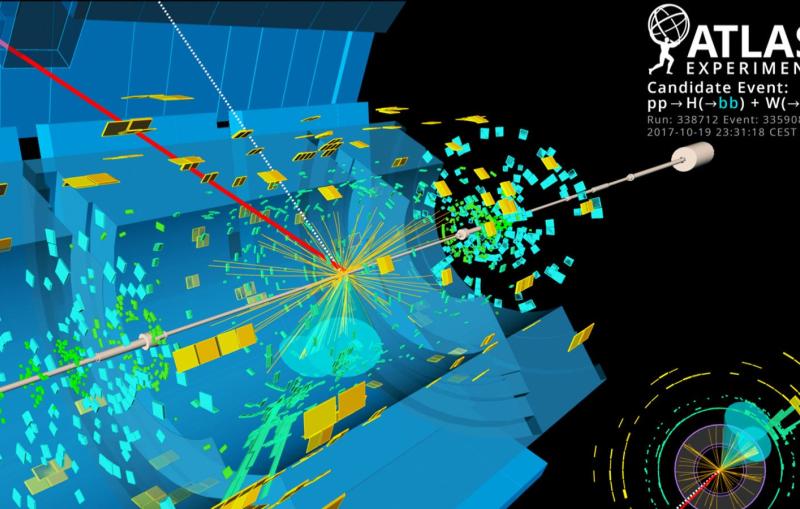
Studying the particles and forces that knit the cosmos together
Building smaller, faster, more powerful accelerators for all
Understanding the machinery of life at its most basic level
Inventing new tools for science and society
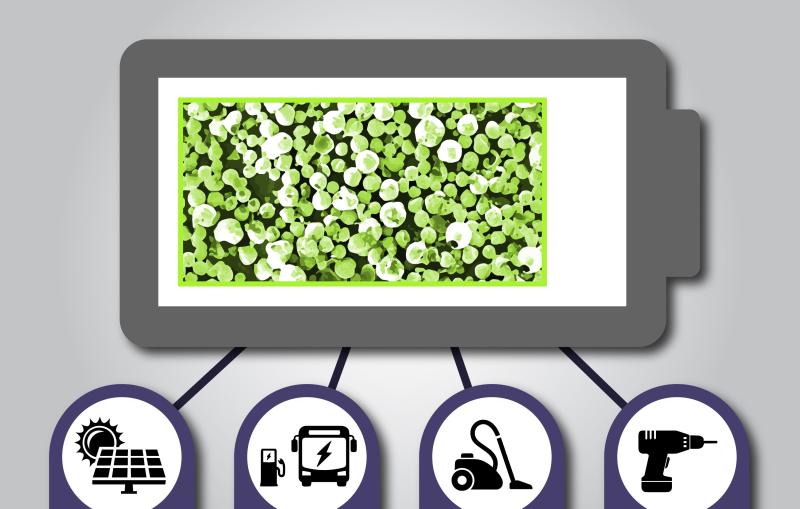
Finding clean, sustainable solutions for the world’s energy challenges
SLAC science explained
Cut through the jargon while exploring our research.
Learn more about the places where science happens at SLAC: our major facilities, institutes and centers.
Linac Coherent Light Source
Stanford Synchrotron Radiation Lightsource
Facility for Advanced Accelerator Experimental Tests
Cryogenic Electron Microscopy
Stanford Institute for Materials & Energy Science
Kavli Institute for Particle Astrophysics & Cosmology
Stanford PULSE Institute
Center for Interface Science & Catalysis
NSF-DOE Vera C. Rubin Observatory LSST
SLAC & Stanford build the world’s largest digital camera for the Legacy Survey of Space and Time (LSST).
Find a career, partner with us or apply to use our tools and facilities.
Apply to become a user of our scientific research facilities and instruments.
Careers at SLAC
Join our united workforce.
Get the latest news about the lab, our science and discoveries. Explore SLAC events and learn how to participate.
This joint publication of SLAC and Fermilab is your view into the world of particle physics.
STEM Community Day 2026
Saturday, September 12
It reveals an abrupt transition in cuprates where particles give up their individuality. The results flip a popular theory on its head.
Called XLEAP, the new method will provide sharp views of electrons in chemical processes that take place in billionths of a billionth of a...
A better understanding of these materials and how they store and transport oil and gas could one day enable more efficient fossil fuel production.
A new understanding of the nucleation process could shed light on how the shells help microbes interact with their environments, and help people design...
A new study uncovers how a critical protein binds to drugs used to treat asthma and other inflammatory diseases.
What they learned could lead to a better understanding of how antibiotics are broken down in the body, potentially leading to the development of...
Richter designed particle accelerators and carried out experiments that led to the Nobel Prize-winning discovery of the charm quark.
Tony Heinz and Z-X Shen will receive funding for research focused on catalysis and novel states of matter.
Their work will deepen our understanding of matter in extreme conditions and fundamental particle physics.
Former Stanford and UC-Berkeley physicist is honored for foundational research that peers into unconventional phenomena within exotic materials.
She’ll direct the future of astrophysics research at SLAC and Stanford for the next five years.
Researchers from SLAC and around the world increasingly use machine learning to handle Big Data produced in modern experiments and to study some of...