SLAC National Accelerator Laboratory
    • About

      Learn about our science, people, facilities and partners. Discover our history and vision for the future.

    • OUR STORY
      • Mission, vision, values
      • History
    • LAB OVERVIEW
      • SLAC at a glance
      • Lab organization
      • Our partnerships
    • OUR PEOPLE
      • Leadership
      • Meet our teams
      • Faculty
    • VISIT SLAC
      • Public tours
      • Contact us
    • Resources
      • Images, videos & more
      • Brochures & fact sheets
    • Connect With Us
      • Facebook
      • Flickr
      • Instagram
      • LinkedIn
      • Twitter
      • YouTube
    video

    Who we are

    We explore radically new ideas with an entrepreneurial mindset.

    Science and User Support Building to the left and Arrillaga Science Center building to the right from above the Main Quad at SLAC's campus.
    • Research

      Get an overview of research at SLAC: X-ray and ultrafast science, particle and astrophysics, cosmology, particle accelerators, biology, energy and technology.

    • X-ray and Ultrafast science icon X-ray & ultrafast science

      Revealing nature’s fastest processes with X-rays, lasers and electrons

    • Physics of the universe science icon Physics of the universe

      Studying the particles and forces that knit the cosmos together

    • Advanced Accelerators science icon Advanced accelerators

      Building smaller, faster, more powerful accelerators for all

    • Science of life science icon Science of life

      Understanding the machinery of life at its most basic level

    • New technologies science icon New technologies

      Inventing new tools for science and society

    • Energy sciences science icon Energy sciences

      Finding clean, sustainable solutions for the world’s energy challenges

    Spotlight

    SLAC science explained

    Cut through the jargon while exploring our research.

    SAGE campers have fun experimenting with a Van de Graff generator
    • Facilities & Centers

      Learn more about the places where science happens at SLAC: our major facilities, institutes and centers.

    • SCIENTIFIC FACILITIES
      • LCLS website

        Linac Coherent Light Source

      • SSRL website

        Stanford Synchrotron Radiation Lightsource

      • FACET-II website

        Facility for Advanced Accelerator Experimental Tests

      • CryoEM website

        Cryogenic Electron Microscopy

    • JOINT INSTITUTES & CENTERS
      • SIMES website

        Stanford Institute for Materials & Energy Science

      • KIPAC website

        Kavli Institute for Particle Astrophysics & Cosmology

      • PULSE website

        Stanford PULSE Institute

      • SUNCAT website

        Center for Interface Science & Catalysis

      • SLAC-Stanford Battery Center

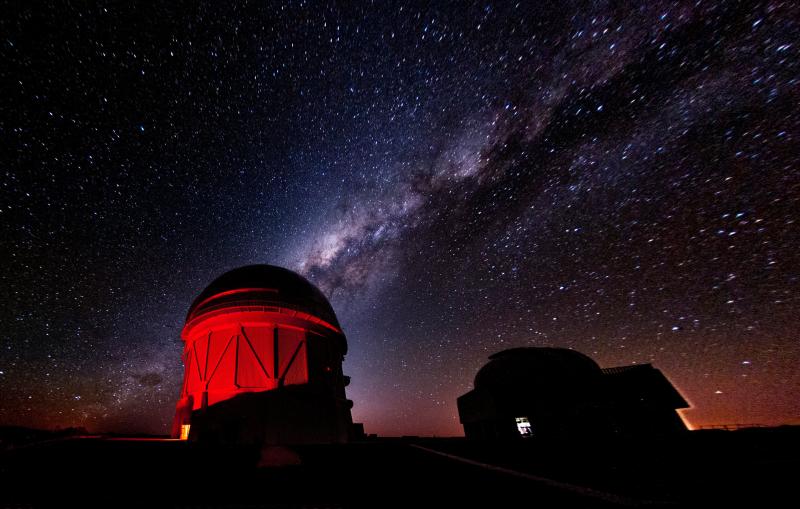
    NSF-DOE Vera C. Rubin Observatory LSST

    SLAC & Stanford build the world’s largest digital camera for the Legacy Survey of Space and Time (LSST).

    A drone photo of Rubin Observatory while taking pictures during the First Look observing campaign
    • Work with Us

      Find a career, partner with us or apply to use our tools and facilities.

    • PARTNER WITH US
      • For industry partners
      • Research partnerships & tech transfer
      • Technology Innovation
    • CAREERS AT SLAC
      • Job openings
      • Internships
      • Life at SLAC
    • USE OUR FACILITIES

      Apply to become a user of our scientific research facilities and instruments.

    • COMING TO SLAC
    • BECOME A SUPPLIER

    Careers at SLAC

    Join our united workforce.

    SLAC staff in main quad
    • News & Events

      Get the latest news about the lab, our science and discoveries. Explore SLAC events and learn how to participate.

    • NEWS CENTER
      • News archive
      • Media resources
      • Images & videos
    • SLAC EVENTS
      • Public lectures
      • Scientific seminars
      • Community events
    • SYMMETRY MAGAZINE

      This joint publication of SLAC and Fermilab is your view into the world of particle physics.

    • EDUCATIONAL PROGRAMS
      • Educational tours
      • Resources for students & educators
    • Connect With Us
      • Facebook
      • Flickr
      • Instagram
      • LinkedIn
      • Twitter
      • YouTube
    Upcoming public lecture

    Reinventing the way we break down plastic waste

    Thursday, March 26, 2026
    7:00–8:00 p.m. PDT

    Public Lecture: Ozge Bozkurt
Filter search by
Staff portalStanford directoryComing to SLACResources for…
  1. Home
  2. …
Filter by research area
  • X-ray and ultrafast science (179)
  • Physics of the universe (127)
  • Energy sciences (43)
  • Science of life (28)
  • New technologies (22)
  • Advanced accelerators (10)
Filter by Type
  • (-) News (1774)
  • Image (387)
  • Video (227)
  • Event (157)
  • Page (67)
  • Person (66)
  • resource (64)
  • News Collection (4)
Sort by
1774 results
Display Grid Display List
Clear all
Feature

X-ray Laser Pulses in Two Colors

SLAC researchers have demonstrated for the first time how to produce pairs of X-ray laser pulses in slightly different wavelengths, or colors, with finely...

March 26, 2013  ·  4 min read
""
Feature

SLAC Public Lecture: Particle Accelerator on a Chip

Tuesday evening, May 24, 2011, Christopher McGuinness of SLAC's Accelerator Research Division will present a free public lecture, "Particle Accelerator on a Chip."

May 24, 2011  ·  1 min read
Stillframe image for public lecture
Feature

First glimpse of polarons forming in a promising next-gen energy material

These fleeting disruptions, seen for the first time in lead hybrid perovskites, may help explain why these materials are exceptionally good at turning sunlight...

January 4, 2021  ·  5 min read
An illustration shows polarons as bubbles of distortion in a perovskite lattice
Feature

Scientists get the most realistic view yet of a coronavirus spike’s protein structure

The study, done on a mild-mannered relative of the virus that causes COVID-19, paves the way for seeing more clearly how spike proteins initiate...

December 18, 2020  ·  4 min read
Illustration of a coronavirus spike
Feature

Physicists solve chicken-and-egg question at the heart of photomagnetism

The results, which show that ultrafast atomic motions are the first step in forming a magnetic state, could lead to faster and more efficient...

December 17, 2020  ·  3 min read
Charge transfer
Feature
VIA Stanford News

Stanford single-dose nanoparticle vaccine for COVID-19

Researchers at Stanford are working to develop a single-dose vaccine for SARS-CoV-2 that could potentially be stored at room temperature.

January 5, 2021
The ferritin nanoparticle, shown with red center and six blue spikes.
Feature

Study shows tweaking one layer of atoms on a catalyst’s surface can make it work better

The surprising results offer a way to boost the activity and stability of catalysts for making hydrogen fuel from water.

January 11, 2021  ·  5 min read
Illustration showing a book with layers of atoms on its pages
Feature

Sulfur plays a role in the ocean’s carbon cycle, new study finds

The results suggest a possible feedback that could help trap carbon in the ocean’s low-oxygen zones, but the impact on climate change remains unclear.

January 12, 2021  ·  4 min read
Scientists watch from a ship deck as a sample is hauled in from the ocean.
Feature

Yi Cui will receive E.O. Lawrence Award

A pioneer in clean energy technology at Stanford and SLAC, he is one of eight scientists and engineers honored by the U.S. Department of...

January 13, 2021  ·  3 min read
Photo of Stanford and SLAC Professor Yi Cui
Feature

A day in the life of a light engineer

Knowledge of physics and a love of challenges fuel May Ling Ng’s quest for nanometer perfection in the smooth surfaces of mirrors used at...

January 19, 2021  ·  5 min read
A woman stands in a long hallway with scientific equipment
Feature

Squeezing a rock-star material could make it stable enough for solar cells

A promising lead halide perovskite is great at converting sunlight to electricity, but it breaks down at room temperature. Now scientists have discovered how...

January 21, 2021  ·  4 min read
Lead halide material being squeezed in a diamond anvil cell.
Feature

A new hands-off probe uses light to explore the subtleties of electron behavior in a topological insulator

Just as pressing a guitar string produces a higher pitch, sending laser light through a material can shift it to higher energies and higher...

February 2, 2021  ·  5 min read
High harmonic generation in a topological insulator.
  • Go to previous page
  • Page 1
  • …
  • Page 77
  • Page 78
  • Page 79
  • Page 80
  • Currently on page 81
  • Page 82
  • Page 83
  • Page 84
  • Page 85
  • …
  • Page 148
  • Go to next page

SLAC National Accelerator Laboratory 
2575 Sand Hill Road  
Menlo Park, CA 94025-7015  
650.926.3300

  • Coming to SLAC
  • Connect with us
  • Contact us
  • Facebook
  • Flickr
  • Instagram
  • LinkedIn
  • Twitter
  • YouTube

Sign up for our email

Monthly newsletter for cutting-edge science, SLAC milestones and events.

Sign up

Bold People
Visionary Science
Real Impact

We explore how the universe works at the biggest, smallest and fastest scales and invent powerful tools used by scientists around the globe.

  • About
    • Our story
    • Our people
    • Lab overview
    • Visit SLAC
    • Resources
    • Connect with us
  • Research
    • X-ray & ultrafast science
    • Advanced accelerators
    • New technologies
    • Physics of the universe
    • Science of life
    • Energy sciences
    • SLAC science explained
  • Facilities & centers
    • Scientific facilities
    • Joint institutes & centers
  • Work with us
    • Partner with us
    • Become a supplier
    • Use our facilities
    • Careers at SLAC
  • News & events
    • News center
    • Symmetry Magazine
    • Media resources
    • Events
    • Educational programs
    • Connect with us
  • Staff portal
  • Privacy policy
  • Accessibility
  • Vulnerability disclosure
  • A–Z index
  • Website feedback
Home
  • SLAC home
  • Maps & directions
  • Emergency info
  • Careers

© 2026 SLAC National Accelerator Laboratory is operated by Stanford University for the U.S. Department of Energy Office of Science.

Stanford University U.S. Department of Energy
Top Top
Back to top Back to top