SLAC National Accelerator Laboratory
    • About

      Learn about our science, people, facilities and partners. Discover our history and vision for the future.

    • OUR STORY
      • Mission, vision, values
      • History
    • LAB OVERVIEW
      • SLAC at a glance
      • Lab organization
      • Our partnerships
    • OUR PEOPLE
      • Leadership
      • Meet our teams
      • Faculty
    • VISIT SLAC
      • Public tours
      • Contact us
    • Resources
      • Images, videos & more
      • Brochures & fact sheets
    • Connect With Us
      • Facebook
      • Flickr
      • Instagram
      • LinkedIn
      • Twitter
      • YouTube
    video

    Who we are

    We explore radically new ideas with an entrepreneurial mindset.

    Science and User Support Building to the left and Arrillaga Science Center building to the right from above the Main Quad at SLAC's campus.
    • Research

      Get an overview of research at SLAC: X-ray and ultrafast science, particle and astrophysics, cosmology, particle accelerators, biology, energy and technology.

    • X-ray and Ultrafast science icon X-ray & ultrafast science

      Revealing nature’s fastest processes with X-rays, lasers and electrons

    • Physics of the universe science icon Physics of the universe

      Studying the particles and forces that knit the cosmos together

    • Advanced Accelerators science icon Advanced accelerators

      Building smaller, faster, more powerful accelerators for all

    • Science of life science icon Science of life

      Understanding the machinery of life at its most basic level

    • New technologies science icon New technologies

      Inventing new tools for science and society

    • Energy sciences science icon Energy sciences

      Finding clean, sustainable solutions for the world’s energy challenges

    Spotlight

    SLAC science explained

    Cut through the jargon while exploring our research.

    SAGE campers have fun experimenting with a Van de Graff generator
    • Facilities & Centers

      Learn more about the places where science happens at SLAC: our major facilities, institutes and centers.

    • SCIENTIFIC FACILITIES
      • LCLS website

        Linac Coherent Light Source

      • SSRL website

        Stanford Synchrotron Radiation Lightsource

      • FACET-II website

        Facility for Advanced Accelerator Experimental Tests

      • CryoEM website

        Cryogenic Electron Microscopy

    • JOINT INSTITUTES & CENTERS
      • SIMES website

        Stanford Institute for Materials & Energy Science

      • KIPAC website

        Kavli Institute for Particle Astrophysics & Cosmology

      • PULSE website

        Stanford PULSE Institute

      • SUNCAT website

        Center for Interface Science & Catalysis

      • SLAC-Stanford Battery Center

    NSF-DOE Vera C. Rubin Observatory LSST

    SLAC & Stanford build the world’s largest digital camera for the Legacy Survey of Space and Time (LSST).

    A drone photo of Rubin Observatory while taking pictures during the First Look observing campaign
    • Work with Us

      Find a career, partner with us or apply to use our tools and facilities.

    • PARTNER WITH US
      • For industry partners
      • Research partnerships & tech transfer
      • Technology Innovation
    • CAREERS AT SLAC
      • Job openings
      • Internships
      • Life at SLAC
    • USE OUR FACILITIES

      Apply to become a user of our scientific research facilities and instruments.

    • COMING TO SLAC
    • BECOME A SUPPLIER

    Careers at SLAC

    Join our united workforce.

    SLAC staff in main quad
    • News & Events

      Get the latest news about the lab, our science and discoveries. Explore SLAC events and learn how to participate.

    • NEWS CENTER
      • News archive
      • Media resources
      • Images & videos
    • SLAC EVENTS
      • Public lectures
      • Scientific seminars
      • Community events
    • SYMMETRY MAGAZINE

      This joint publication of SLAC and Fermilab is your view into the world of particle physics.

    • EDUCATIONAL PROGRAMS
      • Educational tours
      • Resources for students & educators
    • Connect With Us
      • Facebook
      • Flickr
      • Instagram
      • LinkedIn
      • Twitter
      • YouTube
    Upcoming public lecture

    Reinventing the way we break down plastic waste

    Thursday, March 26, 2026
    7:00–8:00 p.m. PDT

    Public Lecture: Ozge Bozkurt
Filter search by
Staff portalStanford directoryComing to SLACResources for…
  1. Home
  2. …
Filter by research area
  • X-ray and ultrafast science (179)
  • Physics of the universe (127)
  • Energy sciences (43)
  • Science of life (28)
  • New technologies (22)
  • Advanced accelerators (10)
Filter by Type
  • (-) News (1774)
  • Image (387)
  • Video (227)
  • Event (157)
  • Page (67)
  • Person (66)
  • resource (64)
  • News Collection (4)
Sort by
1774 results
Display Grid Display List
Clear all
Feature

SSRL Researchers Show How Iron Activates Oxygen in Living Things

Oxygen performs many key functions in the body’s internal chemistry, but the life-sustaining molecule can’t do its job alone.

November 17, 2011  ·  2 min read
Ball-and-stick model of an X-ray crystal structure
News Release

BaBar Data Hint at Cracks in the Standard Model

Menlo Park, Calif. — Recently analyzed data from the BaBar experiment may suggest possible flaws in the Standard Model of particle physics, the reigning...

June 18, 2012  ·  2 min read
Concept Art: B to D-Star-Tau-Nu
Feature

Shedding Light

In 1971, physicist Burton Richter of Stanford Linear Accelerator Center was building a new type of particle collider called a storage ring.

June 2, 2011  ·  6 min read
soft X-ray fluorescence at Berkeley Lab’s Advanced Light Source
Feature

Stanford-SLAC Team Uses X-ray Imaging to Observe Running Batteries in Real Time

Most electric cars, from the Tesla Model S to the Nissan Leaf, run on rechargeable lithium-ion batteries – a pricey technology that accounts for...

July 18, 2012  ·  5 min read
Mike Toney and Johanna Nelson at SSRL
News Release

Fermi's Large Area Telescope Sees Surprising Flares in Crab Nebula

The Crab Nebula, one of our best-known and most stable neighbors in the winter sky, is shocking scientists with its propensity for fireworks—gamma-ray flares...

January 6, 2011  ·  3 min read
The Crab Nebula
Feature

Lepton-Photon Conference Wraps Up in San Francisco

Last Saturday, about 230 high-energy physicists of various stripes wrapped up a week of talks on all aspects of the field at the XXVI...

July 3, 2013  ·  3 min read
Some of the Lepton-Photon attendees gather for a group photo. (Matt Beardsley.)
News Release

BaBar Experiment Confirms Time Asymmetry

Menlo Park, Calif. — Time marches relentlessly forward for you and me; watch a movie in reverse, and you’ll quickly see something is amiss.

November 19, 2012  ·  4 min read
Illustration - Big letter "B"s change color to represent transforming B mesons
Feature

SLAC Public Tour Guide Closing in on Ph.D. and America's Elite Runners

Ph.D. candidate Keith Bechtol, who’s been researching gamma-ray astronomy at SLAC and doing educational outreach as a public tour guide, is just as committed...

January 30, 2012  ·  3 min read
Keith Bechtol at Olympic Trials
Feature

User Spotlight: Studying Air, Artifacts, Meteorites and More at SSRL

Tom Cahill and his colleagues at the DELTA Group are frequent visitors to the Stanford Synchrotron Radiation Lightsource, where they use Beam Line 2-2...

August 23, 2012  ·  3 min read
Sample of a meteorite
Feature

X-ray Laser Research Ranks in Science Magazine's Top 10

Research at SLAC's powerful X-ray laser that could lead to the development of specialized drugs to better combat African sleeping sickness has been recognized...

December 21, 2012  ·  1 min read
Image - diffraction pattern of Trypanosoma brucei cathepsin B protein
Feature

SSRL Confirms Anti-Flu Proteins Work as Designed

Understanding why proteins interact with certain specific molecules and not with the myriad others in their environment is a major goal of molecular biology.

October 1, 2012  ·  2 min read
Conceptual art showing proteins and viruses
Feature

Harold Hwang Wins Top Korean Award

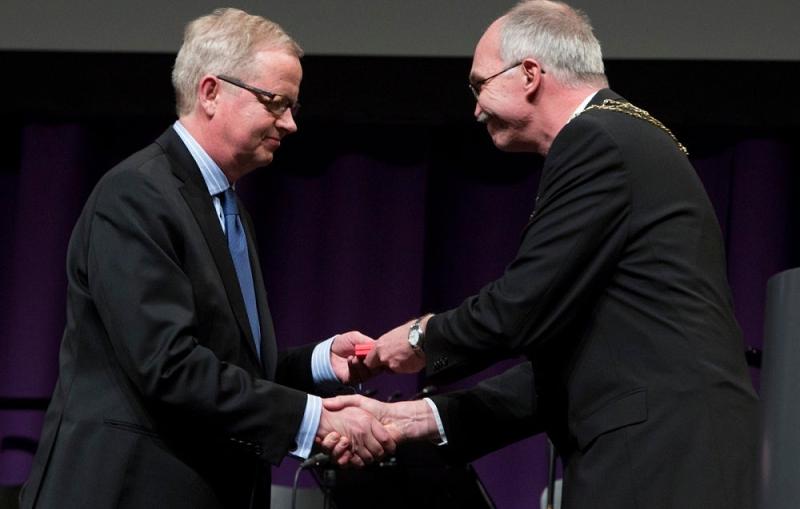
Harold Y. Hwang, professor of applied physics and photon science at Stanford and SLAC, has won the 2013 Ho-Am Award in Science, one of...

April 16, 2013  ·  1 min read
Photo - Harold Hwang
  • Go to previous page
  • Page 1
  • …
  • Page 72
  • Page 73
  • Page 74
  • Page 75
  • Currently on page 76
  • Page 77
  • Page 78
  • Page 79
  • Page 80
  • …
  • Page 148
  • Go to next page

SLAC National Accelerator Laboratory 
2575 Sand Hill Road  
Menlo Park, CA 94025-7015  
650.926.3300

  • Coming to SLAC
  • Connect with us
  • Contact us
  • Facebook
  • Flickr
  • Instagram
  • LinkedIn
  • Twitter
  • YouTube

Sign up for our email

Monthly newsletter for cutting-edge science, SLAC milestones and events.

Sign up

Bold People
Visionary Science
Real Impact

We explore how the universe works at the biggest, smallest and fastest scales and invent powerful tools used by scientists around the globe.

  • About
    • Our story
    • Our people
    • Lab overview
    • Visit SLAC
    • Resources
    • Connect with us
  • Research
    • X-ray & ultrafast science
    • Advanced accelerators
    • New technologies
    • Physics of the universe
    • Science of life
    • Energy sciences
    • SLAC science explained
  • Facilities & centers
    • Scientific facilities
    • Joint institutes & centers
  • Work with us
    • Partner with us
    • Become a supplier
    • Use our facilities
    • Careers at SLAC
  • News & events
    • News center
    • Symmetry Magazine
    • Media resources
    • Events
    • Educational programs
    • Connect with us
  • Staff portal
  • Privacy policy
  • Accessibility
  • Vulnerability disclosure
  • A–Z index
  • Website feedback
Home
  • SLAC home
  • Maps & directions
  • Emergency info
  • Careers

© 2026 SLAC National Accelerator Laboratory is operated by Stanford University for the U.S. Department of Energy Office of Science.

Stanford University U.S. Department of Energy
Top Top
Back to top Back to top