SLAC National Accelerator Laboratory
    • About

      Learn about our science, people, facilities and partners. Discover our history and vision for the future.

    • OUR STORY
      • Mission, vision, values
      • History
    • LAB OVERVIEW
      • SLAC at a glance
      • Lab organization
      • Our partnerships
    • OUR PEOPLE
      • Leadership
      • Meet our teams
      • Faculty
    • VISIT SLAC
      • Public tours
      • Contact us
    • Resources
      • Images, videos & more
      • Brochures & fact sheets
    • Connect With Us
      • Facebook
      • Flickr
      • Instagram
      • LinkedIn
      • Twitter
      • YouTube
    video

    Who we are

    We explore radically new ideas with an entrepreneurial mindset.

    Science and User Support Building to the left and Arrillaga Science Center building to the right from above the Main Quad at SLAC's campus.
    • Research

      Get an overview of research at SLAC: X-ray and ultrafast science, particle and astrophysics, cosmology, particle accelerators, biology, energy and technology.

    • X-ray and Ultrafast science icon X-ray & ultrafast science

      Revealing nature’s fastest processes with X-rays, lasers and electrons

    • Physics of the universe science icon Physics of the universe

      Studying the particles and forces that knit the cosmos together

    • Advanced Accelerators science icon Advanced accelerators

      Building smaller, faster, more powerful accelerators for all

    • Science of life science icon Science of life

      Understanding the machinery of life at its most basic level

    • New technologies science icon New technologies

      Inventing new tools for science and society

    • Energy sciences science icon Energy sciences

      Finding clean, sustainable solutions for the world’s energy challenges

    Spotlight

    SLAC science explained

    Cut through the jargon while exploring our research.

    SAGE campers have fun experimenting with a Van de Graff generator
    • Facilities & Centers

      Learn more about the places where science happens at SLAC: our major facilities, institutes and centers.

    • SCIENTIFIC FACILITIES
      • LCLS website

        Linac Coherent Light Source

      • SSRL website

        Stanford Synchrotron Radiation Lightsource

      • FACET-II website

        Facility for Advanced Accelerator Experimental Tests

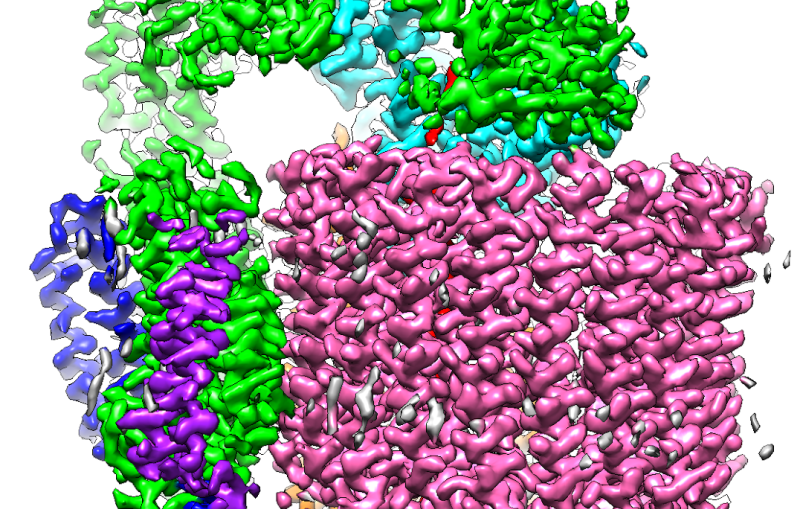
      • CryoEM website

        Cryogenic Electron Microscopy

    • JOINT INSTITUTES & CENTERS
      • SIMES website

        Stanford Institute for Materials & Energy Science

      • KIPAC website

        Kavli Institute for Particle Astrophysics & Cosmology

      • PULSE website

        Stanford PULSE Institute

      • SUNCAT website

        Center for Interface Science & Catalysis

      • SLAC-Stanford Battery Center

    NSF-DOE Vera C. Rubin Observatory LSST

    SLAC & Stanford build the world’s largest digital camera for the Legacy Survey of Space and Time (LSST).

    A drone photo of Rubin Observatory while taking pictures during the First Look observing campaign
    • Work with Us

      Find a career, partner with us or apply to use our tools and facilities.

    • PARTNER WITH US
      • For industry partners
      • Research partnerships & tech transfer
      • Technology Innovation
    • CAREERS AT SLAC
      • Job openings
      • Internships
      • Life at SLAC
    • USE OUR FACILITIES

      Apply to become a user of our scientific research facilities and instruments.

    • COMING TO SLAC
    • BECOME A SUPPLIER

    Careers at SLAC

    Join our united workforce.

    SLAC staff in main quad
    • News & Events

      Get the latest news about the lab, our science and discoveries. Explore SLAC events and learn how to participate.

    • NEWS CENTER
      • News archive
      • Media resources
      • Images & videos
    • SLAC EVENTS
      • Public lectures
      • Scientific seminars
      • Community events
    • SYMMETRY MAGAZINE

      This joint publication of SLAC and Fermilab is your view into the world of particle physics.

    • EDUCATIONAL PROGRAMS
      • Educational tours
      • Resources for students & educators
    • Connect With Us
      • Facebook
      • Flickr
      • Instagram
      • LinkedIn
      • Twitter
      • YouTube
    Upcoming public lecture

    Reinventing the way we break down plastic waste

    Thursday, March 26, 2026
    7:00–8:00 p.m. PDT

    Public Lecture: Ozge Bozkurt
Filter search by
Staff portalStanford directoryComing to SLACResources for…
  1. Home
  2. …
Filter by research area
  • X-ray and ultrafast science (183)
  • Physics of the universe (128)
  • Energy sciences (47)
  • Science of life (29)
  • New technologies (24)
  • Advanced accelerators (10)
Filter by Type
  • (-) News (1773)
  • Image (387)
  • Video (227)
  • Event (157)
  • Page (67)
  • (-) Person (66)
  • resource (64)
  • News Collection (4)
Sort by
1839 results
Display Grid Display List
Clear all
Feature

Secretary of Energy Rick Perry Visits SLAC, Tours Site of X-ray Laser Upgrade

The DOE’s top official met with SLAC staff and toured the Linac Coherent Light Source X-ray laser, where a superconducting upgrade is underway.

March 28, 2018  ·  3 min read
Secretary of Energy Rick Perry at SLAC's LCLS undulator hall
Feature

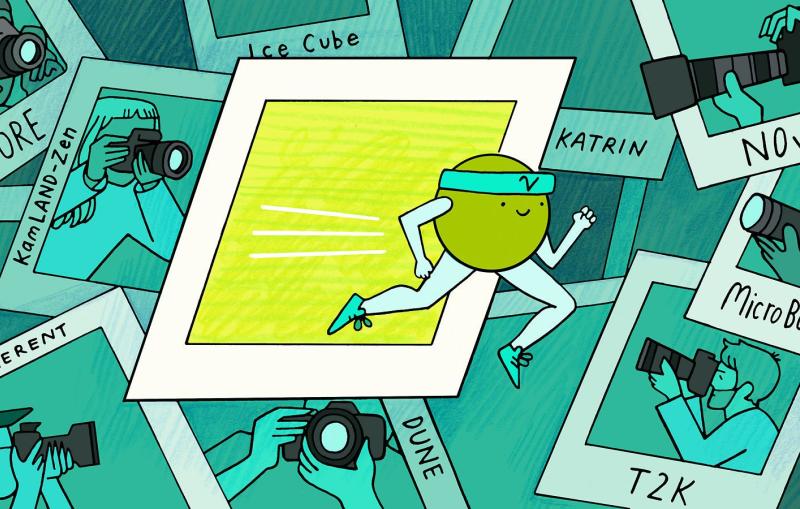
Hirohisa Tanaka Joins SLAC to Push Limits of Neutrino Physics

The accomplished particle physicist will prepare the lab for its role in DUNE, a next-generation experiment designed to demystify neutrinos and their fundamental role...

April 3, 2018  ·  5 min read
Hirohisa Tanaka
Feature

Tick, Tock on the ‘Attoclock’: Tracking X-Ray Laser Pulses at Record Speeds

When it comes to making molecular movies, producing the world’s fastest X-ray pulses is only half the battle. A new technique reveals details about...

April 4, 2018  ·  5 min read
Illustration of the LCSL "attoclock"
Feature

SLAC Produces First Electron Beam with Superconducting Electron Gun

The new technology could allow next-generation instruments to explore the atomic world in ever more detail.

April 9, 2018  ·  5 min read
Beam from SRF gun
News Release

Scientists Use Machine Learning to Speed Discovery of Metallic Glass

SLAC and its collaborators are transforming the way new materials are discovered. In a new report, they combine artificial intelligence and accelerated experiments to...

April 13, 2018  ·  6 min read
SLAC postdoctoral scholar Fang Ren at an SSRL beamline
Feature

The World’s Largest Astronomical Movie

The Large Synoptic Survey Telescope will track billions of objects for 10 years, creating unprecedented opportunities for studies of cosmic mysteries.

April 17, 2018
LSST
Feature

A SLAC Legend Gives the Lab His Lifetime Collection of Precious Foils

The foils, each made from a single chemical element, are used to calibrate X-ray equipment at SLAC’s SSRL synchrotron, and were donated by long-time...

April 23, 2018  ·  3 min read
Photo - thin metal foils
Feature

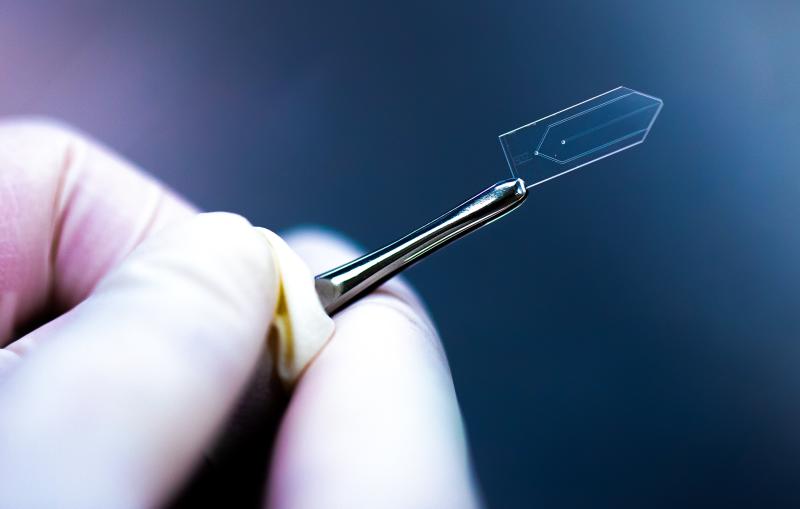
X-Ray Scientists Create Tiny, Super-Thin Sheets of Flowing Water that Shimmer Like Soap Bubbles

The liquid sheets – less than 100 water molecules thick – will let researchers probe chemical, physical and biological processes, and even the nature...

April 26, 2018  ·  6 min read
A glass chip used as a nozzle to create thin sheets of flowing liquid.
Feature

Scientists Find a New Way to Make Novel Materials by ‘Un-Squeezing’

Like turning a snowball back into fluffy snow, a new technique turns high-density materials into a lower-density one by applying the chemical equivalent of...

May 1, 2018  ·  4 min read
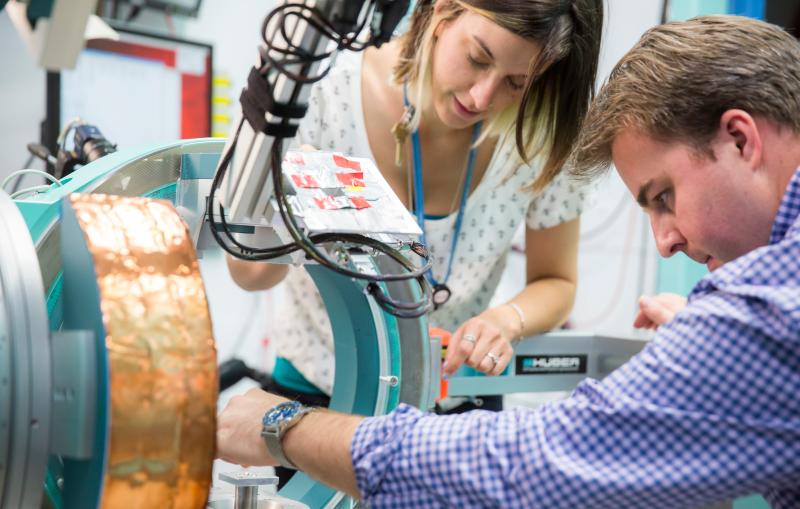
SLAC scientists working at SSRL experimental station
News Release

SLAC and Stanford Open One of World's Most Advanced Facilities for Cryo-EM

The new facility provides revolutionary tools for exploring tiny biological machines, from viral particles to the interior of the cell.

April 30, 2018
SLAC-Stanford Cryo-EM Facility
Feature
VIA Symmetry Magazine

SLAC’s Archivist Closes a Chapter

Approaching retirement, Jean Deken describes what it’s like to preserve decades of collective scientific memory at a national lab.

May 1, 2018
Feature
VIA Stanford News

Stanford, SLAC Researchers Have Developed a Water-Based Battery to Store Solar and Wind Energy

SIMES scientists have developed a manganese-hydrogen battery that could fill a missing piece in the nation’s energy puzzle by storing wind and solar energy...

May 2, 2018
  • Go to previous page
  • Page 1
  • …
  • Page 38
  • Page 39
  • Page 40
  • Page 41
  • Currently on page 42
  • Page 43
  • Page 44
  • Page 45
  • Page 46
  • …
  • Page 154
  • Go to next page

SLAC National Accelerator Laboratory 
2575 Sand Hill Road  
Menlo Park, CA 94025-7015  
650.926.3300

  • Coming to SLAC
  • Connect with us
  • Contact us
  • Facebook
  • Flickr
  • Instagram
  • LinkedIn
  • Twitter
  • YouTube

Sign up for our email

Monthly newsletter for cutting-edge science, SLAC milestones and events.

Sign up

Bold People
Visionary Science
Real Impact

We explore how the universe works at the biggest, smallest and fastest scales and invent powerful tools used by scientists around the globe.

  • About
    • Our story
    • Our people
    • Lab overview
    • Visit SLAC
    • Resources
    • Connect with us
  • Research
    • X-ray & ultrafast science
    • Advanced accelerators
    • New technologies
    • Physics of the universe
    • Science of life
    • Energy sciences
    • SLAC science explained
  • Facilities & centers
    • Scientific facilities
    • Joint institutes & centers
  • Work with us
    • Partner with us
    • Become a supplier
    • Use our facilities
    • Careers at SLAC
  • News & events
    • News center
    • Symmetry Magazine
    • Media resources
    • Events
    • Educational programs
    • Connect with us
  • Staff portal
  • Privacy policy
  • Accessibility
  • Vulnerability disclosure
  • A–Z index
  • Website feedback
Home
  • SLAC home
  • Maps & directions
  • Emergency info
  • Careers

© 2026 SLAC National Accelerator Laboratory is operated by Stanford University for the U.S. Department of Energy Office of Science.

Stanford University U.S. Department of Energy
Top Top
Back to top Back to top