SLAC National Accelerator Laboratory
    • About

      Learn about our science, people, facilities and partners. Discover our history and vision for the future.

    • OUR STORY
      • Mission, vision, values
      • History
    • LAB OVERVIEW
      • SLAC at a glance
      • Lab organization
      • Our partnerships
    • OUR PEOPLE
      • Leadership
      • Meet our teams
      • Faculty
    • VISIT SLAC
      • Public tours
      • Contact us
    • Resources
      • Images, videos & more
      • Brochures & fact sheets
    • Connect With Us
      • Facebook
      • Flickr
      • Instagram
      • LinkedIn
      • Twitter
      • YouTube
    video

    Who we are

    We explore radically new ideas with an entrepreneurial mindset.

    Science and User Support Building to the left and Arrillaga Science Center building to the right from above the Main Quad at SLAC's campus.
    • Research

      Get an overview of research at SLAC: X-ray and ultrafast science, particle and astrophysics, cosmology, particle accelerators, biology, energy and technology.

    • X-ray and Ultrafast science icon X-ray & ultrafast science

      Revealing nature’s fastest processes with X-rays, lasers and electrons

    • Physics of the universe science icon Physics of the universe

      Studying the particles and forces that knit the cosmos together

    • Advanced Accelerators science icon Advanced accelerators

      Building smaller, faster, more powerful accelerators for all

    • Science of life science icon Science of life

      Understanding the machinery of life at its most basic level

    • New technologies science icon New technologies

      Inventing new tools for science and society

    • Energy sciences science icon Energy sciences

      Finding clean, sustainable solutions for the world’s energy challenges

    Spotlight

    SLAC science explained

    Cut through the jargon while exploring our research.

    SAGE campers have fun experimenting with a Van de Graff generator
    • Facilities & Centers

      Learn more about the places where science happens at SLAC: our major facilities, institutes and centers.

    • SCIENTIFIC FACILITIES
      • LCLS website

        Linac Coherent Light Source

      • SSRL website

        Stanford Synchrotron Radiation Lightsource

      • FACET-II website

        Facility for Advanced Accelerator Experimental Tests

      • CryoEM website

        Cryogenic Electron Microscopy

    • JOINT INSTITUTES & CENTERS
      • SIMES website

        Stanford Institute for Materials & Energy Science

      • KIPAC website

        Kavli Institute for Particle Astrophysics & Cosmology

      • PULSE website

        Stanford PULSE Institute

      • SUNCAT website

        Center for Interface Science & Catalysis

      • SLAC-Stanford Battery Center

    NSF-DOE Vera C. Rubin Observatory LSST

    SLAC & Stanford build the world’s largest digital camera for the Legacy Survey of Space and Time (LSST).

    A drone photo of Rubin Observatory while taking pictures during the First Look observing campaign
    • Work with Us

      Find a career, partner with us or apply to use our tools and facilities.

    • PARTNER WITH US
      • For industry partners
      • Research partnerships & tech transfer
      • Technology Innovation
    • CAREERS AT SLAC
      • Job openings
      • Internships
      • Life at SLAC
    • USE OUR FACILITIES

      Apply to become a user of our scientific research facilities and instruments.

    • COMING TO SLAC
    • BECOME A SUPPLIER

    Careers at SLAC

    Join our united workforce.

    SLAC staff in main quad
    • News & Events

      Get the latest news about the lab, our science and discoveries. Explore SLAC events and learn how to participate.

    • NEWS CENTER
      • News archive
      • Media resources
      • Images & videos
    • SLAC EVENTS
      • Public lectures
      • Scientific seminars
      • Community events
    • SYMMETRY MAGAZINE

      This joint publication of SLAC and Fermilab is your view into the world of particle physics.

    • EDUCATIONAL PROGRAMS
      • Educational tours
      • Resources for students & educators
    • Connect With Us
      • Facebook
      • Flickr
      • Instagram
      • LinkedIn
      • Twitter
      • YouTube
    Upcoming public lecture

    Reinventing the way we break down plastic waste

    Thursday, March 26, 2026
    7:00–8:00 p.m. PDT

    Public Lecture: Ozge Bozkurt
Filter search by
Staff portalStanford directoryComing to SLACResources for…
  1. Home
  2. …
Filter by research area
  • X-ray and ultrafast science (183)
  • Physics of the universe (128)
  • Energy sciences (47)
  • Science of life (29)
  • New technologies (24)
  • Advanced accelerators (10)
Filter by Type
  • (-) News (1773)
  • Image (387)
  • Video (227)
  • Event (157)
  • Page (67)
  • (-) Person (66)
  • resource (64)
  • News Collection (4)
Sort by
1839 results
Display Grid Display List
Clear all
Feature

Striving toward a new era of the LHC

SLAC experimentalists and theorists collaborate to develop critical detector components, data analysis tools, and theoretical models for the HL-LHC upgrade, which will investigate the...

February 22, 2024  ·  6 min read
Eight pipes arrayed in a circle lead to a central experimental apparatus.
Feature

Researchers develop roadmap to defossilize economy by reusing carbon atoms

SLAC is taking part in a multi-institutional effort to help reach net-zero carbon emissions goals in difficult-to-electrify industries.

May 1, 2024  ·  3 min read
This is a graphic representation of the roadmap to defossilize carbon
Feature

Repeat winners reign at the Regional Science Bowl

Lynbrook High School and Joaquin Miller Middle School will continue on to nationals from the regional event hosted at SLAC.   

March 14, 2024  ·  4 min read
High school students hold up a blue National Science Bowl banner.

Moises Smart

Chief Engineer
Headshot of Moises Smart
Feature
VIA Stanford

A newly published protein structure helps explain how some anti-cancer immunotherapy treatments work

Scientists at Stanford and NYU have published and investigated a new structure of the protein LAG-3 which could enable the development of new cancer...

March 12, 2024
Three people in lab coats examine chemistry equipment.
Feature

New research on tungsten unlocks potential for improving fusion materials

Researchers have uncovered new insights about tungsten's ability to conduct heat, which could lead to materials advancements for fusion reactor and aerospace technologies.

March 13, 2024  ·  4 min read
tungsten
Feature

SLAC technology designed to detect dark matter could lead to a better understanding of galaxy evolution

Sensors designed and created at SLAC could help a proposed satellite mission map the X-ray emissions of galaxies with unprecedented precision.

March 20, 2024  ·  4 min read
a hexagonal, copper and gold-colored experimental apparatus.
Feature
VIA Symmetry Magazine

Symmetry: A trio of paths toward the discovery machine of the future

An advisory committee recommends the US work to advance three key areas of emerging accelerator technology.

March 19, 2024
Illustration of three physics-related tarot cards, labeled Proton-Proton, Muon and Plasma-Wakefield
News Brief

Scientists propose a new way to search for dark matter

In a new study, SLAC researchers suggest a small-scale solution could be the key to solving a large-scale mystery.

March 27, 2024  ·  3 min read
Black spheres travel across a grid of blue spheres.
News Brief

First results from DESI make the most precise measurement of our expanding universe

Researchers have used the Dark Energy Spectroscopic Instrument to make the largest 3D map of our universe and world-leading measurements of dark energy, the...

April 4, 2024  ·  3 min read
A fan-shaped map shows a lumpy web of galaxies
Feature

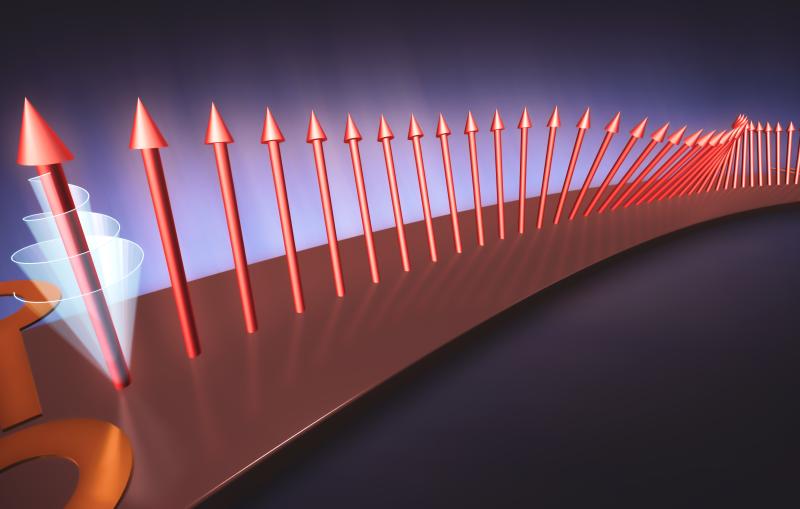
Researchers control quantum properties of 2D materials with tailored light

The team developed a groundbreaking method that harnesses the structure of light to twist and tweak the properties of quantum materials. 

April 15, 2024  ·  3 min read
quantum control
Feature

Rubin Observatory will reveal dark matter’s ghostly disruptions of stellar streams

Vera C. Rubin Observatory’s stunningly detailed images will illuminate distant stellar streams and their past encounters with dark matter.

April 15, 2024  ·  5 min read
An illustration of streams of stars flowing around a spiral galaxy.
  • Go to previous page
  • Page 1
  • …
  • Page 132
  • Page 133
  • Page 134
  • Page 135
  • Currently on page 136
  • Page 137
  • Page 138
  • Page 139
  • Page 140
  • …
  • Page 154
  • Go to next page

SLAC National Accelerator Laboratory 
2575 Sand Hill Road  
Menlo Park, CA 94025-7015  
650.926.3300

  • Coming to SLAC
  • Connect with us
  • Contact us
  • Facebook
  • Flickr
  • Instagram
  • LinkedIn
  • Twitter
  • YouTube

Sign up for our email

Monthly newsletter for cutting-edge science, SLAC milestones and events.

Sign up

Bold People
Visionary Science
Real Impact

We explore how the universe works at the biggest, smallest and fastest scales and invent powerful tools used by scientists around the globe.

  • About
    • Our story
    • Our people
    • Lab overview
    • Visit SLAC
    • Resources
    • Connect with us
  • Research
    • X-ray & ultrafast science
    • Advanced accelerators
    • New technologies
    • Physics of the universe
    • Science of life
    • Energy sciences
    • SLAC science explained
  • Facilities & centers
    • Scientific facilities
    • Joint institutes & centers
  • Work with us
    • Partner with us
    • Become a supplier
    • Use our facilities
    • Careers at SLAC
  • News & events
    • News center
    • Symmetry Magazine
    • Media resources
    • Events
    • Educational programs
    • Connect with us
  • Staff portal
  • Privacy policy
  • Accessibility
  • Vulnerability disclosure
  • A–Z index
  • Website feedback
Home
  • SLAC home
  • Maps & directions
  • Emergency info
  • Careers

© 2026 SLAC National Accelerator Laboratory is operated by Stanford University for the U.S. Department of Energy Office of Science.

Stanford University U.S. Department of Energy
Top Top
Back to top Back to top