Learn about our science, people, facilities and partners. Discover our history and vision for the future.
Who we are
We explore radically new ideas with an entrepreneurial mindset.
Get an overview of research at SLAC: X-ray and ultrafast science, particle and astrophysics, cosmology, particle accelerators, biology, energy and technology.
Revealing nature’s fastest processes with X-rays, lasers and electrons
Studying the particles and forces that knit the cosmos together
Building smaller, faster, more powerful accelerators for all
Understanding the machinery of life at its most basic level
Inventing new tools for science and society
Breaking new ground in securing abundant, affordable and reliable energy.
SLAC science explained
Cut through the jargon while exploring our research.
Learn more about the places where science happens at SLAC: our major facilities, institutes and centers.
Linac Coherent Light Source
Stanford Synchrotron Radiation Lightsource
Facility for Advanced Accelerator Experimental Tests
Cryogenic Electron Microscopy
Stanford Institute for Materials & Energy Science
Kavli Institute for Particle Astrophysics & Cosmology
Stanford PULSE Institute
Center for Interface Science & Catalysis
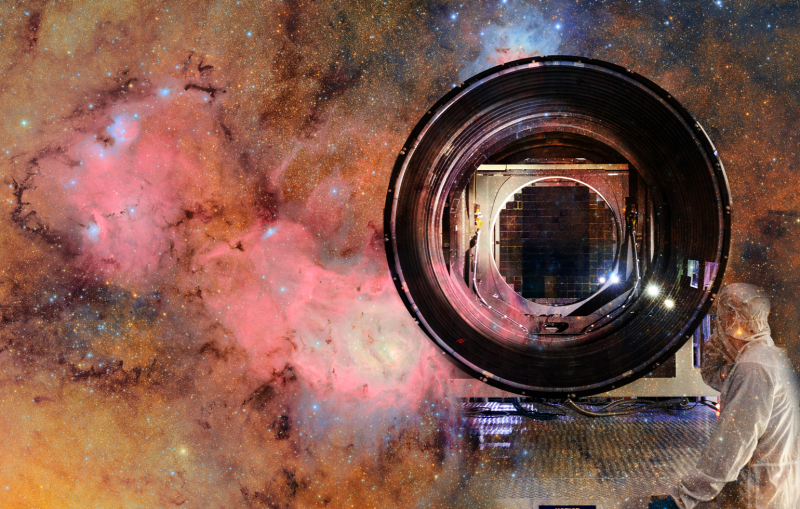
NSF-DOE Vera C. Rubin Observatory LSST
SLAC & Stanford build the world’s largest digital camera for the Legacy Survey of Space and Time (LSST).
Find a career, partner with us or apply to use our tools and facilities.
Apply to become a user of our scientific research facilities and instruments.
Careers at SLAC
Join our united workforce.
Get the latest news about the lab, our science and discoveries. Explore SLAC events and learn how to participate.
This joint publication of SLAC and Fermilab is your view into the world of particle physics.
Blazing the path to a fusion future
Thursday, October 8, 7:00 p.m.
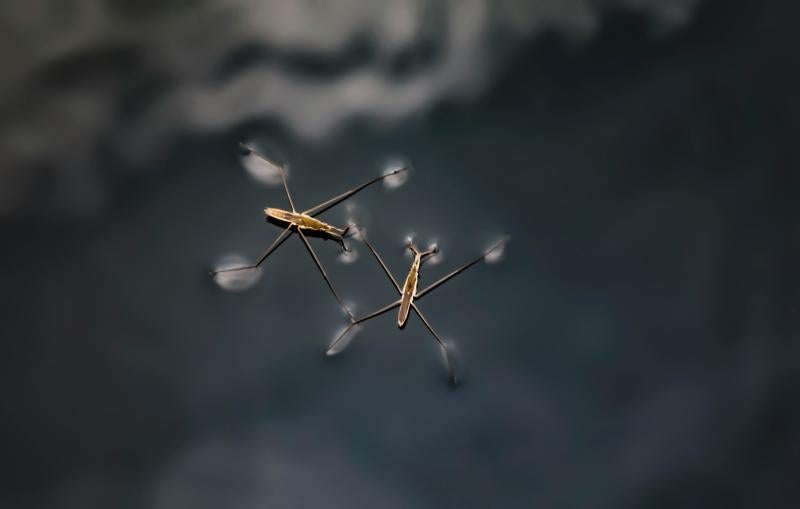
Water is all around us, yet its surface layer is surprisingly hard to study. Experiments at SLAC’s X-ray laser are bringing it into focus.
Surfing a plasma wave, electrons get an energy and brightness boost.
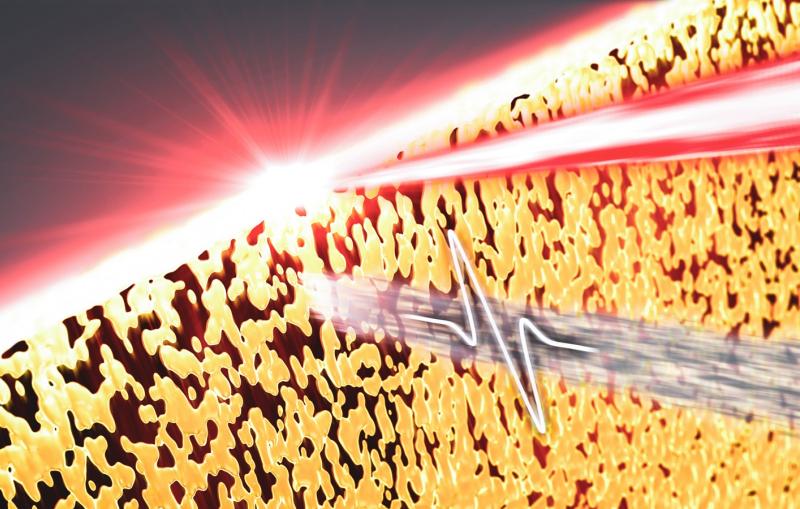
With a new method that could be extended to study Earth’s core and nuclear fusion, they identify and explain jumps in the electrical conductivity...
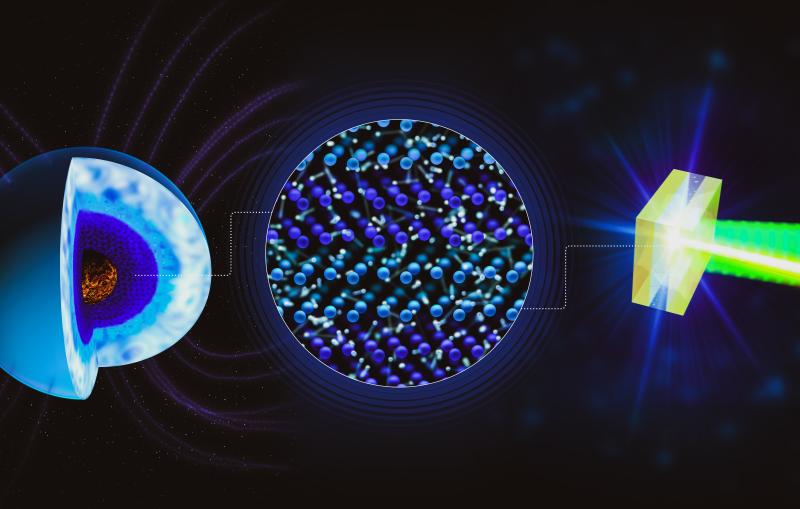
Researchers find evidence of coexisting atomic stacking patterns in superionic water.
Imaging at SLAC's synchrotron demonstrates the twisted structures’ exotic properties that could benefit the development of superconductors and quantum materials.
The latest results combined weak lensing and galaxy clustering and incorporated four dark energy probes from a single experiment for the first time.
The LSST Camera explores cosmic mysteries as part of the Rubin Observatory’s Legacy Survey of Space and Time.
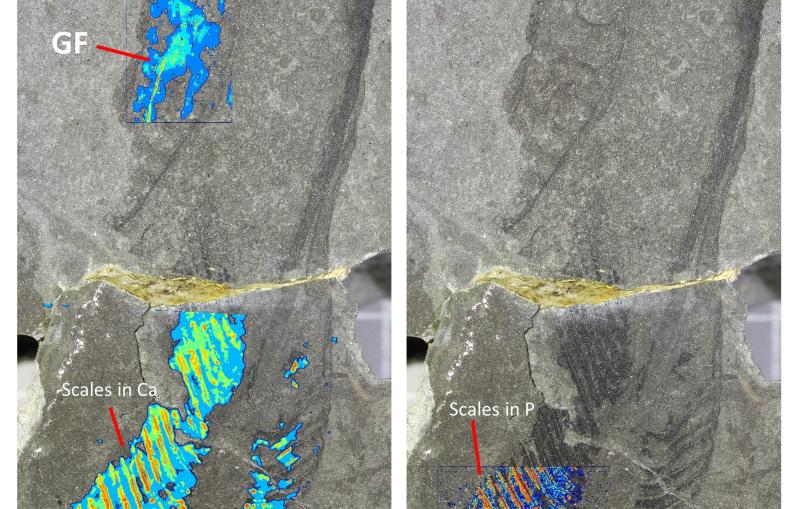
Using SSRL, scientists uncovered fossil evidence that the first groups of vertebrates possessed surprisingly advanced eyes.
SLAC experts discuss how microelectronics impacts our lives and where the future lies in this Q&A.
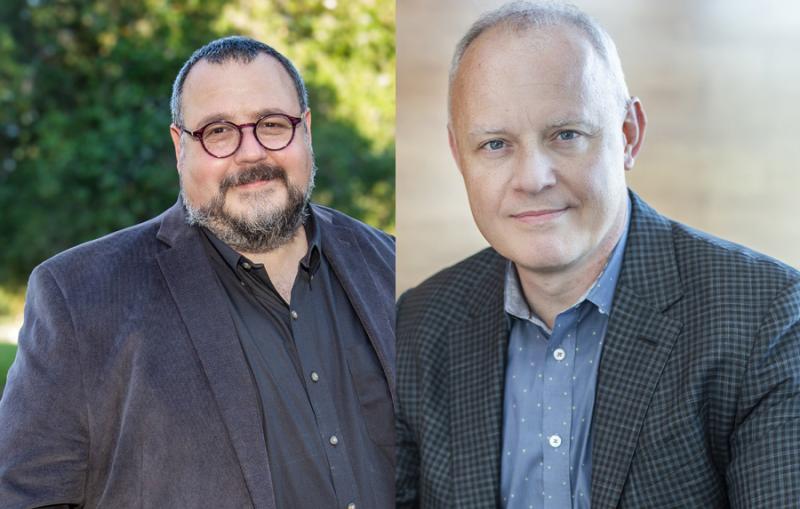
Derek Mendez and Xueli “Sherry” Zheng aim to accelerate drug discovery and improve energy storage.