SLAC National Accelerator Laboratory
    • About

      Learn about our science, people, facilities and partners. Discover our history and vision for the future.

    • OUR STORY
      • Mission, vision, values
      • History
    • LAB OVERVIEW
      • SLAC at a glance
      • Lab organization
      • Our partnerships
    • OUR PEOPLE
      • Leadership
      • Meet our teams
      • Faculty
    • VISIT SLAC
      • Public tours
      • Contact us
    • Resources
      • Images, videos & more
      • Brochures & fact sheets
    • Connect With Us
      • Facebook
      • Flickr
      • Instagram
      • LinkedIn
      • Twitter
      • YouTube
    video

    Who we are

    We explore radically new ideas with an entrepreneurial mindset.

    Science and User Support Building to the left and Arrillaga Science Center building to the right from above the Main Quad at SLAC's campus.
    • Research

      Get an overview of research at SLAC: X-ray and ultrafast science, particle and astrophysics, cosmology, particle accelerators, biology, energy and technology.

    • X-ray and Ultrafast science icon X-ray & ultrafast science

      Revealing nature’s fastest processes with X-rays, lasers and electrons

    • Physics of the universe science icon Physics of the universe

      Studying the particles and forces that knit the cosmos together

    • Advanced Accelerators science icon Advanced accelerators

      Building smaller, faster, more powerful accelerators for all

    • Science of life science icon Science of life

      Understanding the machinery of life at its most basic level

    • New technologies science icon New technologies

      Inventing new tools for science and society

    • Energy sciences science icon Energy sciences

      Finding clean, sustainable solutions for the world’s energy challenges

    Spotlight

    SLAC science explained

    Cut through the jargon while exploring our research.

    SAGE campers have fun experimenting with a Van de Graff generator
    • Facilities & Centers

      Learn more about the places where science happens at SLAC: our major facilities, institutes and centers.

    • SCIENTIFIC FACILITIES
      • LCLS website

        Linac Coherent Light Source

      • SSRL website

        Stanford Synchrotron Radiation Lightsource

      • FACET-II website

        Facility for Advanced Accelerator Experimental Tests

      • CryoEM website

        Cryogenic Electron Microscopy

    • JOINT INSTITUTES & CENTERS
      • SIMES website

        Stanford Institute for Materials & Energy Science

      • KIPAC website

        Kavli Institute for Particle Astrophysics & Cosmology

      • PULSE website

        Stanford PULSE Institute

      • SUNCAT website

        Center for Interface Science & Catalysis

      • SLAC-Stanford Battery Center

    NSF-DOE Vera C. Rubin Observatory LSST

    SLAC & Stanford build the world’s largest digital camera for the Legacy Survey of Space and Time (LSST).

    A drone photo of Rubin Observatory while taking pictures during the First Look observing campaign
    • Work with Us

      Find a career, partner with us or apply to use our tools and facilities.

    • PARTNER WITH US
      • For industry partners
      • Research partnerships & tech transfer
      • Technology Innovation
    • CAREERS AT SLAC
      • Job openings
      • Internships
      • Life at SLAC
    • USE OUR FACILITIES

      Apply to become a user of our scientific research facilities and instruments.

    • COMING TO SLAC
    • BECOME A SUPPLIER

    Careers at SLAC

    Join our united workforce.

    SLAC staff in main quad
    • News & Events

      Get the latest news about the lab, our science and discoveries. Explore SLAC events and learn how to participate.

    • NEWS CENTER
      • News archive
      • Media resources
      • Images & videos
    • SLAC EVENTS
      • Public lectures
      • Scientific seminars
      • Community events
    • SYMMETRY MAGAZINE

      This joint publication of SLAC and Fermilab is your view into the world of particle physics.

    • EDUCATIONAL PROGRAMS
      • Educational tours
      • Resources for students & educators
    • Connect With Us
      • Facebook
      • Flickr
      • Instagram
      • LinkedIn
      • Twitter
      • YouTube
    Spotlight

    SLAC events

    Event attendees listen to a science lecture
Filter search by
Staff portalStanford directoryComing to SLACResources for…
  1. Home
  2. …
Filter by research area
  • X-ray and ultrafast science (259)
  • Physics of the universe (190)
  • Energy sciences (64)
  • Science of life (56)
  • Advanced accelerators (33)
  • New technologies (33)
Filter by Type
  • (-) News (1789)
  • (-) Image (387)
  • Video (228)
  • Event (159)
  • Page (67)
  • Person (67)
  • resource (64)
  • News Collection (5)
Sort by
2176 results
Display Grid Display List
Clear all
Feature

SLAC’s Amy Cordones-Hahn and Brendan O’Shea receive DOE Early Career Awards

The prestigious awards provide at least $2.5 million over five years in support of their work in understanding photochemical reactions and improving accelerator beams.

June 23, 2020  ·  5 min read
SLAC staff scientists Amy Cordones-Hahn and Brendan O'Shea
VIA Stanford News

Stanford-led team shows how to store data using 2D materials instead of silicon chips

Researchers have invented a way to slide atomically-thin layers of 2D materials over one another to store more data, in less space and using...

June 29, 2020
Illustration of experimental technology that stores data by shifting atomically thin layers of metal
Feature

Looping X-rays to produce higher quality laser pulses

A proposed device could expand the reach of X-ray lasers, opening new experimental avenues in biology, chemistry, materials science and physics.

July 1, 2020  ·  4 min read
x-ray laser oscillator
Feature

How iron transforms under pressure

New research could offer insights into the formation of planets like Earth and inform the design of more resilient materials.

July 2, 2020  ·  3 min read
Iron impact header
News Release

SLAC’s upgraded X-ray laser facility produces first light

Marking the beginning of the LCLS-II era, the first phase of the major upgrade comes online.

July 17, 2020  ·  5 min read
New undulator hall
Feature

Wah Chiu appointed first Wallenberg-Bienenstock Professor at SLAC and Stanford

A pioneer in developing methods for cryogenic electron microscopy, he directs two joint facilities for cryo-EM research and development on the SLAC campus.

July 22, 2020  ·  3 min read
Photo of Professor Wah Chui with a cryo-electron micrcoscope
News Brief

How clean water technologies could get a boost from X-ray synchrotrons

In a new perspective, SLAC and University of Paderborn scientists argue that research at synchrotrons could help improve water-purifying materials in ways that might...

July 27, 2020  ·  3 min read
Cracked, dry earth landscape.
Feature

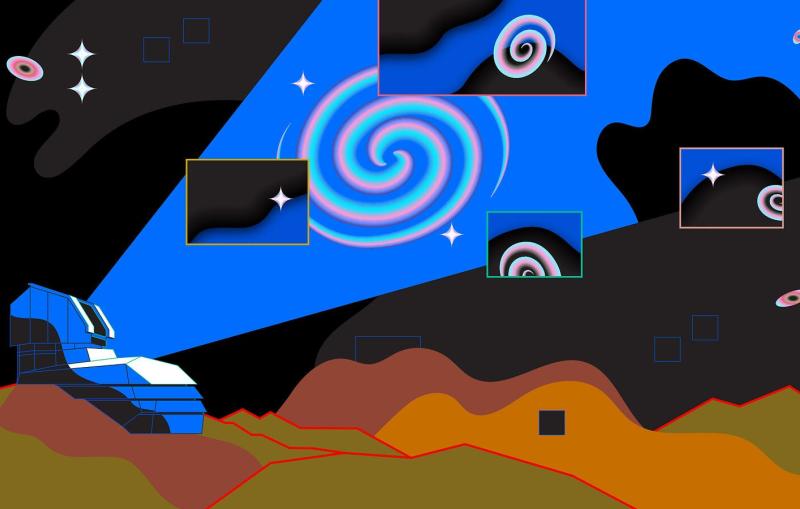
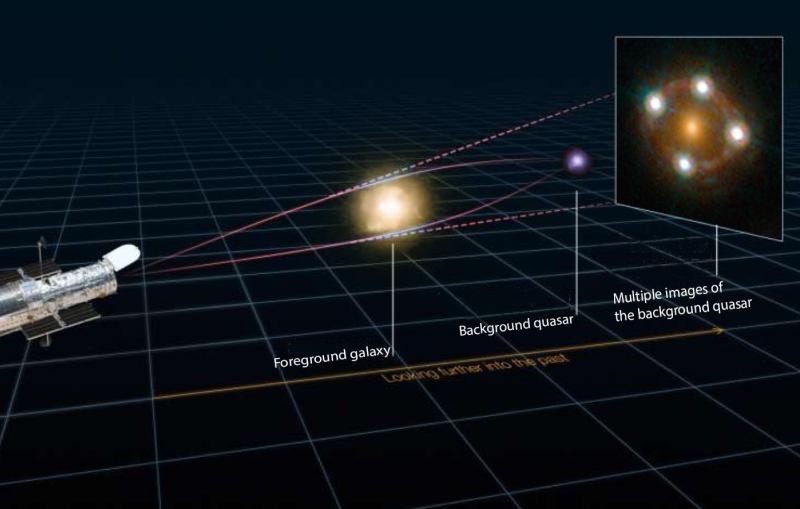
Dark Energy Survey census of the smallest galaxies hones the search for dark matter

Observations of dwarf galaxies around the Milky Way have yielded simultaneous constraints on three popular theories of dark matter.

August 4, 2020  ·  4 min read
simulations of distribution of dark matter around a galaxy
Feature

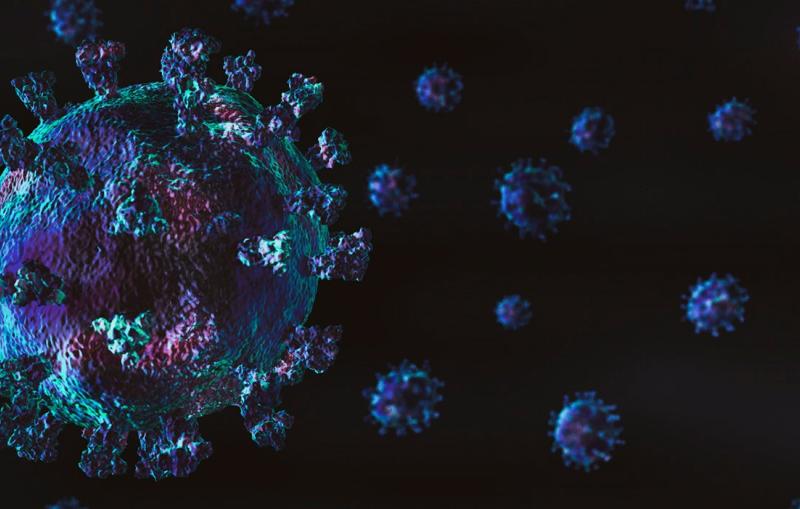
SLAC’s new X-ray beamline aids COVID-19 research

Scientists are deploying this state-of-the-art X-ray crystallography facility to study biological molecules related to the COVID-19 pandemic.

August 3, 2020  ·  6 min read
News Brief

In a search for COVID-19 treatments, researchers pursue a drug used on cats

University of Alberta researchers worked with SLAC X-ray scientists to explore the potential of a feline coronavirus drug that may be effective against SARS-CoV-2.

August 27, 2020  ·  2 min read
Feature

Shedding light on stellar evolution

Researchers developed a way to measure the basic properties of matter at the highest pressures thus far achieved in a controlled laboratory experiment.

August 5, 2020  ·  6 min read
White dwarf
News Brief

Researchers tease out the unique chemical fingerprint of the most aggressive free radical in living things

The technique they used will offer insight into many different chemical reactions.

August 6, 2020  ·  2 min read
hydroxyl radical
  • Go to previous page
  • Page 1
  • …
  • Page 116
  • Page 117
  • Page 118
  • Page 119
  • Currently on page 120
  • Page 121
  • Page 122
  • Page 123
  • Page 124
  • …
  • Page 182
  • Go to next page

SLAC National Accelerator Laboratory 
2575 Sand Hill Road  
Menlo Park, CA 94025-7015  
650.926.3300

  • Coming to SLAC
  • Connect with us
  • Contact us
  • Facebook
  • Flickr
  • Instagram
  • LinkedIn
  • Twitter
  • YouTube

Sign up for our email

Monthly newsletter for cutting-edge science, SLAC milestones and events.

Sign up

Bold People
Visionary Science
Real Impact

We explore how the universe works at the biggest, smallest and fastest scales and invent powerful tools used by scientists around the globe.

  • About
    • Our story
    • Our people
    • Lab overview
    • Visit SLAC
    • Resources
    • Connect with us
  • Research
    • X-ray & ultrafast science
    • Advanced accelerators
    • New technologies
    • Physics of the universe
    • Science of life
    • Energy sciences
    • SLAC science explained
  • Facilities & centers
    • Scientific facilities
    • Joint institutes & centers
  • Work with us
    • Partner with us
    • Become a supplier
    • Use our facilities
    • Careers at SLAC
  • News & events
    • News center
    • Symmetry Magazine
    • Media resources
    • Events
    • Educational programs
    • Connect with us
  • Staff portal
  • Privacy policy
  • Accessibility
  • Vulnerability disclosure
  • A–Z index
  • Website feedback
Home
  • SLAC home
  • Maps & directions
  • Emergency info
  • Careers

© 2026 SLAC National Accelerator Laboratory is operated by Stanford University for the U.S. Department of Energy Office of Science.

Stanford University U.S. Department of Energy
Top Top
Back to top Back to top