SLAC National Accelerator Laboratory
    • About

      Learn about our science, people, facilities and partners. Discover our history and vision for the future.

    • OUR STORY
      • Mission, vision, values
      • History
    • LAB OVERVIEW
      • SLAC at a glance
      • Lab organization
      • Our partnerships
    • OUR PEOPLE
      • Leadership
      • Meet our teams
      • Faculty
    • VISIT SLAC
      • Public tours
      • Contact us
    • Resources
      • Images, videos & more
      • Brochures & fact sheets
    • Connect With Us
      • Facebook
      • Flickr
      • Instagram
      • LinkedIn
      • Twitter
      • YouTube
    video

    Who we are

    We explore radically new ideas with an entrepreneurial mindset.

    Science and User Support Building to the left and Arrillaga Science Center building to the right from above the Main Quad at SLAC's campus.
    • Research

      Get an overview of research at SLAC: X-ray and ultrafast science, particle and astrophysics, cosmology, particle accelerators, biology, energy and technology.

    • X-ray and Ultrafast science icon X-ray & ultrafast science

      Revealing nature’s fastest processes with X-rays, lasers and electrons

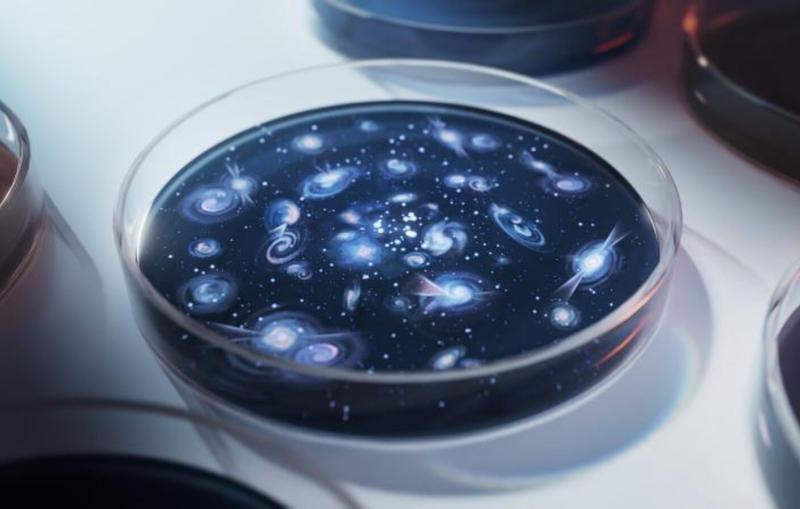
    • Physics of the universe science icon Physics of the universe

      Studying the particles and forces that knit the cosmos together

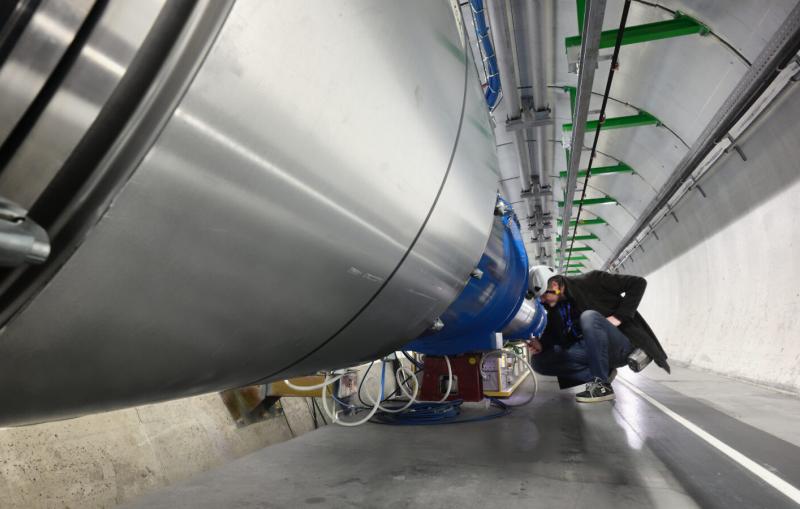
    • Advanced Accelerators science icon Advanced accelerators

      Building smaller, faster, more powerful accelerators for all

    • Science of life science icon Science of life

      Understanding the machinery of life at its most basic level

    • New technologies science icon New technologies

      Inventing new tools for science and society

    • Energy sciences science icon Energy sciences

      Finding clean, sustainable solutions for the world’s energy challenges

    Spotlight

    SLAC science explained

    Cut through the jargon while exploring our research.

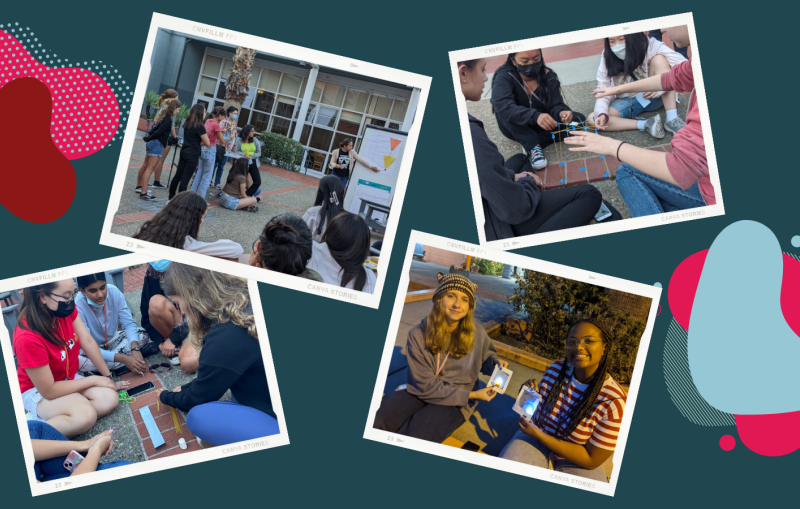
    SAGE campers have fun experimenting with a Van de Graff generator
    • Facilities & Centers

      Learn more about the places where science happens at SLAC: our major facilities, institutes and centers.

    • SCIENTIFIC FACILITIES
      • LCLS website

        Linac Coherent Light Source

      • SSRL website

        Stanford Synchrotron Radiation Lightsource

      • FACET-II website

        Facility for Advanced Accelerator Experimental Tests

      • CryoEM website

        Cryogenic Electron Microscopy

    • JOINT INSTITUTES & CENTERS
      • SIMES website

        Stanford Institute for Materials & Energy Science

      • KIPAC website

        Kavli Institute for Particle Astrophysics & Cosmology

      • PULSE website

        Stanford PULSE Institute

      • SUNCAT website

        Center for Interface Science & Catalysis

      • SLAC-Stanford Battery Center

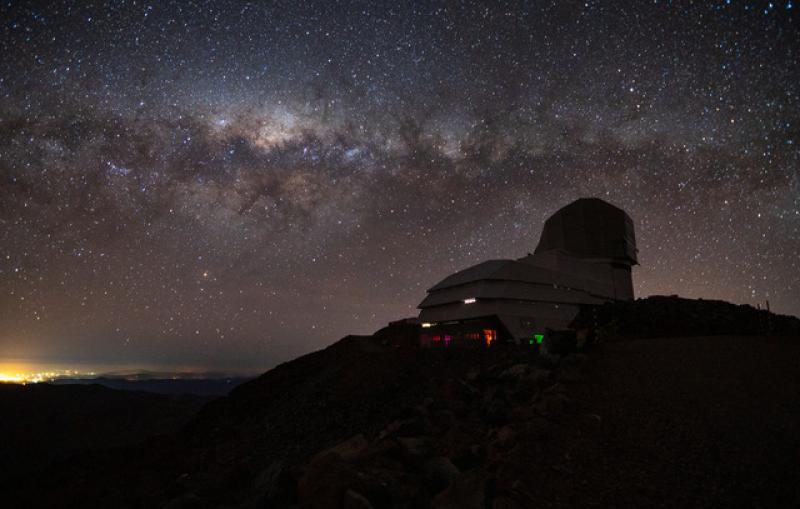
    NSF-DOE Vera C. Rubin Observatory LSST

    SLAC & Stanford build the world’s largest digital camera for the Legacy Survey of Space and Time (LSST).

    A drone photo of Rubin Observatory while taking pictures during the First Look observing campaign
    • Work with Us

      Find a career, partner with us or apply to use our tools and facilities.

    • PARTNER WITH US
      • For industry partners
      • Research partnerships & tech transfer
      • Technology Innovation
    • CAREERS AT SLAC
      • Job openings
      • Internships
      • Life at SLAC
    • USE OUR FACILITIES

      Apply to become a user of our scientific research facilities and instruments.

    • COMING TO SLAC
    • BECOME A SUPPLIER

    Careers at SLAC

    Join our united workforce.

    SLAC staff in main quad
    • News & Events

      Get the latest news about the lab, our science and discoveries. Explore SLAC events and learn how to participate.

    • NEWS CENTER
      • News archive
      • Media resources
      • Images & videos
    • SLAC EVENTS
      • Public lectures
      • Scientific seminars
      • Community events
    • SYMMETRY MAGAZINE

      This joint publication of SLAC and Fermilab is your view into the world of particle physics.

    • EDUCATIONAL PROGRAMS
      • Educational tours
      • Resources for students & educators
    • Connect With Us
      • Facebook
      • Flickr
      • Instagram
      • LinkedIn
      • Twitter
      • YouTube
    Upcoming public lecture

    Reinventing the way we break down plastic waste

    Thursday, March 26, 2026
    7:00–8:00 p.m. PDT

    Public Lecture: Ozge Bozkurt
Filter search by
Staff portalStanford directoryComing to SLACResources for…
  1. Home
  2. …
Filter by research area
  • X-ray and ultrafast science (337)
  • (-) Physics of the universe (280)
  • Energy sciences (96)
  • Science of life (86)
  • New technologies (58)
  • Advanced accelerators (41)
Filter by Type
  • News (126)
  • Video (66)
  • Image (58)
  • Event (21)
  • resource (4)
  • Page (3)
  • Person (2)
Sort by
280 results
Display Grid Display List
Clear all
Feature
VIA SLAC Flickr

Imaging sensors installed in LSST ComCam

The LSST camera integration and testing team inserted a raft of nine imaging sensors into the body of the ComCam. This miniature version of...

March 5, 2019
Feature

Light dark matter is a thousand times less likely to bump into regular matter than previous astrophysical analyses allowed

A SLAC/Stanford study of the population of satellite galaxies orbiting the Milky Way provides new clues about the particle nature of dark matter.

July 11, 2019  ·  6 min read
Dark matter simulation
Feature

DESI points 5,000 robotic ‘eyes’ at the sky to explore dark energy

The Dark Energy Spectroscopic Instrument begins final testing, setting the stage for a 5-year survey that will analyze the light of 35 million galaxies.

October 28, 2019  ·  7 min read
DESI ‘eyes’
Past Event
Public lecture

10 Years of Cosmic Fireworks with the Fermi Gamma-ray Space Telescope

Presented by Eric Charles. A single gamma ray carries millions of times the energy of a single photon of visible light.  This means that...

Date Tuesday, July 24, 2018
12:30 p.m.  –  1:30 p.m.  PT
Location Panofsky Auditorium, Science and User Support Building (B53)
stillframe image from lecture titled 10 Years of Cosmic Fireworks with the Fermi Gamma-ray Space Telescope
Feature

SLAC physicists Natalia Toro and Philip Schuster win DOE's prestigious E.O. Lawrence Awards

Toro and Schuster are being recognized for their contributions to the design of experiments that use particle accelerators to search for dark matter particles.

June 22, 2022  ·  6 min read
SLAC physicists Natalia Toro and Philip Schuster
Feature

Researchers mark successful startup of LUX-ZEPLIN dark matter detector at Sanford Underground Research Facility

SLAC researchers contributed to the design, construction, testing and analysis of the experiment, which has already put the tightest bounds yet on a popular...

July 7, 2022  ·  6 min read
Bubble-like glass lenses inside a white cylindrical apparatus.
Feature

Chelsea Bartram and Brian Lenardo named 2022 Panofsky Fellows at SLAC

They’ll work on experiments that search for dark matter particles and exotic neutrino decays that could help explain why there’s more matter than antimatter...

July 14, 2022  ·  5 min read
Side-by-side portraits of Brian Lenardo and Chelsea Bartram
Feature

How do you take a better image of atom clouds? Mirrors – lots of mirrors

To capture as much information as possible about clouds of atoms at the heart of the MAGIS-100 experiment, SLAC scientists devised a dome of...

August 19, 2022  ·  6 min read
an array of rainbow-tinted views of a tiny 3D object that spells "DOE"
Feature
VIA Stanford News

The power of awe and the cosmos

A cosmologist, cultural historian, and neurosurgeon discuss how outer space and otherworldly phenomena can inspire discovery across disciplines and bring people together.

September 7, 2022
Image of galaxies of different colors and varied, warped shapes.
Feature

Researchers at SLAC use purified liquid xenon to search for mysterious dark matter particles

An enormous vat of pure liquid xenon will help scientists at SLAC and around the globe learn more about the universe.

September 15, 2022  ·  7 min read
A collection of pipes, towers, and other equipment
Feature

SLAC scientists created the most powerful ultrashort electron beam in the world

Researchers positioned lasers to compress billions of electrons together, creating a beam five times more powerful than before.

March 3, 2025  ·  3 min read
Claudio Emma and Brendan O’Shea examine experimental apparatus.
News Release

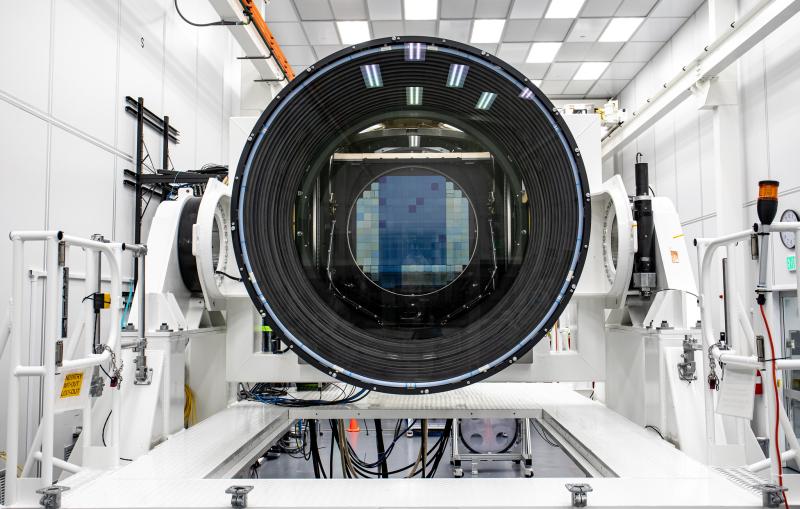
NSF–DOE Vera C. Rubin Observatory installs LSST Camera on telescope

Using the largest digital camera in the world, Rubin Observatory will soon be ready to capture more data than any other observatory in history.

March 12, 2025  ·  8 min read
A person in a hard hat looks at a giant black lens cap surrounded by a mirror
  • Go to previous page
  • Page 1
  • …
  • Page 9
  • Page 10
  • Page 11
  • Page 12
  • Currently on page 13
  • Page 14
  • Page 15
  • Page 16
  • Page 17
  • …
  • Page 24
  • Go to next page

SLAC National Accelerator Laboratory 
2575 Sand Hill Road  
Menlo Park, CA 94025-7015  
650.926.3300

  • Coming to SLAC
  • Connect with us
  • Contact us
  • Facebook
  • Flickr
  • Instagram
  • LinkedIn
  • Twitter
  • YouTube

Sign up for our email

Monthly newsletter for cutting-edge science, SLAC milestones and events.

Sign up

Bold People
Visionary Science
Real Impact

We explore how the universe works at the biggest, smallest and fastest scales and invent powerful tools used by scientists around the globe.

  • About
    • Our story
    • Our people
    • Lab overview
    • Visit SLAC
    • Resources
    • Connect with us
  • Research
    • X-ray & ultrafast science
    • Advanced accelerators
    • New technologies
    • Physics of the universe
    • Science of life
    • Energy sciences
    • SLAC science explained
  • Facilities & centers
    • Scientific facilities
    • Joint institutes & centers
  • Work with us
    • Partner with us
    • Become a supplier
    • Use our facilities
    • Careers at SLAC
  • News & events
    • News center
    • Symmetry Magazine
    • Media resources
    • Events
    • Educational programs
    • Connect with us
  • Staff portal
  • Privacy policy
  • Accessibility
  • Vulnerability disclosure
  • A–Z index
  • Website feedback
Home
  • SLAC home
  • Maps & directions
  • Emergency info
  • Careers

© 2026 SLAC National Accelerator Laboratory is operated by Stanford University for the U.S. Department of Energy Office of Science.

Stanford University U.S. Department of Energy
Top Top
Back to top Back to top