SLAC National Accelerator Laboratory
    • About

      Learn about our science, people, facilities and partners. Discover our history and vision for the future.

    • OUR STORY
      • Mission, vision, values
      • History
    • LAB OVERVIEW
      • SLAC at a glance
      • Lab organization
      • Our partnerships
    • OUR PEOPLE
      • Leadership
      • Meet our teams
      • Faculty
    • VISIT SLAC
      • Public tours
      • Contact us
    • Resources
      • Images, videos & more
      • Brochures & fact sheets
    • Connect With Us
      • Facebook
      • Flickr
      • Instagram
      • LinkedIn
      • Twitter
      • YouTube
    video

    Who we are

    We explore radically new ideas with an entrepreneurial mindset.

    Science and User Support Building to the left and Arrillaga Science Center building to the right from above the Main Quad at SLAC's campus.
    • Research

      Get an overview of research at SLAC: X-ray and ultrafast science, particle and astrophysics, cosmology, particle accelerators, biology, energy and technology.

    • X-ray and Ultrafast science icon X-ray & ultrafast science

      Revealing nature’s fastest processes with X-rays, lasers and electrons

    • Physics of the universe science icon Physics of the universe

      Studying the particles and forces that knit the cosmos together

    • Advanced Accelerators science icon Advanced accelerators

      Building smaller, faster, more powerful accelerators for all

    • Science of life science icon Science of life

      Understanding the machinery of life at its most basic level

    • New technologies science icon New technologies

      Inventing new tools for science and society

    • Energy sciences science icon Energy sciences

      Finding clean, sustainable solutions for the world’s energy challenges

    Spotlight

    SLAC science explained

    Cut through the jargon while exploring our research.

    SAGE campers have fun experimenting with a Van de Graff generator
    • Facilities & Centers

      Learn more about the places where science happens at SLAC: our major facilities, institutes and centers.

    • SCIENTIFIC FACILITIES
      • LCLS website

        Linac Coherent Light Source

      • SSRL website

        Stanford Synchrotron Radiation Lightsource

      • FACET-II website

        Facility for Advanced Accelerator Experimental Tests

      • CryoEM website

        Cryogenic Electron Microscopy

    • JOINT INSTITUTES & CENTERS
      • SIMES website

        Stanford Institute for Materials & Energy Science

      • KIPAC website

        Kavli Institute for Particle Astrophysics & Cosmology

      • PULSE website

        Stanford PULSE Institute

      • SUNCAT website

        Center for Interface Science & Catalysis

      • SLAC-Stanford Battery Center

    NSF-DOE Vera C. Rubin Observatory LSST

    SLAC & Stanford build the world’s largest digital camera for the Legacy Survey of Space and Time (LSST).

    A drone photo of Rubin Observatory while taking pictures during the First Look observing campaign
    • Work with Us

      Find a career, partner with us or apply to use our tools and facilities.

    • PARTNER WITH US
      • For industry partners
      • Research partnerships & tech transfer
      • Technology Innovation
    • CAREERS AT SLAC
      • Job openings
      • Internships
      • Life at SLAC
    • USE OUR FACILITIES

      Apply to become a user of our scientific research facilities and instruments.

    • COMING TO SLAC
    • BECOME A SUPPLIER

    Careers at SLAC

    Join our united workforce.

    SLAC staff in main quad
    • News & Events

      Get the latest news about the lab, our science and discoveries. Explore SLAC events and learn how to participate.

    • NEWS CENTER
      • News archive
      • Media resources
      • Images & videos
    • SLAC EVENTS
      • Public lectures
      • Scientific seminars
      • Community events
    • SYMMETRY MAGAZINE

      This joint publication of SLAC and Fermilab is your view into the world of particle physics.

    • EDUCATIONAL PROGRAMS
      • Educational tours
      • Resources for students & educators
    • Connect With Us
      • Facebook
      • Flickr
      • Instagram
      • LinkedIn
      • Twitter
      • YouTube
    Spotlight

    SLAC events

    Event attendees listen to a science lecture
Filter search by
Staff portalStanford directoryComing to SLACResources for…
  1. Home
  2. …
Filter by research area
  • (-) X-ray and ultrafast science (344)
  • (-) Physics of the universe (285)
  • Energy sciences (96)
  • Science of life (87)
  • New technologies (58)
  • Advanced accelerators (41)
Filter by Type
  • News (315)
  • Image (131)
  • Video (115)
  • Event (39)
  • resource (12)
  • Page (9)
  • Person (6)
  • News Collection (2)
Sort by
629 results
Display Grid Display List
Clear all
News Brief

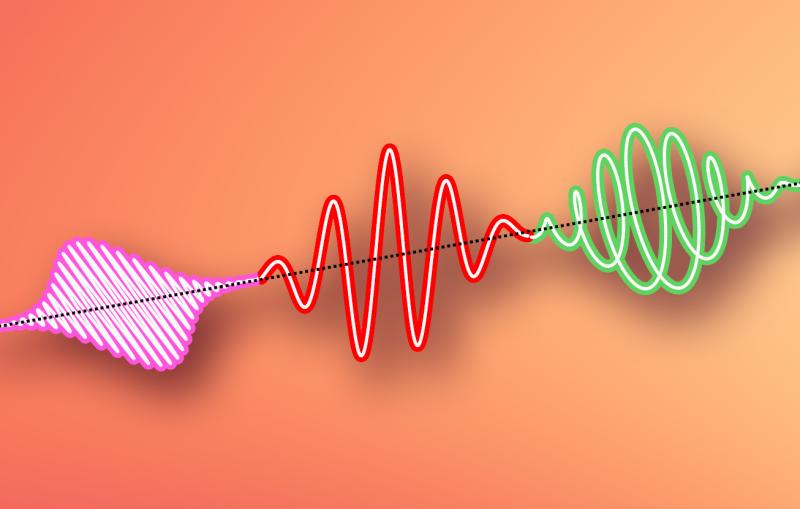
SLAC researchers mix X-rays and optical light to track speedy electrons in materials

The new method allows better studies of valence electrons key to materials’ properties and could help unlock novel photocatalysts, light-switchable superconductors and other applications...

March 10, 2026  ·  3 min read
Illustration showing the mixing of X-rays and optical light
News Release

NSF–DOE Vera C. Rubin Observatory launches real-time discovery machine for monitoring the night sky

NSF-DOE Rubin Observatory has issued its first scientific alerts, marking a historic milestone in astrophysics and kicking off a new era of dynamic, real-time...

February 25, 2026  ·  10 min read
Star-filled teal night sky with turquoise glowing band, scattered “DATA ALERT” tags, and a white icon of the Rubin Observatory atop dark mountains.
News Release

SuperCDMS SNOLAB cools down to near absolute zero, setting the stage for one of the world’s most sensitive dark matter searches

The experiment’s detectors have reached their operating temperature, almost a thousand times colder than outer space.

March 17, 2026  ·  6 min read
SuperCDMS team members posing with a detector tower.
News Brief

To create better batteries, SLAC researchers introduce disorder into the design

By instigating atomic disorder in lithium-ion battery materials, researchers created more stable materials that don’t expand, contract and degrade like traditional materials do.

March 23, 2026  ·  5 min read
Illustration of layers in a battery material
News Brief
Argonne National Lab

New chip technology enables real-time insights from scientific data

Argonne, SLAC researchers designed a chip that compresses and processes detector data instantly, letting scientists analyze results and steer experiments as they happen.

March 24, 2026
Silicon chip that integrates both imaging sensors and data compression, shown next to a U.S. penny
news collection
News Collection

LCLS-II High Energy Upgrade

Now, we’re turning up the energy. The high-energy upgrade to LCLS will extend its ultrafast megahertz capability into the “hard,” or high-energy, X-ray regime.   

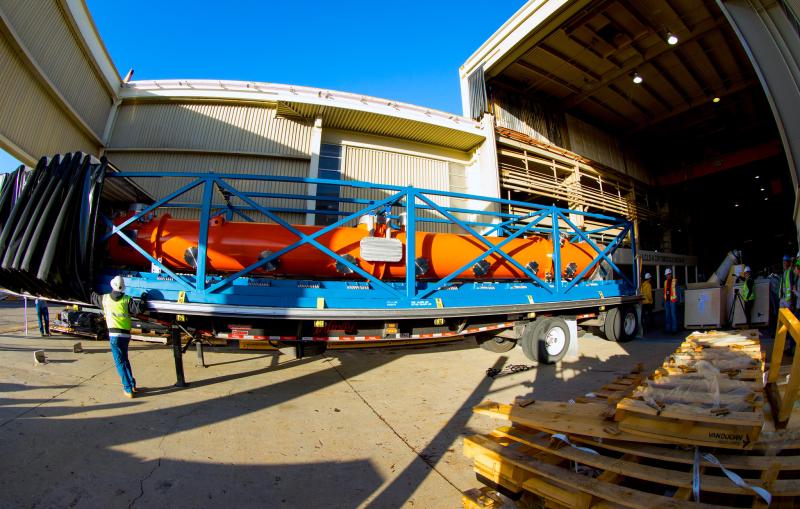
The first of 23 cryomodules is delivered to SLAC for the high energy upgrade to the Linac Coherent Light Source
News Release

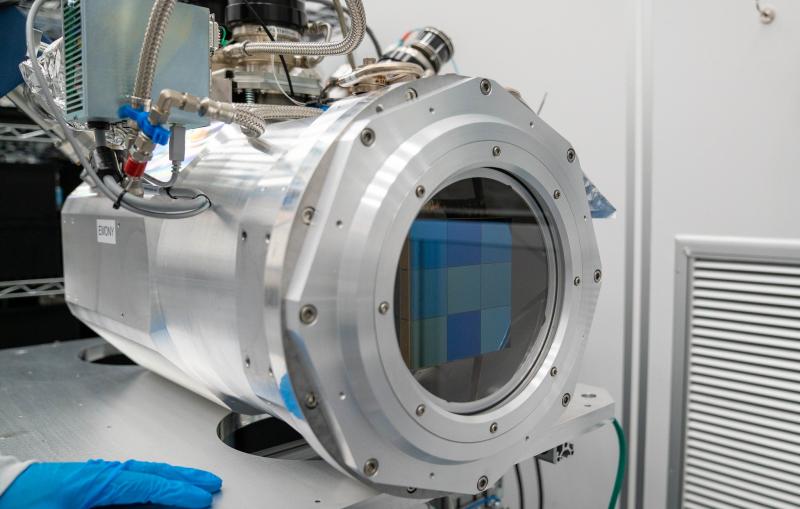
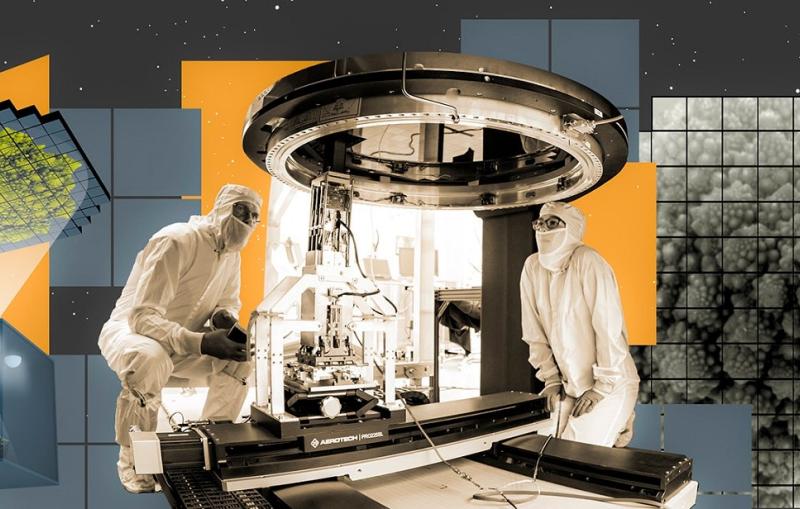
Sensors of world’s largest digital camera snap first 3,200-megapixel images at SLAC

The camera will explore cosmic mysteries as part of the Rubin Observatory’s Legacy Survey of Space and Time.

September 8, 2020  ·  9 min read
LSSTCam Focal Plane Header
Feature

AI rebuilds molecules from exploding fragments

SLAC researchers and collaborators trained a neural network that can use ion momentum to work backward and predict the pre-blast geometry of a molecule.

March 18, 2026  ·  6 min read
Illustration of AI used for the reconstruction of the structure of molecules blown up by X-ray pulses
News Brief

New detector triples the speed of SLAC’s electron camera, enabling higher sensitivity

Researchers reengineered an ePix10k detector for use in ultrafast electron diffraction, empowering studies of chemical processes that were previously out of reach. 

April 3, 2026  ·  4 min read
Photo of the detection chamber of SLAC's MeV-UED instrument
Past Event
SLAC on Tap

Atoms in slow motion, the skyrmion, and crackling magnets: the hidden world of quantum materials

What do the sound of Rice Krispies and the motion of atoms and magnets have in common? Join us at the Dutch Goose for...
Date Tuesday, April 14, 2026
5:30 p.m.  –  7:00 p.m.  PT
Location The Dutch Goose, 3567 Alameda de las Pulgas Menlo Park, CA 94025
Graphic of a man and logo
News Brief
VIA Rubin Observatory

Early data from NSF–DOE Vera C. Rubin Observatory reveals over 11,000 new asteroids

Rubin’s largest asteroid haul yet, gathered before the Legacy Survey of Space and Time even begins, is just the “tip of the iceberg.”

April 2, 2026
Illustration of asteroids
Past Event
Public Lectures

How we built the world's largest digital camera

The world’s biggest digital camera was built at SLAC, and shipped to the NSF-DOE Vera C. Rubin Observatory in northern Chile last year. This...
Date Thursday, August 7, 2025
7:00 p.m.  –  8:00 p.m.  PT
Location SLAC National Accelerator Laboratory, Kavli Auditorium
Public Lecture: Travis Lange
  • Go to previous page
  • Page 1
  • …
  • Page 45
  • Page 46
  • Page 47
  • Page 48
  • Page 49
  • Page 50
  • Page 51
  • Currently on page 52
  • Page 53
  • Go to next page

SLAC National Accelerator Laboratory 
2575 Sand Hill Road  
Menlo Park, CA 94025-7015  
650.926.3300

  • Coming to SLAC
  • Connect with us
  • Contact us
  • Facebook
  • Flickr
  • Instagram
  • LinkedIn
  • Twitter
  • YouTube

Sign up for our email

Monthly newsletter for cutting-edge science, SLAC milestones and events.

Sign up

Bold People
Visionary Science
Real Impact

We explore how the universe works at the biggest, smallest and fastest scales and invent powerful tools used by scientists around the globe.

  • About
    • Our story
    • Our people
    • Lab overview
    • Visit SLAC
    • Resources
    • Connect with us
  • Research
    • X-ray & ultrafast science
    • Advanced accelerators
    • New technologies
    • Physics of the universe
    • Science of life
    • Energy sciences
    • SLAC science explained
  • Facilities & centers
    • Scientific facilities
    • Joint institutes & centers
  • Work with us
    • Partner with us
    • Become a supplier
    • Use our facilities
    • Careers at SLAC
  • News & events
    • News center
    • Symmetry Magazine
    • Media resources
    • Events
    • Educational programs
    • Connect with us
  • Staff portal
  • Privacy policy
  • Accessibility
  • Vulnerability disclosure
  • A–Z index
  • Website feedback
Home
  • SLAC home
  • Maps & directions
  • Emergency info
  • Careers

© 2026 SLAC National Accelerator Laboratory is operated by Stanford University for the U.S. Department of Energy Office of Science.

Stanford University U.S. Department of Energy
Top Top
Back to top Back to top