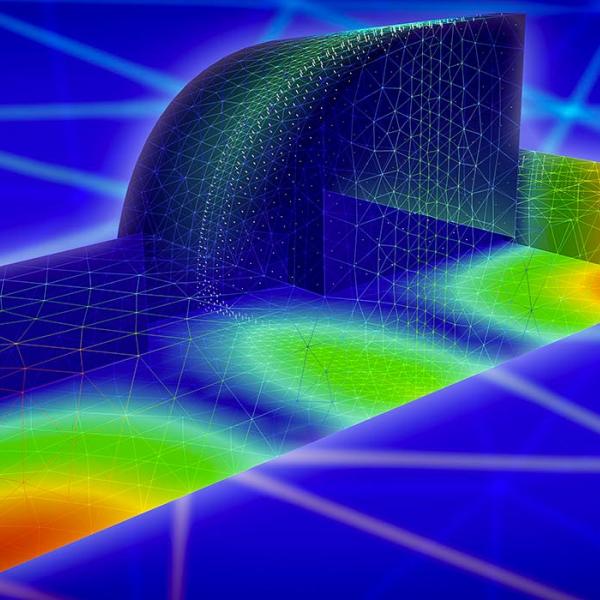
SLAC works with two small businesses to make its ACE3P software easier to use in supercomputer simulations for optimizing the shapes of accelerator structures.
From our kitchens to our clothes to the delivery of medicines, plastics play an indispensable role in our daily lives. But, the end-life of these plastics is not always taken into account. Few types of plastics can be readily recycled...
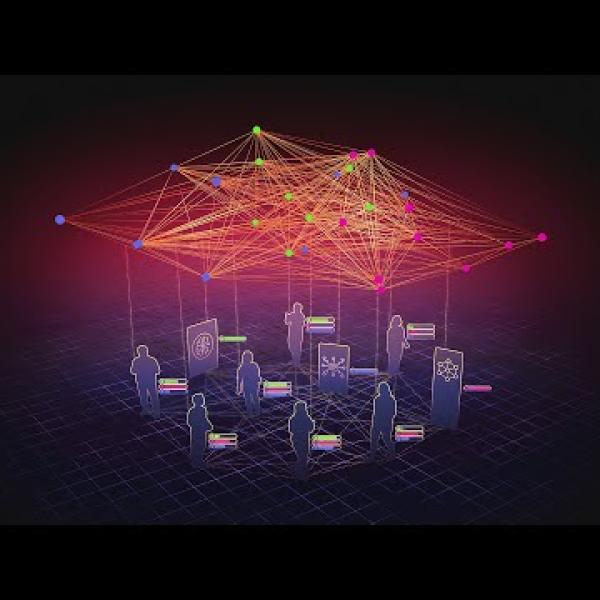
Modern particle accelerator control rooms are like busy air traffic control centers, where skilled operators juggle hundreds of interconnected and time-sensitive tasks to generate and shape high-energy particle beams. Control room tasks are increasingly performed with the support of AI...
Register here to join us in-person, or watch online. How do we find the next super material? How do we discover the next breakthrough drug? How do we unlock the mystery of dark matter and the structure of the universe...
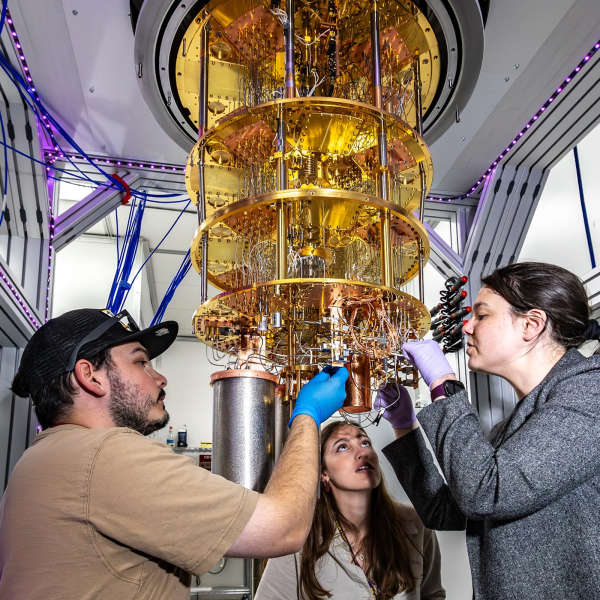
Driven by curiosity about nature, SLAC researcher Shannon Harvey develops quantum dots, a mass-producible type of qubit, as part of the Q-NEXT collaboration.
A new program led by SLAC and Sandia national laboratories connects investors and entrepreneurs with Department of Energy scientists to launch startups in key technology areas.