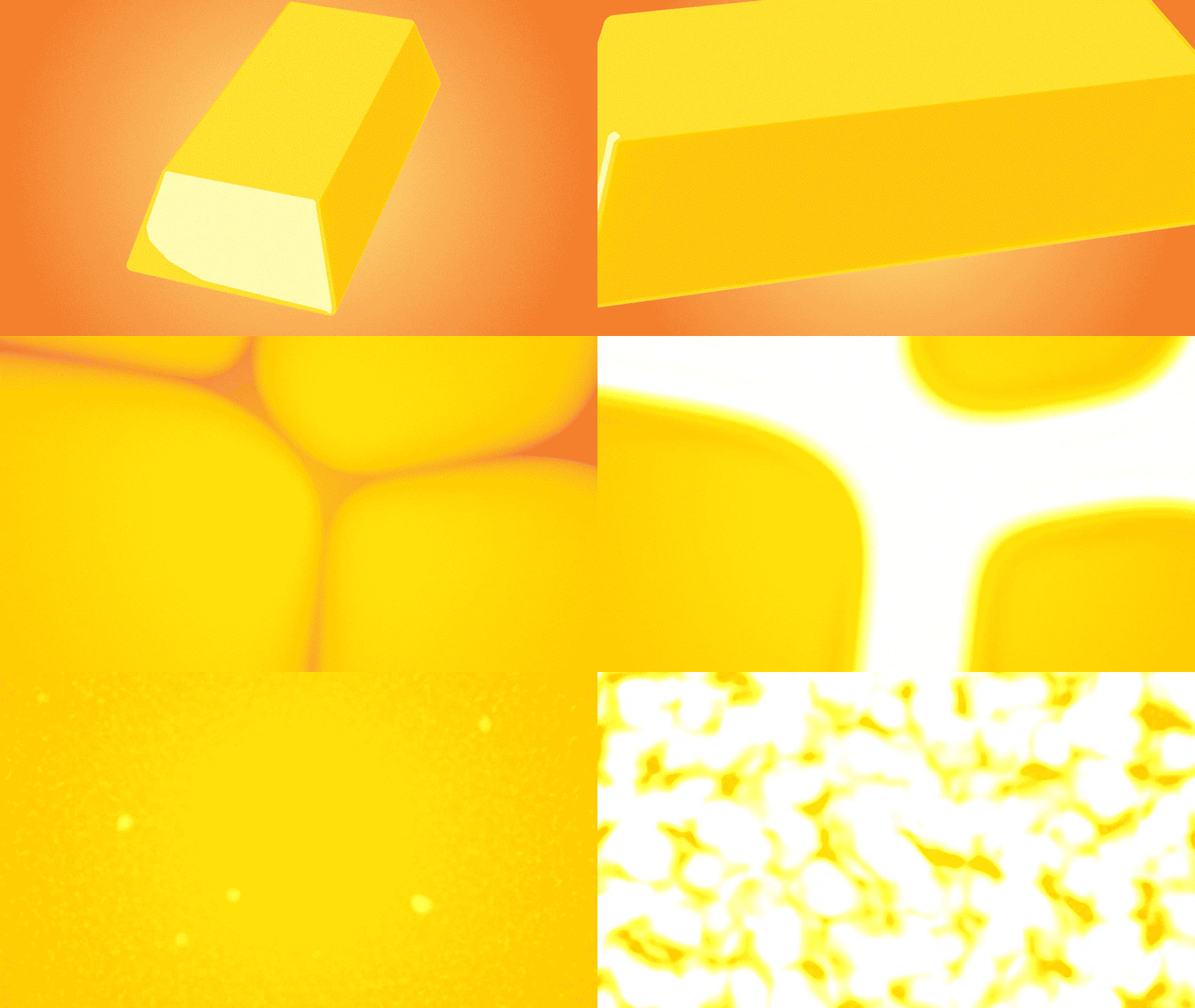
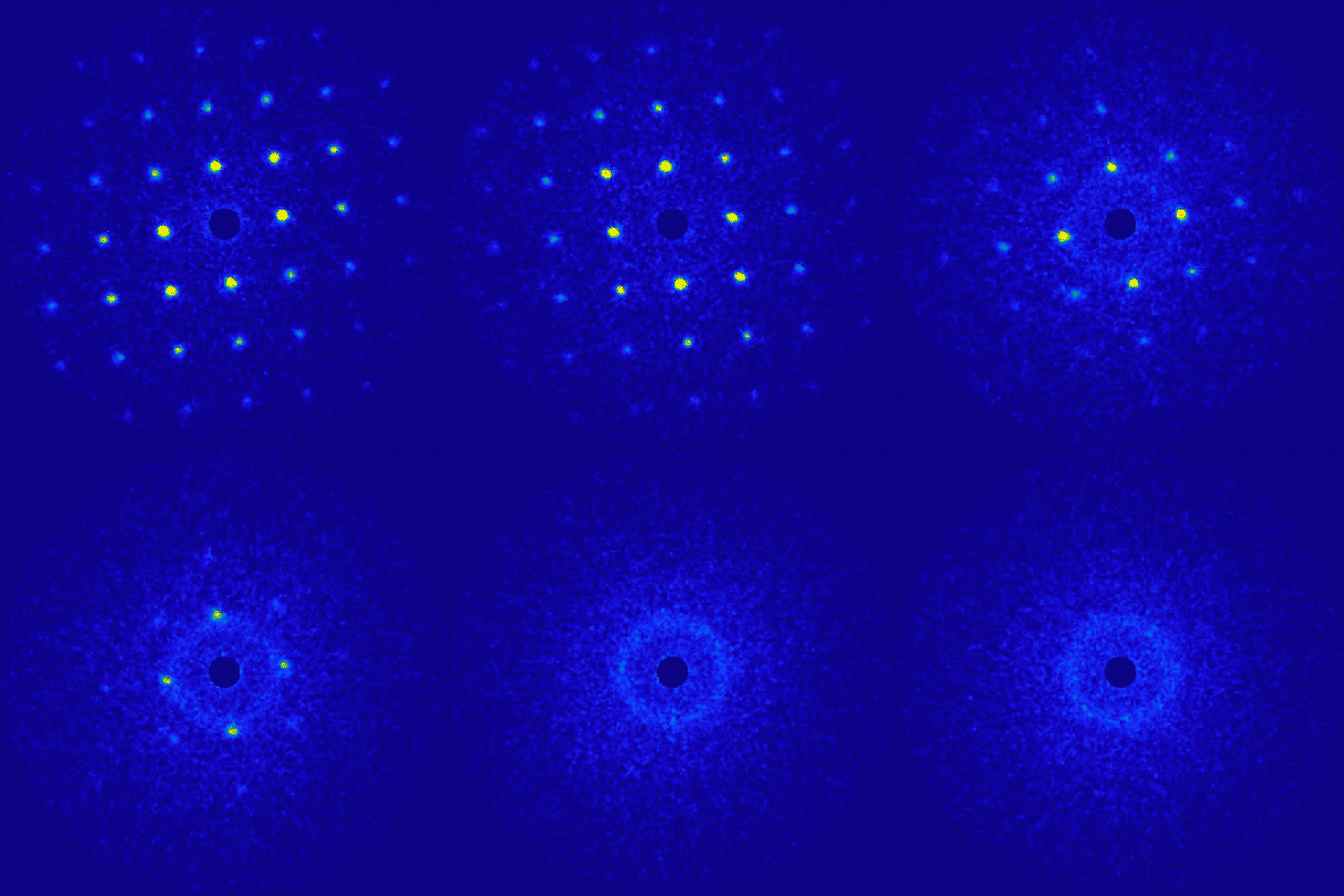
This animation shows the results of a recent study at SLAC, in which researchers used a powerful beam of electrons to watch gold melt extremely rapidly after being heated by a laser pulse.
This movie shows the transition of a gold sample from a solid (dotted pattern) to a liquid (ring pattern) after being heated by a laser pulse. It was taken with SLAC’s ultrafast “electron” camera, an instrument for ultrafast electron diffraction...
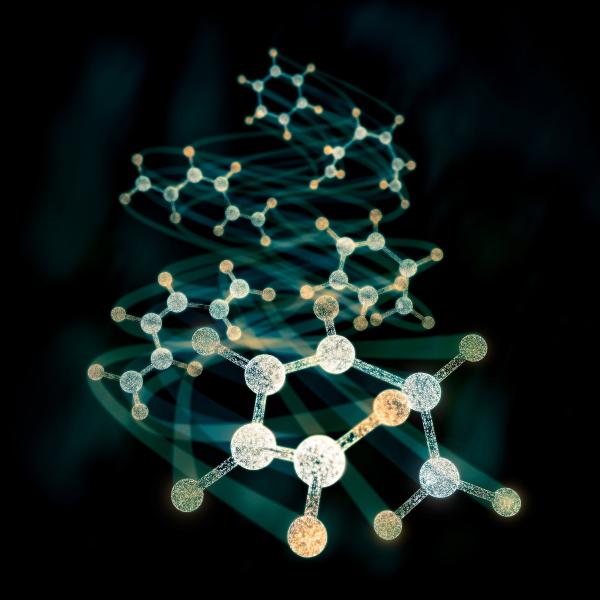
This illustration shows snapshots of the light-triggered transition of the ring-shaped 1,3-cyclohexadiene (CHD) molecule (background) to its stretched-out 1,3,5-hexatriene (HT) form (foreground).
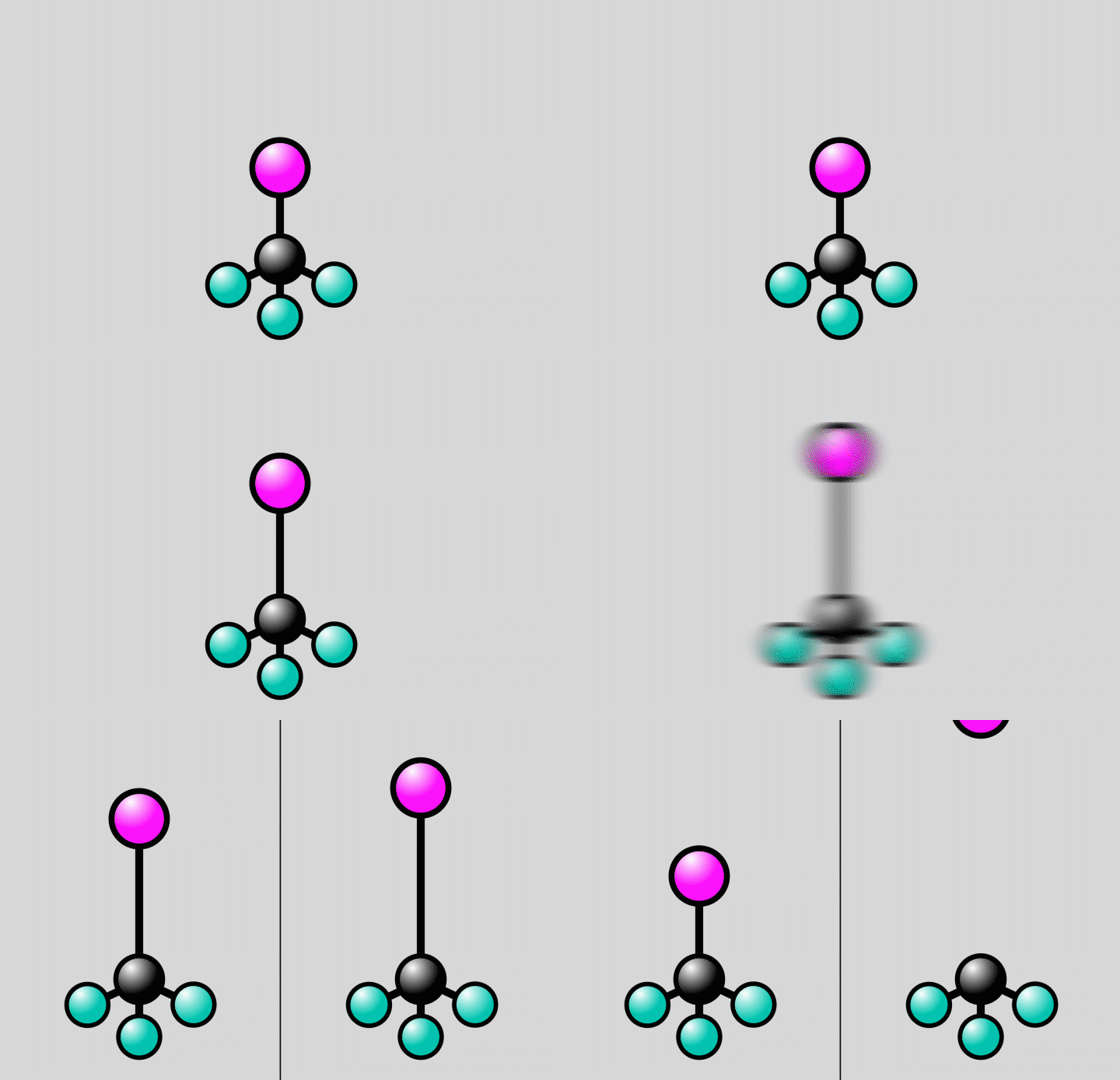
Animation of a trifluoroiodomethane molecule (carbon shown in black, fluoride in green, iodine in pink) responding to laser light. The light flash stretches the bond between the carbon and iodine atoms to a point where the bond can either break...
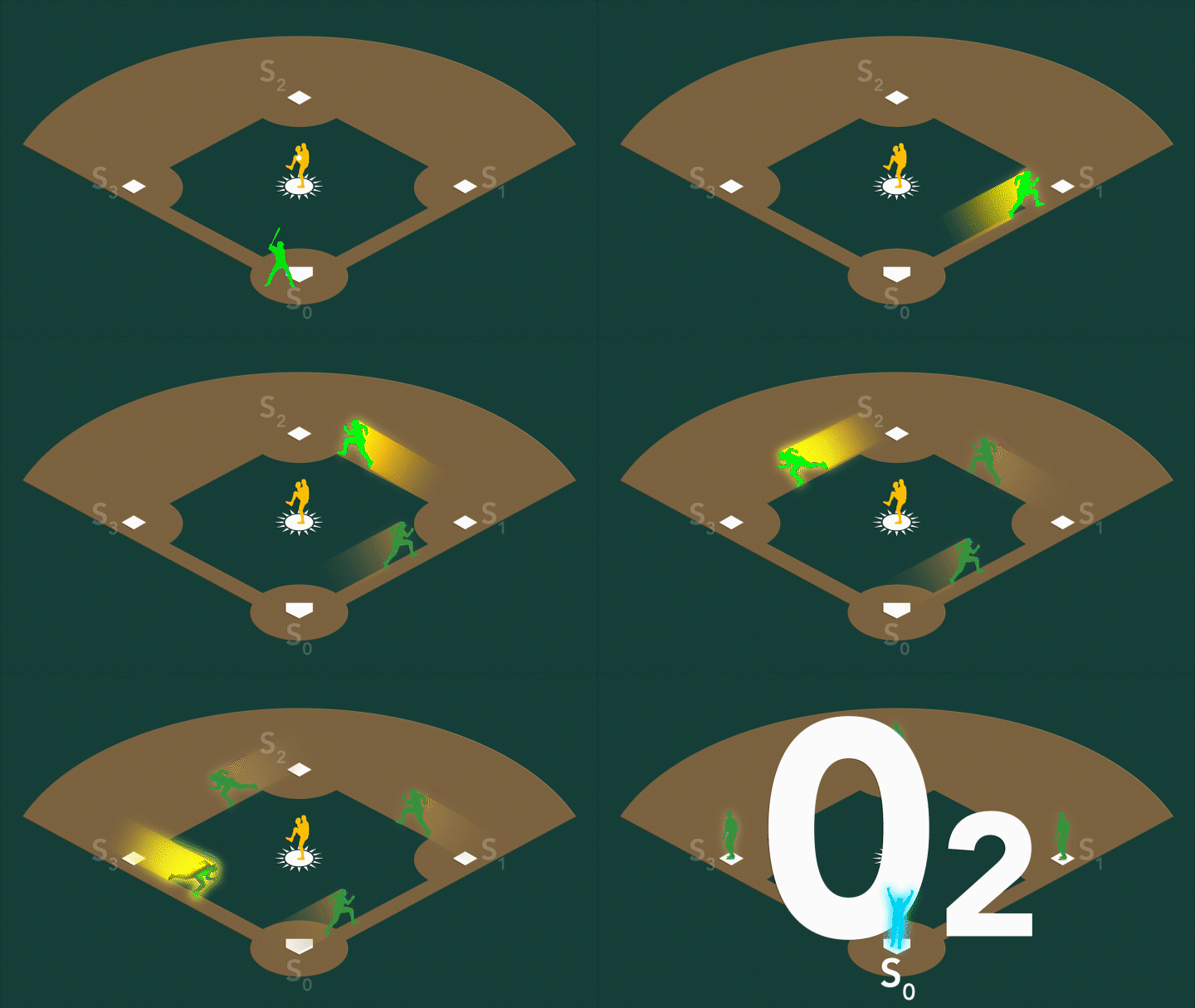
In photosystem II, the water-splitting center cycles through four stable states, S0-S3. On a baseball field, S0 would be the start of the game when a batter on home base is ready to hit.
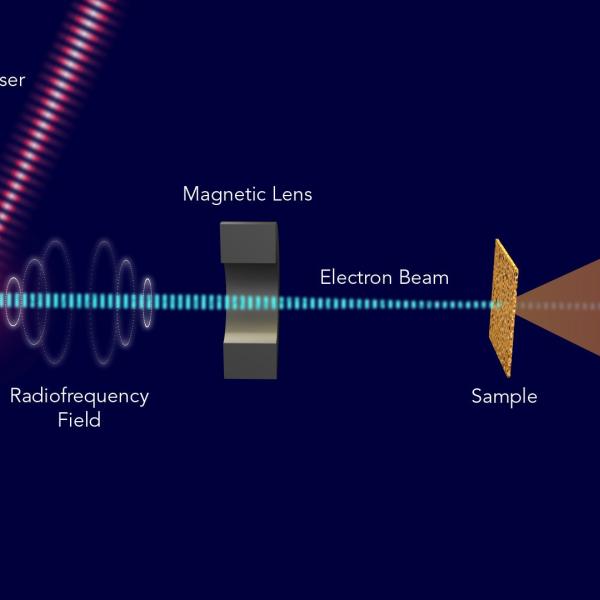
Schematic of SLAC’s new apparatus for ultrafast electron diffraction – one of the world’s fastest “electron cameras” – researchers can study motions in materials that take place in less than 100 quadrillionths of a second.
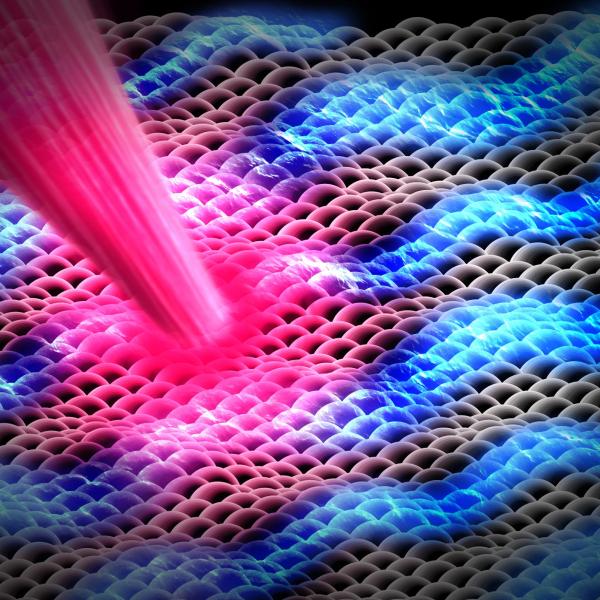
Researchers used SLAC’s ultrafast electron diffraction (UED) as an electron camera to take snapshots of a three-atom-thick layer of a promising material as it wrinkles in response to a laser pulse.
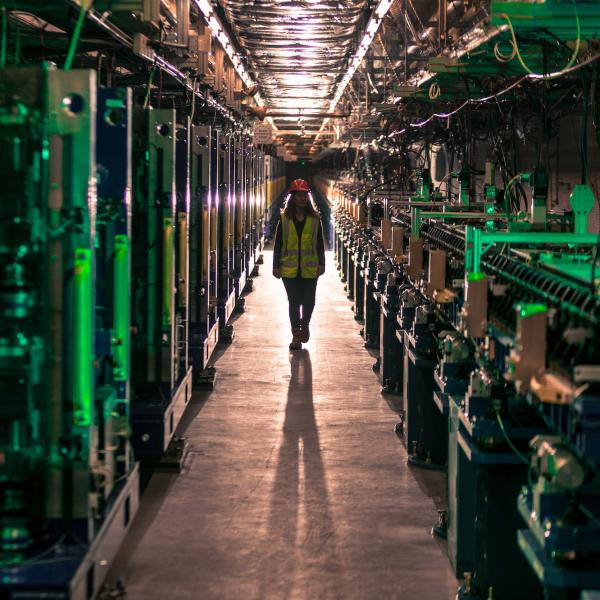
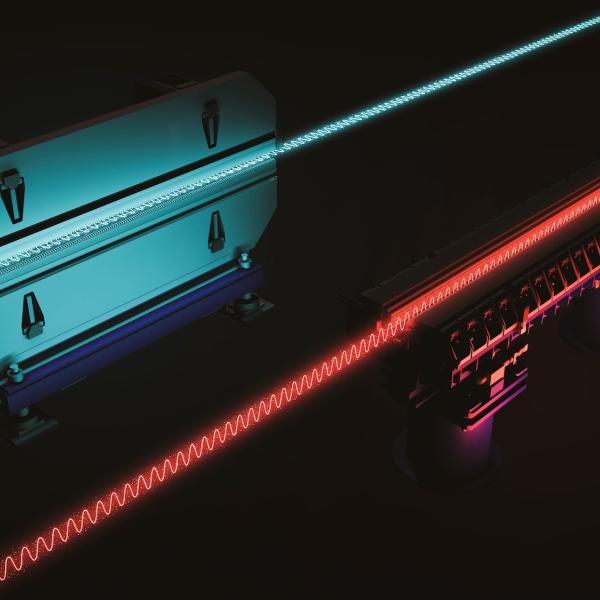
The second phase of a major upgrade project is now online at SLAC’S Linac Coherent Light Source (LCLS). On Saturday, scientists ushered an electron beam through a new undulator to produce “soft” X-rays (left). This follows the upgraded facility’s first...
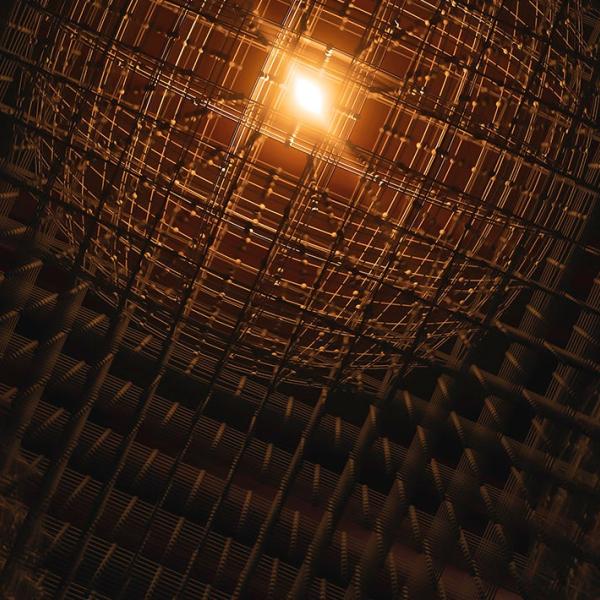
An illustration shows polarons – fleeting distortions in a material’s atomic lattice ––in a promising next-generation energy material, lead hybrid perovskite.
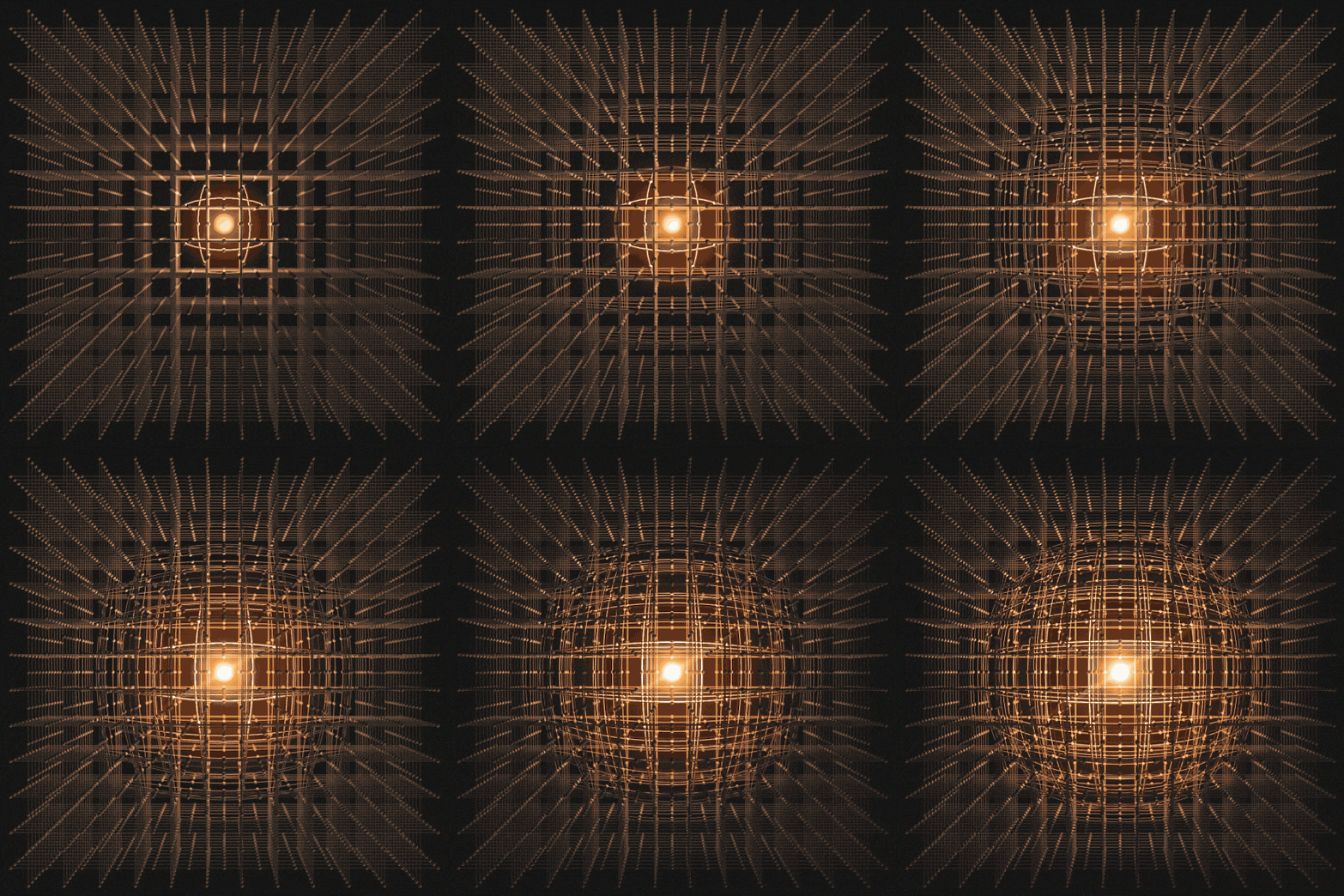
As this animation shows, polaronic distortions start very small and rapidly expand outward in all directions to a diameter of about 5 billionths of a meter, which is about a 50-fold increase. This nudges about 10 layers of atoms slightly...