April 23, 2026

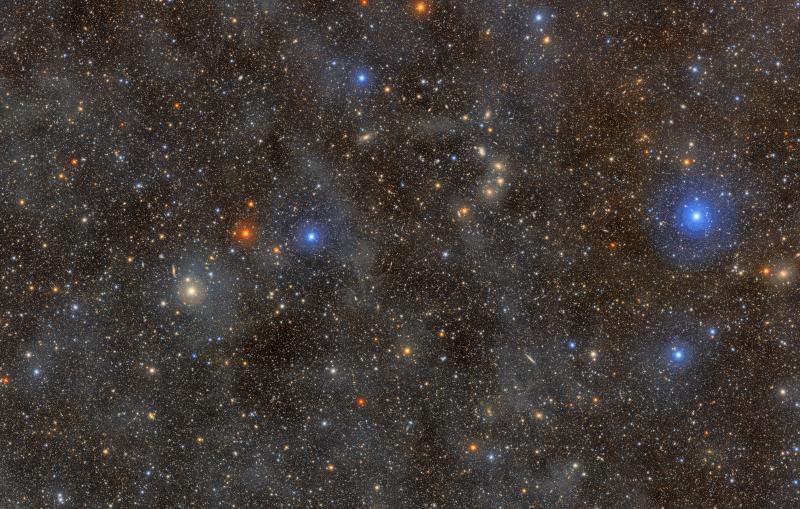
How NSF-DOE Vera C. Rubin Observatory maps the universe every night

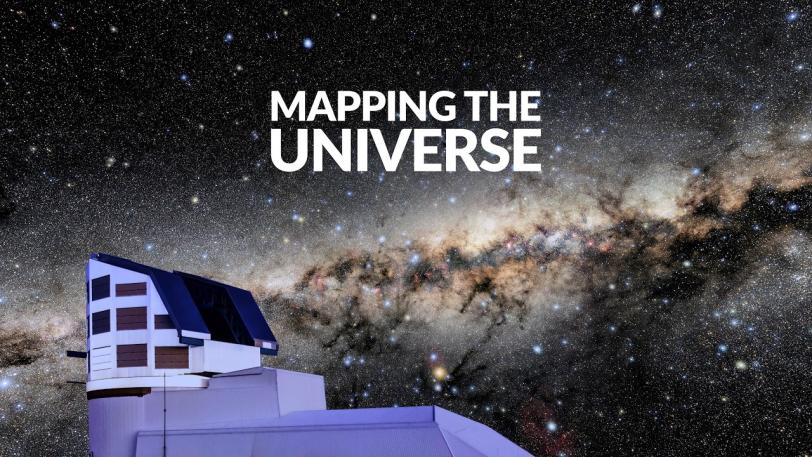
This video breaks down how Rubin will run the Legacy Survey of Space and Time (LSST) and build a 10-year time lapse of the entire Southern sky.
Video

About SLAC

SLAC National Accelerator Laboratory explores how the universe works at the biggest, smallest and fastest scales and invents powerful tools used by researchers around the globe. As world leaders in ultrafast science and bold explorers of the physics of the universe, we forge new ground in understanding our origins and building a healthier and more sustainable future. Our discovery and innovation help develop new materials and chemical processes and open unprecedented views of the cosmos and life’s most delicate machinery. Building on more than 60 years of visionary research, we help shape the future by advancing areas such as quantum technology, scientific computing and the development of next-generation accelerators.

SLAC is operated by Stanford University for the U.S. Department of Energy’s Office of Science. The Office of Science is the single largest supporter of basic research in the physical sciences in the United States and is working to address some of the most pressing challenges of our time.

Dig Deeper

Related stories

News Brief

SLAC scientists played key roles in leadership, survey design, cosmological  applications, studies of dark matter and of links to the cosmic microwave background.

Star trails over the Mayall Telescope.
News Release

The experiment’s detectors have reached their operating temperature, almost a thousand times colder than outer space.

SuperCDMS team members posing with a detector tower.
Feature

An international team of researchers simulated magnetic forces in the early universe and found they could bridge the gap between the observed and calculated...

A simulation of the distribution of matter in the early universe
News Brief

SLAC scientists played key roles in leadership, survey design, cosmological  applications, studies of dark matter and of links to the cosmic microwave background.

Star trails over the Mayall Telescope.
News Release

The experiment’s detectors have reached their operating temperature, almost a thousand times colder than outer space.

SuperCDMS team members posing with a detector tower.
Feature

An international team of researchers simulated magnetic forces in the early universe and found they could bridge the gap between the observed and calculated...

A simulation of the distribution of matter in the early universe
News Release

NSF-DOE Rubin Observatory has issued its first scientific alerts, marking a historic milestone in astrophysics and kicking off a new era of dynamic, real-time...

Star-filled teal night sky with turquoise glowing band, scattered “DATA ALERT” tags, and a white icon of the Rubin Observatory atop dark mountains.
Feature

Salleo sees strength in the big picture and minute details of the people, tools and partnerships at SLAC.

Portrait of Alberto Salleo
Feature

Cosmologists Josh Frieman and Risa Wechsler look back on the Dark Energy Survey, sharing how it’s paving the way for Rubin Observatory to dig...

Josh Frieman and Risa Wechsler