SLAC welcomes hundreds of students for Regional Science Bowl
The winning teams from Lynbrook High School and Joaquin Miller Middle School will continue on to nationals.
By Chris Patrick
Key takeaways:
- For the 21st year, SLAC hosted the Regional Science Bowl, a STEM competition for San Francisco Bay Area students that is part of the Department of Energy National Science Bowl.
- Lynbrook High School Team 1 and Joaquin Miller Middle School won the regional high school and middle school events this year.
- Both teams will compete in the national finals April 30 through May 4, 2026, in Washington, D.C.
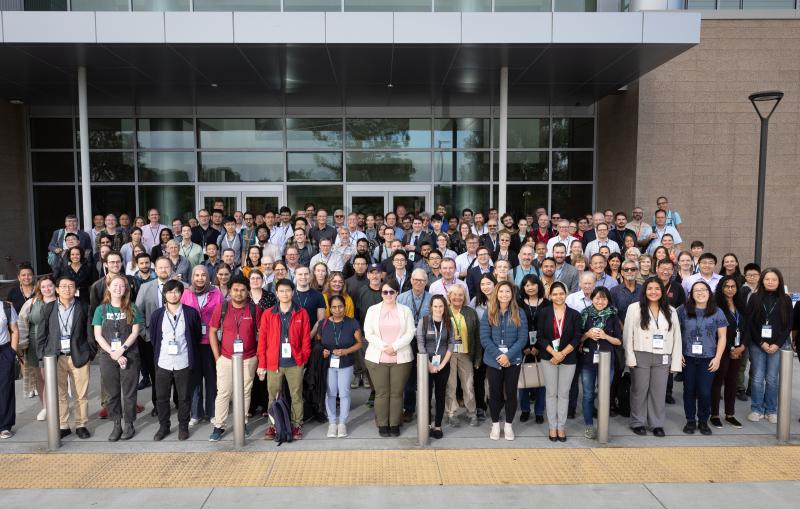
This February, the Department of Energy’s SLAC National Accelerator Laboratory hosted almost 300 San Francisco Bay Area middle and high school students for the Regional Science Bowl. The competition, part of the DOE National Science Bowl, tests students’ knowledge of biology, chemistry, Earth science, physics, energy and math, with an overarching goal of encouraging careers in science, technology, engineering and mathematics (STEM).
“This event is a unique opportunity for the students to visit SLAC and be inspired by STEM professionals,” said Molly Glover, SLAC’s regional coordinator. “Many past participants have gone on to work at DOE labs, including SLAC, where we are happy to have several alums on staff who are volunteering for the competition.”
This was SLAC’s 21st year running the event, and the lab hosted more teams than ever. The winning teams – Lynbrook High School Team 1 and Joaquin Miller Middle School – will go on to compete at the National Science Bowl, held April 30 through May 4 in Washington, D.C.
Lynbrook locks in win
At the high school event on Feb. 28, 32 teams from 27 schools competed. This included two newcomers, Carlmont High and Irvington High.
Lynbrook High Team 1 secured the win. Lynbrook High has won the regional several times and consistently placed in the top three since SLAC began hosting the Regional Science Bowl in 2005. This year, Saratoga High’s Team 1 and Lynbrook High’s Team 2 – who placed second and third, respectively – gave them a run for their money during highly competitive round robins.

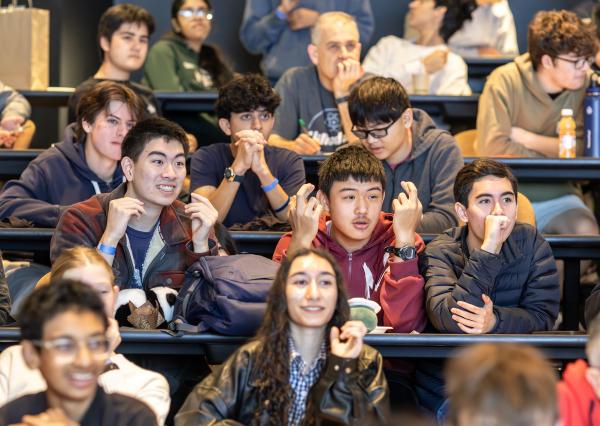
“In later rounds, facing our Team 2 was a moment of pride for both teams,” said Kathleen Loia, biology teacher and science club advisor at Lynbrook High. “Our team works pretty hard and also helps coach the local middle school team. They’re thrilled to return to the National Science Bowl.”
Lynbrook won the national competition in 2022.
The team from Hillsdale High was voted the winners of the Good Sport Award, which was established in 2023 to recognize team spirit and goodwill.
Joaquin Miller maintains winning streak
Held on Feb. 7, the middle school event hosted 28 teams from 22 schools, including four newcomers: John Sinnott Elementary, Mabel Mattos Elementary, Merryhill School 1074, and Stratford Preparatory Milpitas.
Joaquin Miller Middle won for the fifth year in a row. Heather Simonovich, sixth grade science teacher and Science Bowl advisor at Joaquin Miller Middle, credits the team’s win to their regular practice with high school student coaches as well as their enthusiasm for science.

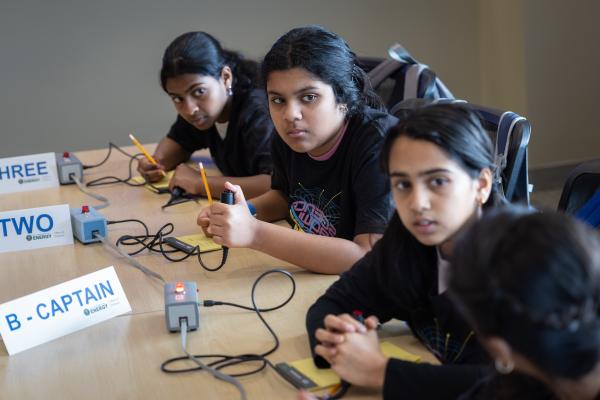
“We had two veteran members and three new members on our competing team, and all were very passionate and well-prepared,” Simonovich said. “The win means a lot to them! They feel excited and honored to compete at the national level and represent our region and our school.”
The runners-up were both from the Challenger School: the Berryessa team earned second place and Middlefield earned third. Mabel Mattos Elementary won the Good Sport Award.
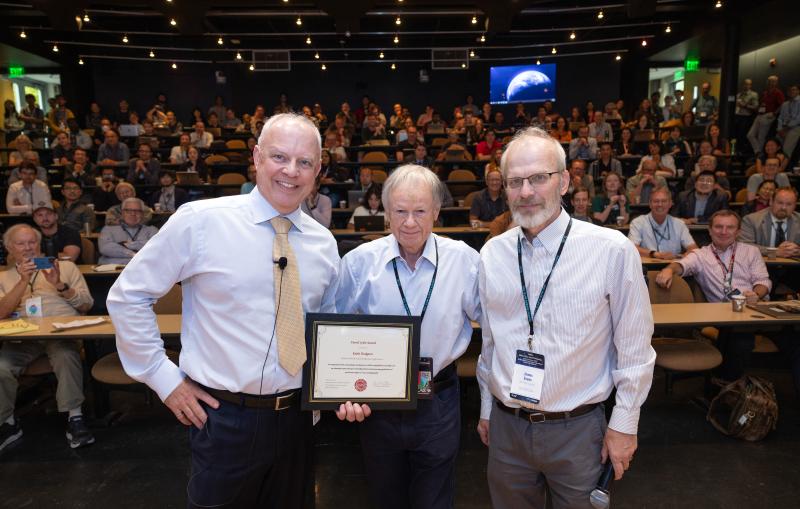
A record 159 volunteers supported the events. To recognize the commitment of volunteers to SLAC’s values of excellence, integrity, collaboration, respect and creativity, the Ray Ng SLAC Cares Science Bowl Volunteer Award was established in 2023. This year, two first-time volunteers won: Anoop Rao and Kay Warchol.
The DOE Office of Science manages the National Science Bowl and sponsors the finals competition.
For media inquiries, please contact media@slac.stanford.edu. For other questions or comments, contact SLAC Strategic Communications & External Affairs at communications@slac.stanford.edu.
About SLAC
SLAC National Accelerator Laboratory explores how the universe works at the biggest, smallest and fastest scales and invents powerful tools used by researchers around the globe. As world leaders in ultrafast science and bold explorers of the physics of the universe, we forge new ground in understanding our origins and building a healthier and more sustainable future. Our discovery and innovation help develop new materials and chemical processes and open unprecedented views of the cosmos and life’s most delicate machinery. Building on more than 60 years of visionary research, we help shape the future by advancing areas such as quantum technology, scientific computing and the development of next-generation accelerators.
SLAC is operated by Stanford University for the U.S. Department of Energy’s Office of Science. The Office of Science is the single largest supporter of basic research in the physical sciences in the United States and is working to address some of the most pressing challenges of our time.
Related stories