SLAC topics

X-ray science RSS feed

X-ray studies at SLAC facilities help scientists understand the fundamental workings of nature by probing matter in atomic detail.

atoms forming a tentative bond
News Brief

SLAC researchers drew on advanced computation and X-ray methods to track down a water-splitting copper catalyst.

Illustration of X-ray beam interacting with the catalyst surface.
News Brief

The team watched how a strained strontium titanate membrane crossed into ferroelectric – and quantum – territory. 

A gold beam bounces off an atomic lattice made of red and blue spheres.
Feature

Using SLAC’s X-ray laser, the method revealed atomic motions in a simple catalyst, opening the door to study more complex molecules key to chemical...

Three molecules on a streaky red and blue background.
Feature

Advanced imaging technique reveals catalyst degradation processes, addressing a key barrier to converting carbon dioxide into liquid fuel.

Walter Drisdell and Aidan Coffey of Berkeley Lab’s Chemical Sciences Division at Berkeley Lab’s LiSA research facility adjusting a pump that flows liquid through the electrochemical cell
News Brief

The new findings highlight the need for ongoing monitoring of H5N1’s evolution in nature. 

Chickens in a grassy field
Feature

Following a boom in catalysis users at SSRL, Beam Line 10-2 has been transformed and outfitted with new technologies. 

Beam Line 10-2 hutch
Feature

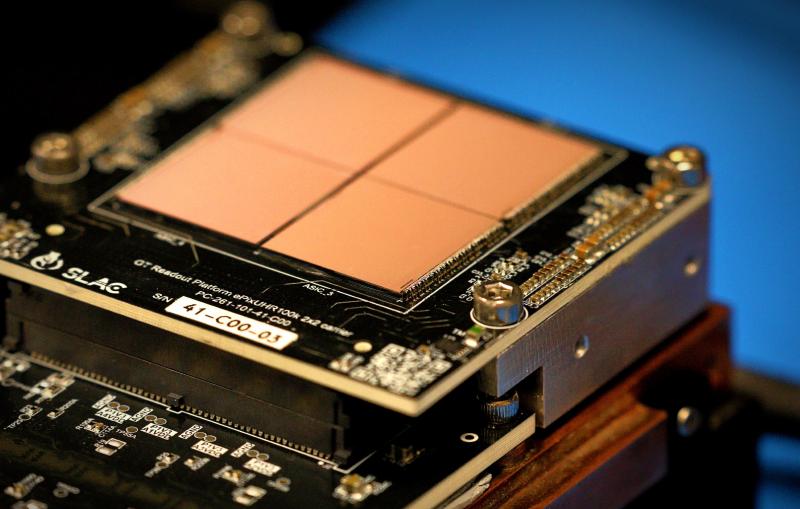
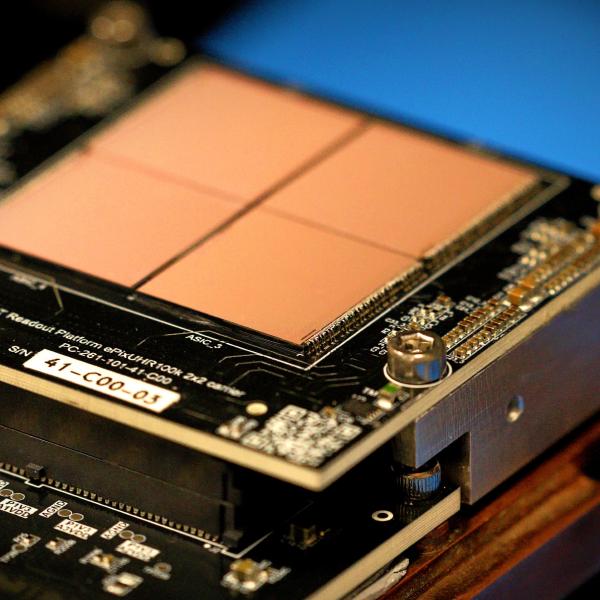
The microelectronics that power daily life and speed discoveries in science and technology are the focus of a bold new vision to make them...

photo of detector
News Brief

A SLAC study shows a process called atomic relaxation offers a new way to explore quantum states in these puzzling materials.

Light blue wavy lines on a maroon red background.
Feature

Researchers across the lab are developing AI tools to harness data and particle beams in real time and make molecular movies, speeding up the...

Graphic of AI in several science areas
News Brief

SLAC’s SSRL helps pin down key players in the microbial production of methylmercury, a poison that can accumulate in fish.

A school of fish.
Feature

An associate scientist at SSRL, Richardson studies plant growth to find ways to enhance nutrient uptake in plants, especially in challenging conditions – such...

Jocelyn Richardson
Feature

For nearly 50 years, Hodgson has illuminated the synchrotron radiation community through his pioneering research, innovations, leadership, advocacy and mentorship at the Stanford Synchrotron...

Photo of a group of men