SLAC topics

X-ray light sources and electron imaging RSS feed

X-ray light sources and electron imaging are advanced techniques used to study the structure and properties of materials. X-ray light sources use high-energy photons to produce X-rays, while electron imaging uses high-energy electrons to produce detailed images of samples. 
Browse tagged content

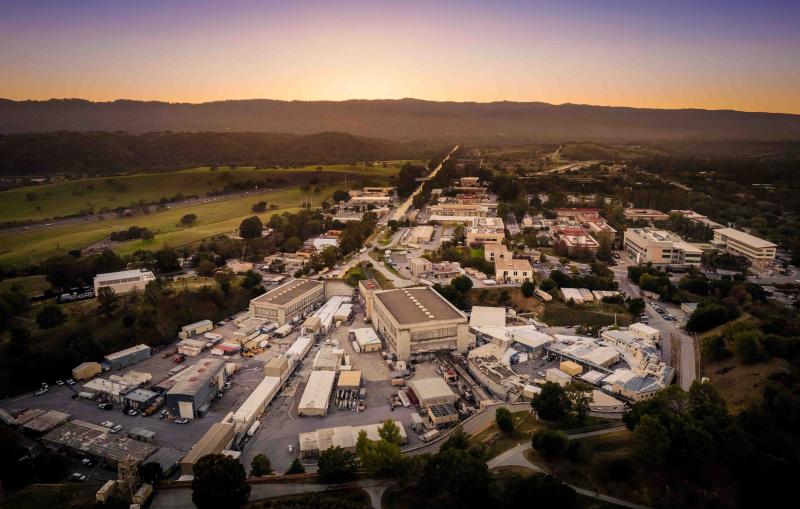
Aerial view of SLAC
News Brief

Nickel dopants could improve sustainable production of ethylene oxide, a chemical widely used in industrial manufacturing.

An illustration of purple balls (oxygen) gather near a nickel atom embedded in a sheet of silver.
News Brief

Supported by SLAC’s catalysis group, researchers have discovered a promising method to remove contaminants during the making of polymers.

Molecules strike a material below.
News Brief

SSRL scientists have figured out how platinum electrodes dissolve, potentially paving the way for renewable energy improvements.

White dots on a black background, with additional purple and blue dots and purple triangles connecting them.
News Brief

The research lays the groundwork for deeper exploration of high-temperature superconducting materials, with real-world applications such as lossless power grids and advanced quantum technologies.

superconductivity
News Brief

SLAC researchers help develop an automated analytical method to speed the discovery process in single atom catalysts.  

Visual depicting a new quatitative analysis method for catalysis
News Brief

LCLS X-rays allowed researchers to connect the molecular dynamics of supercritical carbon dioxide, used in industrial and environmental applications, with its unique properties.

A figure showing atoms and blue blobs projecting an image onto a screen.
News Brief

A SLAC study shows a process called atomic relaxation offers a new way to explore quantum states in these puzzling materials.

Light blue wavy lines on a maroon red background.
Feature

AI is playing a key role in helping SLAC researchers find new galaxies and tiny neutrinos, and discover new drugs.

Diffraction pattern
Feature

Researchers across the lab are developing AI tools to harness data and particle beams in real time and make molecular movies, speeding up the...

Graphic of AI in several science areas
News Brief

SLAC’s SSRL helps pin down key players in the microbial production of methylmercury, a poison that can accumulate in fish.

A school of fish.
Feature

An associate scientist at SSRL, Richardson studies plant growth to find ways to enhance nutrient uptake in plants, especially in challenging conditions – such...

Jocelyn Richardson
Feature

Descamps was recognized for turning the world’s most powerful X-ray laser into a sophisticated tool for probing extremely hot, dense matter.

Adrien Descamps presents his research.