SLAC topics

SUNCAT Center for Interface Science and Catalysis RSS feed

Catalysts are the unsung heroes of chemistry, accelerating reactions used to make fertilizers, fuels and consumer products. SUNCAT’s focus is on improving catalysts for making chemicals and fuels with renewable energy.
Visit SUNCAT website

Illustration of nanocrystals forming into superlattices at SLAC's SSRL
News Brief

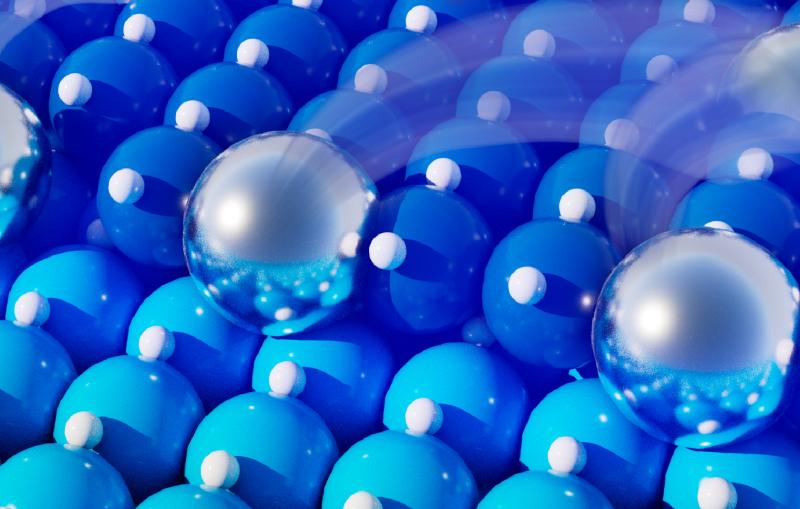
Researchers reveal why trace amounts of alloy added to some catalysts keep them performing better over time. The study suggests models that could boost...

Clustered orange spheres float beside a reflective gray plane, casting soft glows and reflections amid swirling ribbon-like streaks.
News Brief

SLAC researchers drew on advanced computation and X-ray methods to track down a water-splitting copper catalyst.

Illustration of X-ray beam interacting with the catalyst surface.
Feature

He met with SLAC staff and toured the lab’s cutting-edge facilities, diving into world-leading research in X-ray and ultrafast science, artificial intelligence, astrophysics and...

Secretary Wright Visit LCLS
Feature

Advanced imaging technique reveals catalyst degradation processes, addressing a key barrier to converting carbon dioxide into liquid fuel.

Walter Drisdell and Aidan Coffey of Berkeley Lab’s Chemical Sciences Division at Berkeley Lab’s LiSA research facility adjusting a pump that flows liquid through the electrochemical cell
Feature

Following a boom in catalysis users at SSRL, Beam Line 10-2 has been transformed and outfitted with new technologies. 

Beam Line 10-2 hutch
News Brief

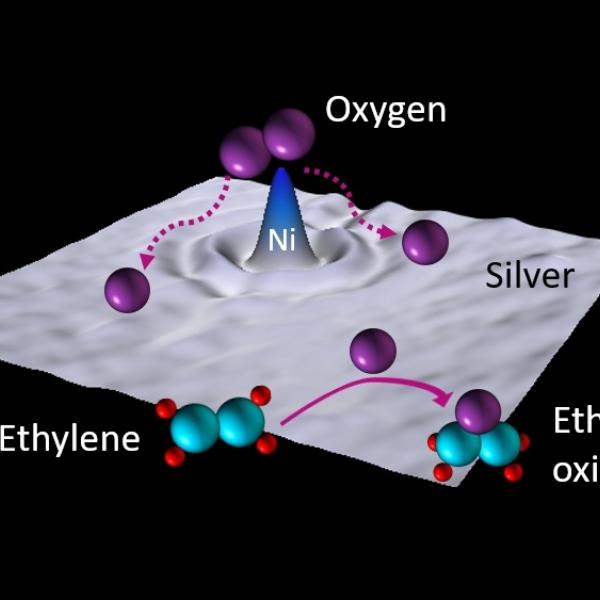
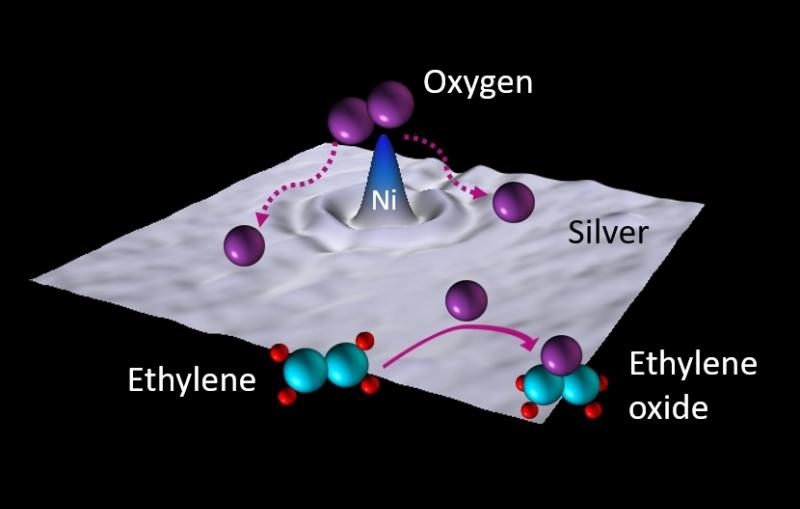
Nickel dopants could improve sustainable production of ethylene oxide, a chemical widely used in industrial manufacturing.

An illustration of purple balls (oxygen) gather near a nickel atom embedded in a sheet of silver.
News Brief

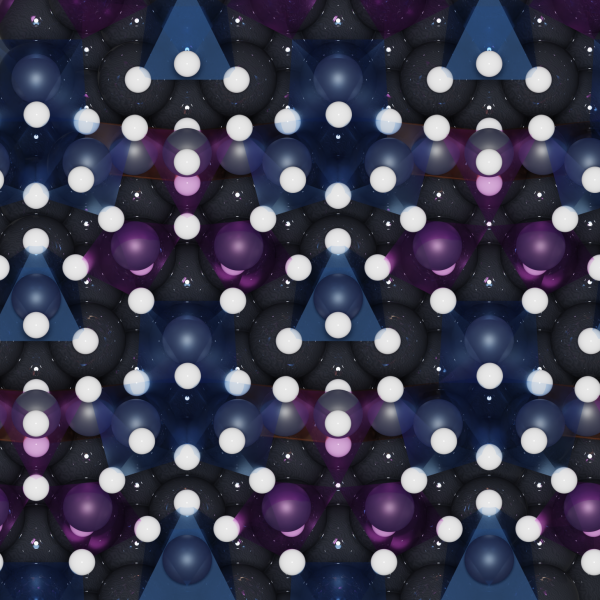
SSRL scientists have figured out how platinum electrodes dissolve, potentially paving the way for renewable energy improvements.

White dots on a black background, with additional purple and blue dots and purple triangles connecting them.
News Brief

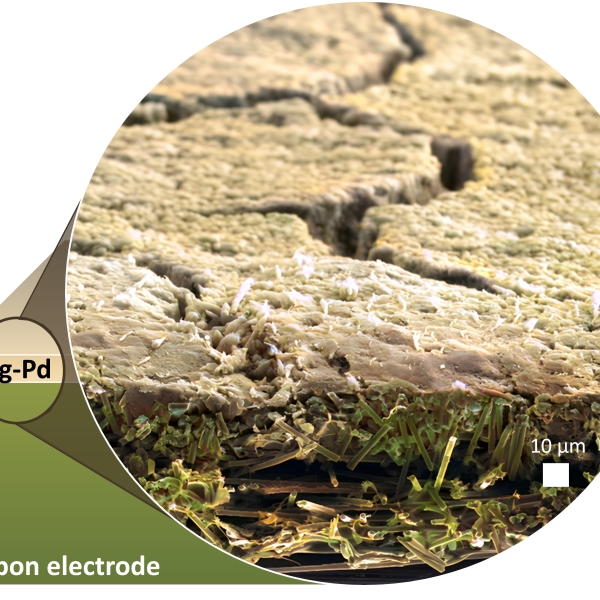
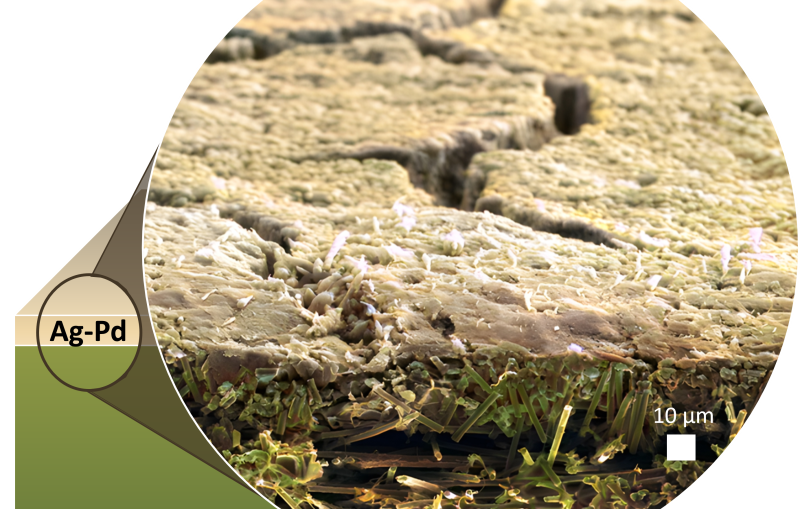
The team reduced the amount of expensive platinum group metals needed to make an effective cell and found a new way to test future...

An illustration of a thin film resembling dry, cracked earth.
Feature

Researchers demonstrate a way to remove the potent greenhouse gas from the exhaust of engines that burn natural gas.  

Illustration of bubbles of methane on surface of catalyst
Feature

The SLAC-Stanford team pulled hydrogen directly from ocean waters. Their work could help efforts to generate low-carbon fuel for electric grids, cars, boats and...

This photograph shows ocean water funneling over rocks on about half of the photograph and deeper ocean water on the other part of the photograph. It is a view of the ocean from above, in the sky.
Feature

Two GEM Fellows reflect on their summer internships at SLAC and share their thoughts on representation and mentorship.

Nate Keyes and Zariq George
Feature

Encapsulating precious-metal catalysts in a web-like alumina framework could reduce the amount needed in catalytic converters – and our dependency on these scarce metals.

A web of red material encapsulates blue polyhedrons.