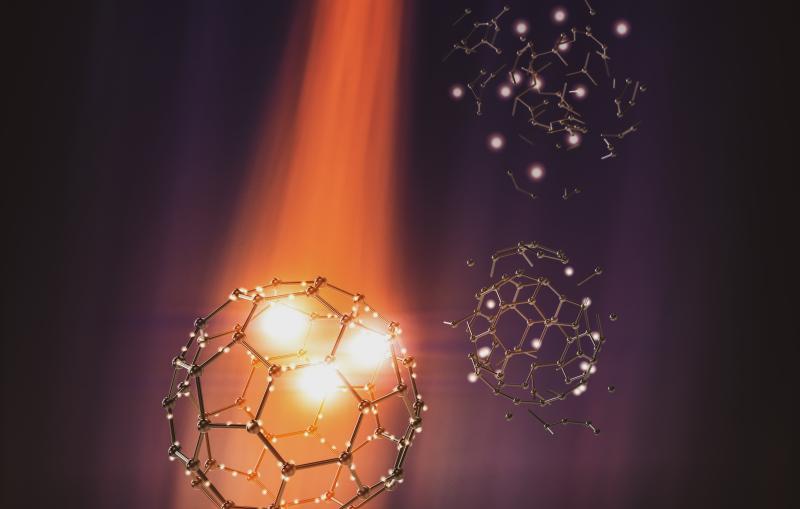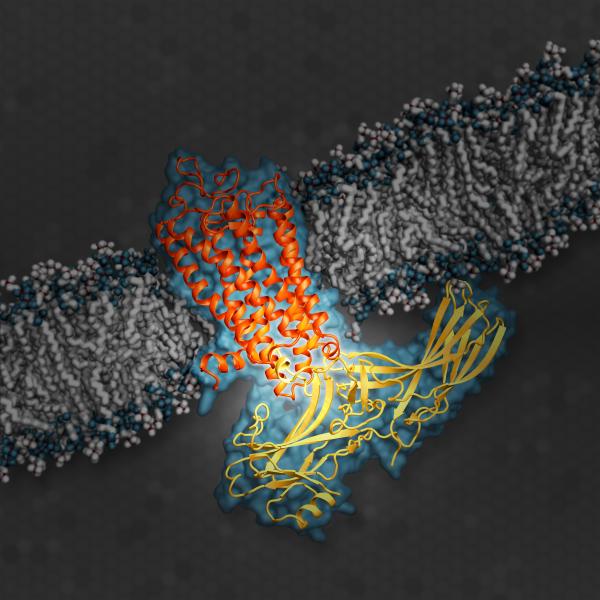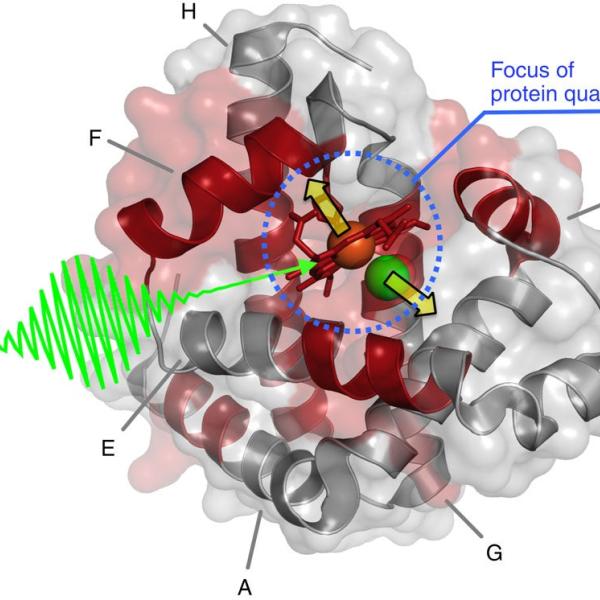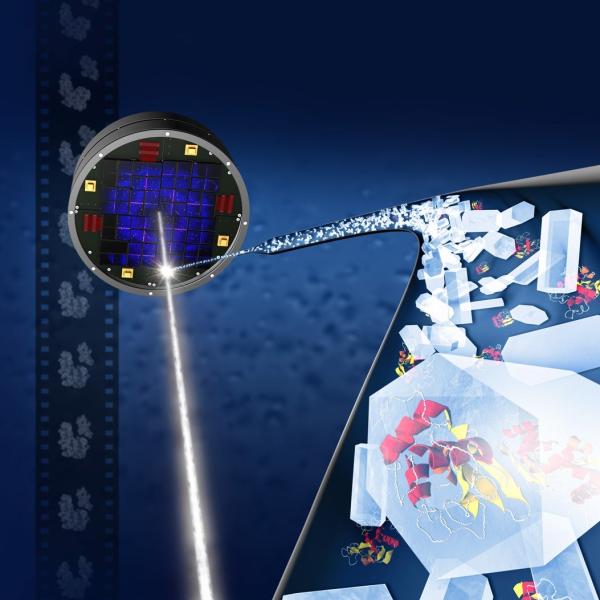
The past decade has seen the exciting birth of the first X-ray laser, the LCLS free electron laser (FEL) followed by other FELs around the world, leading to an explosion of new science, in the femtosecond and very recently in the attosecond regime. I will present our recent time-resolved experimental results using pump-probe technique with FELs to watch, in real time, the response of large molecules to intense X-rays as well as to examine the role of physical and chemical effects and how they lead to the timing of bonds breaking and bond forming.
(Greg Stewart/SLAC National Accelerator Laboratory)
A team led by Stanford University scientists is using software to breathe new life into results from past biological experiments at SLAC’s X-ray laser.
A new experimental station in development at SLAC will expand capabilities for atomic-scale explorations in human health, biology, energy and environmental science.
William Weis, PhD, chairman and professor of photon science at the Department of Energy's SLAC National Accelerator Laboratory, has been appointed chairman of the...
A tiny change in the length of a chemical bond makes a big difference in the activity of a molecule important in health, drug development and chemical synthesis
A team led by Stanford University scientists is using software to breathe new life into results from past biological experiments at SLAC’s X-ray laser.
A new experimental station in development at SLAC will expand capabilities for atomic-scale explorations in human health, biology, energy and environmental science.
William Weis, PhD, chairman and professor of photon science at the Department of Energy's SLAC National Accelerator Laboratory, has been appointed chairman of the Department of Structural Biology in the Stanford School of Medicine.