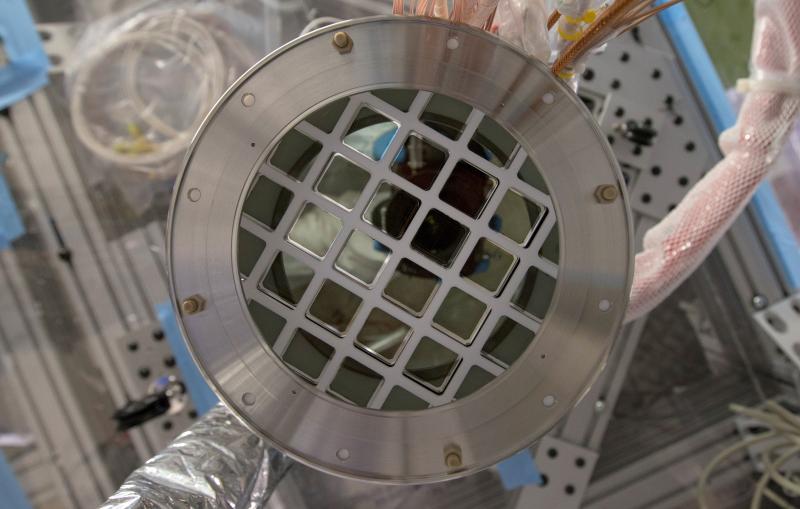
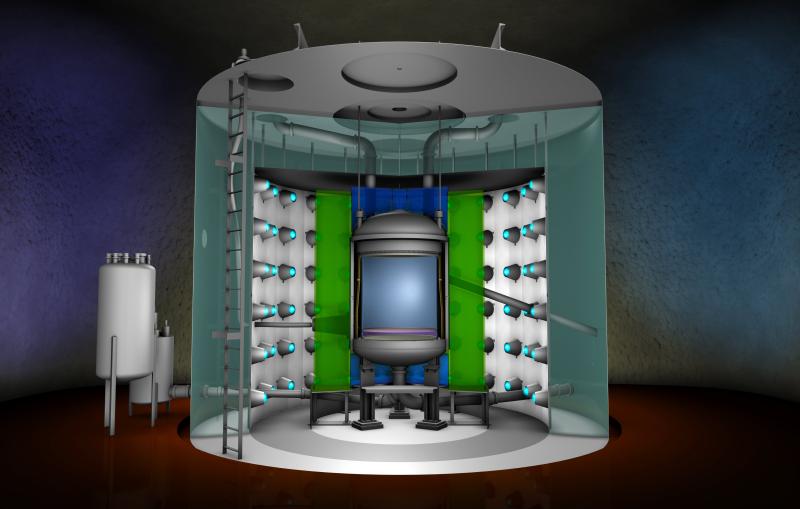
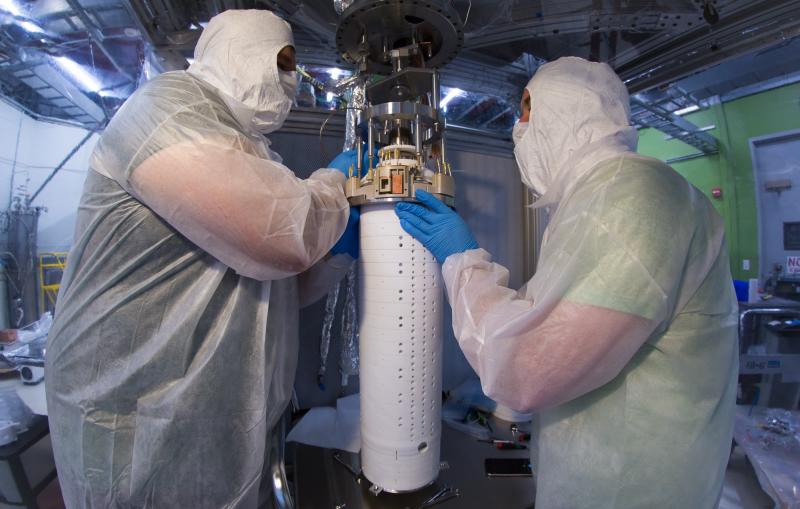
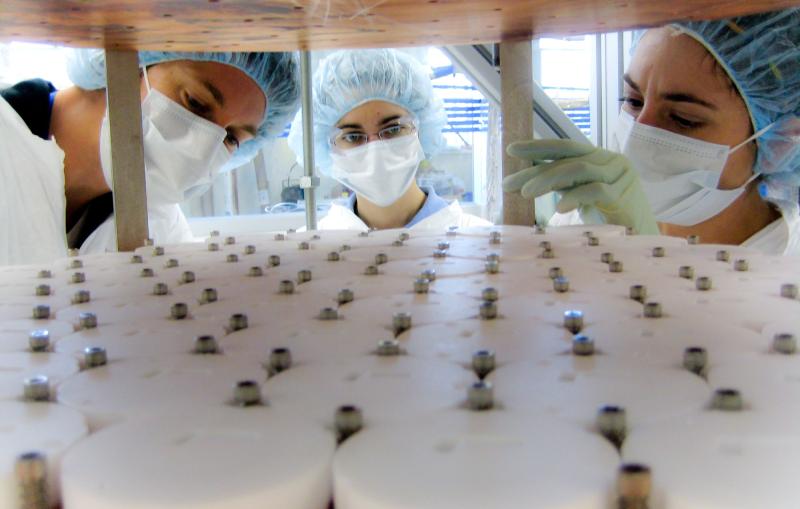
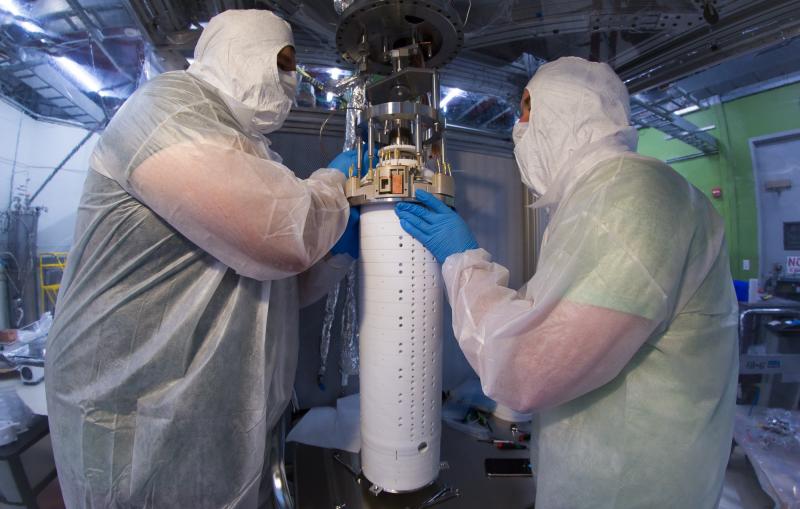
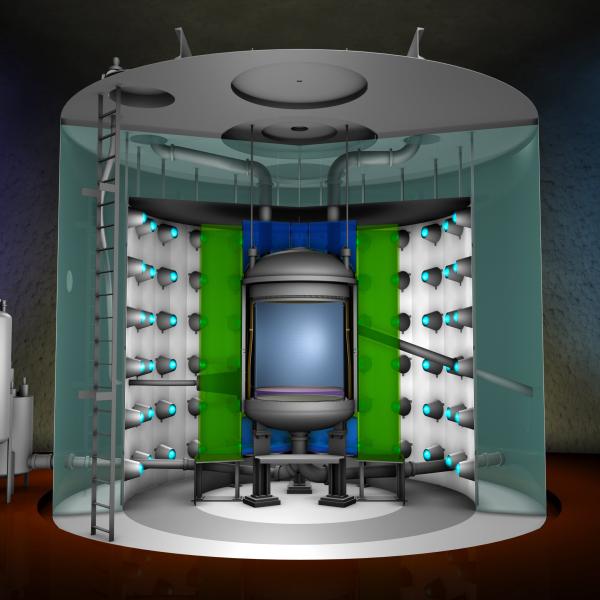
The LZ detector will use a giant tank of xenon and cutting edge detectors to search for a prominent dark matter candidate, weakly interacting massive particles.
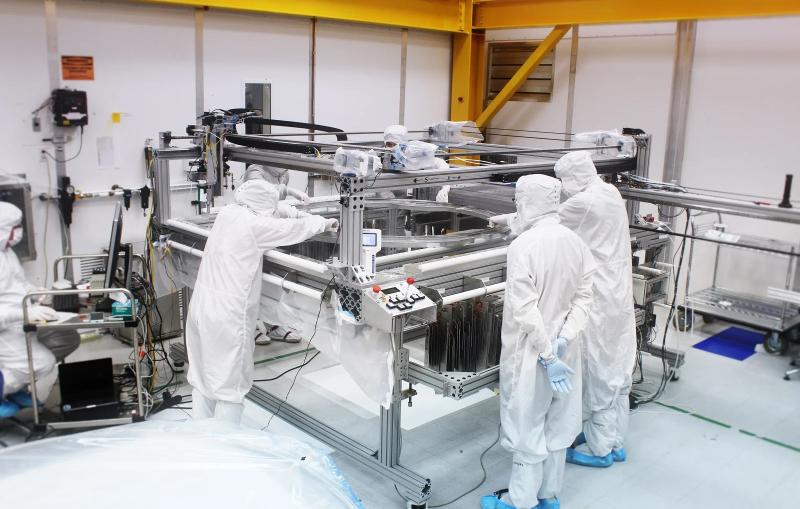
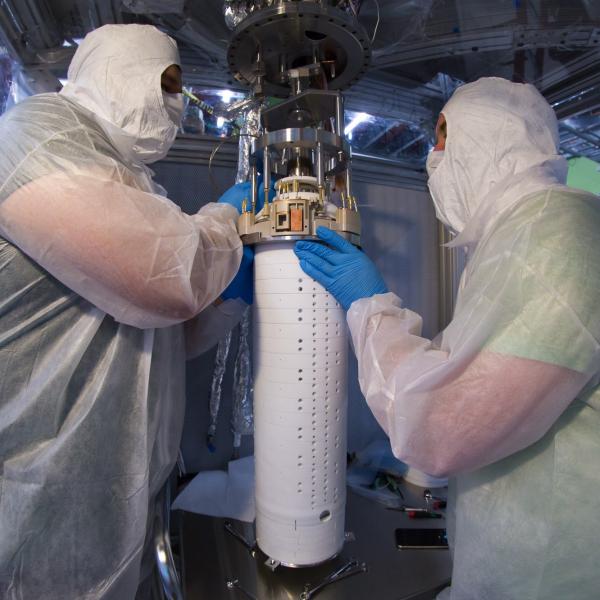
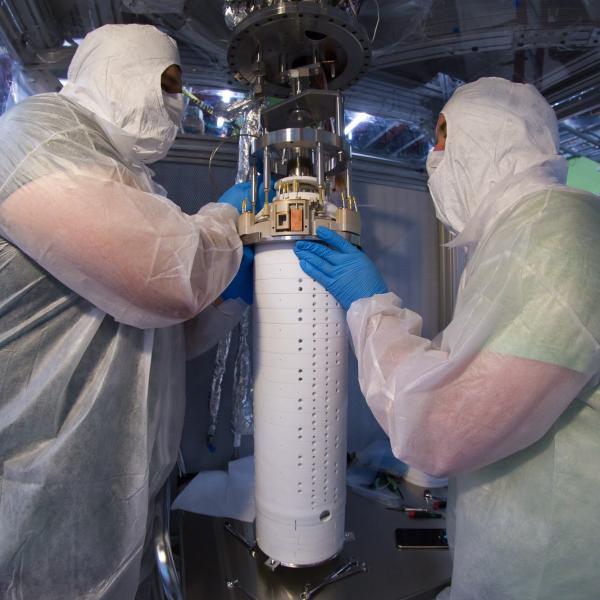
Members of SLAC’s LZ team with the loom they used to weave high-voltage grids for the next-gen dark matter experiment.
(Farrin Abbott/SLAC National Accelerator Laboratory)
The emeritus physicist was honored for the development of novel detectors that have greatly advanced experiments in particle physics, especially BABAR, which looked into...
Dark matter hunters around the world pursue three approaches to look for fingerprints of ghostly WIMPs: on the Earth’s surface, underground and in space.
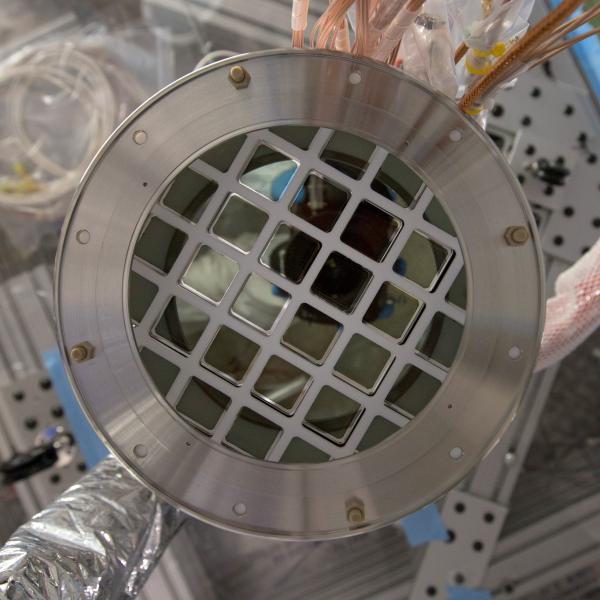
System tests at SLAC continue with 32 light sensors - up from a single one - in a small-scale version of the future experiment, which will use nearly 500 of them.
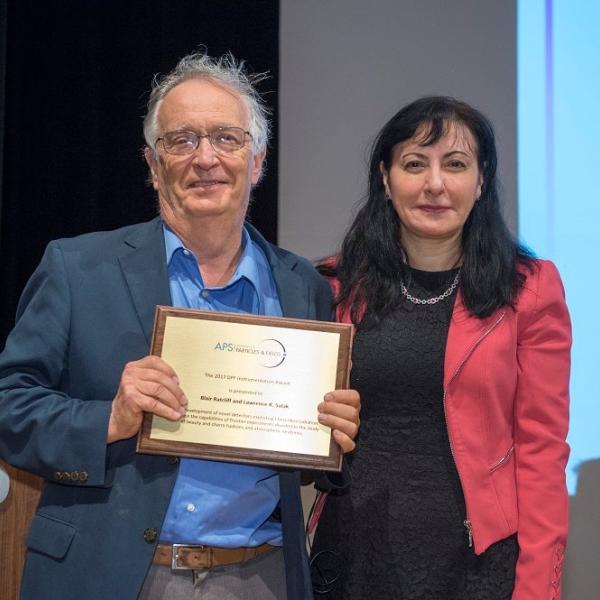
The emeritus physicist was honored for the development of novel detectors that have greatly advanced experiments in particle physics, especially BABAR, which looked into the matter-antimatter imbalance of the universe.
Dark matter hunters around the world pursue three approaches to look for fingerprints of ghostly WIMPs: on the Earth’s surface, underground and in space.