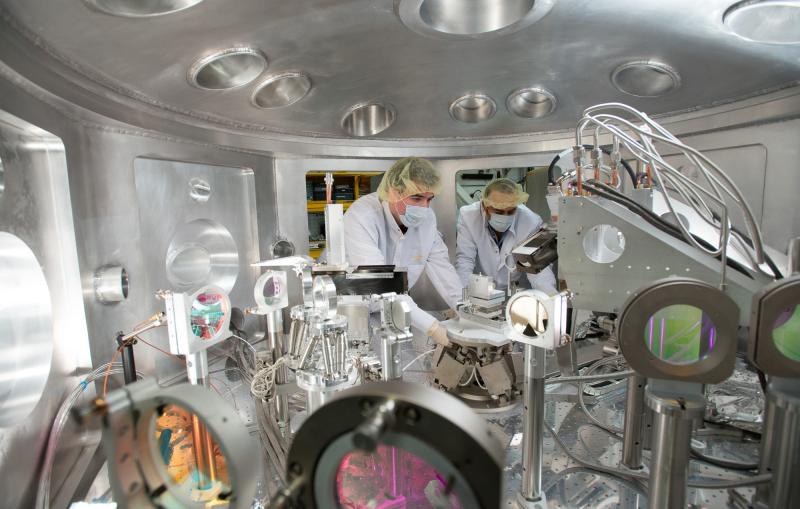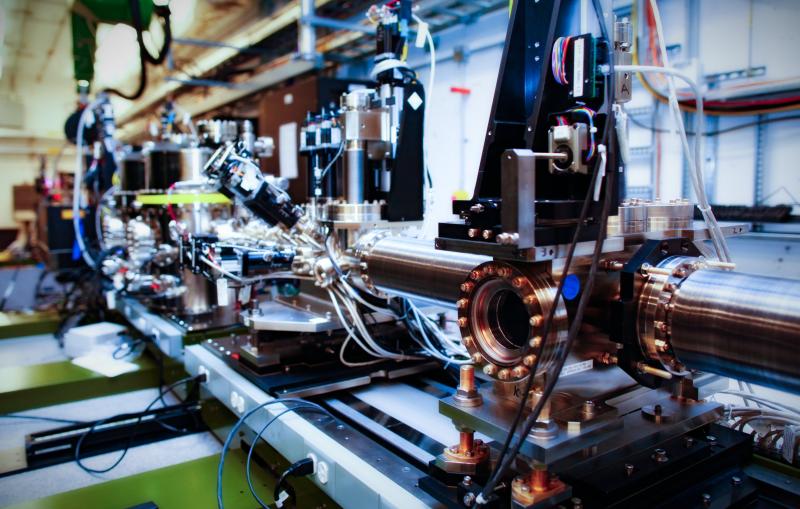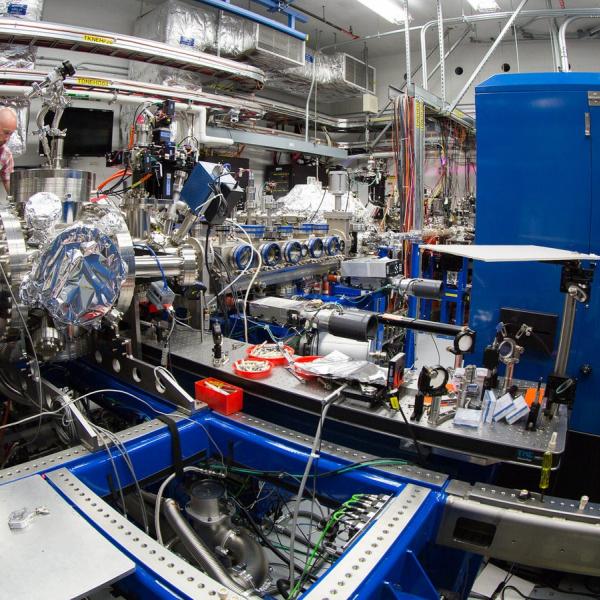


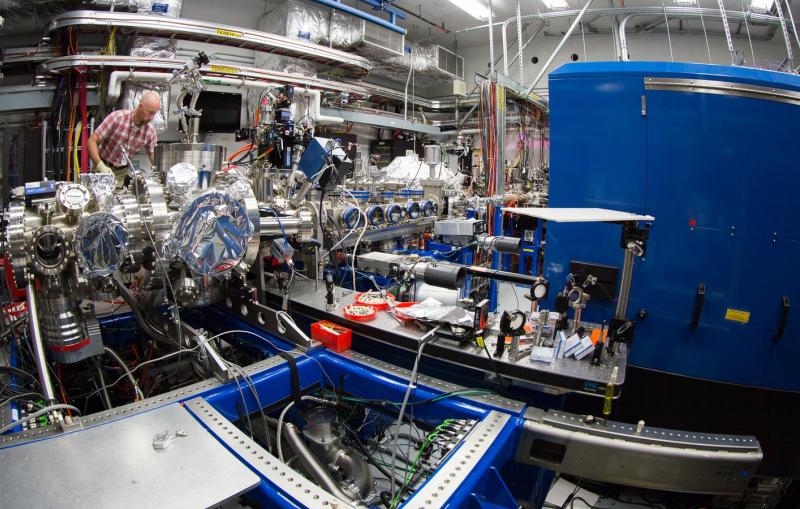
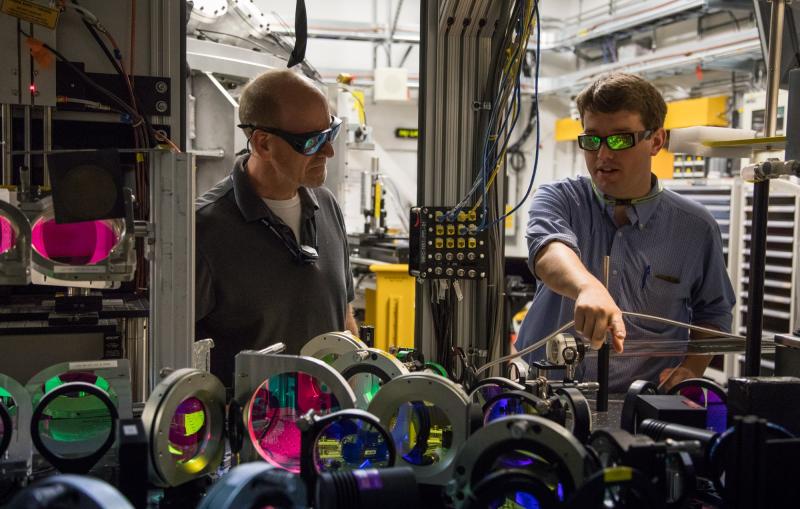

The Linac Coherent Light Source at SLAC, the world’s first hard X-ray free-electron laser, takes X-ray snapshots of atoms and molecules at work, revealing fundamental processes in materials, technology and living things.

Tripling the energy and refining the shape of optical laser pulses at LCLS’s Matter in Extreme Conditions instrument allows researchers to recreate higher-pressure conditions...
Zeeshan Ahmed, Frederico Fiuza and Emilio Nanni will each receive about $2.5 million over five years to pursue cutting-edge research into cosmic inflation, plasma...
Extraordinarily precise measurements -- within millionths of a billionth of a second and a billionth of a hair's breadth -- show this ‘electron-phonon coupling’...
A new X-ray laser technique allows scientists to home in on these single-electron triggers to better understand organic molecules that respond to light, including...
With SLAC’s X-ray laser and synchrotron, scientists measured exactly how much energy goes into keeping this crucial bond from triggering a cell's death spiral.
Tripling the energy and refining the shape of optical laser pulses at LCLS’s Matter in Extreme Conditions instrument allows researchers to recreate higher-pressure conditions and explore unsolved questions relevant to fusion energy, plasma physics and materials science.
Zeeshan Ahmed, Frederico Fiuza and Emilio Nanni will each receive about $2.5 million over five years to pursue cutting-edge research into cosmic inflation, plasma acceleration and using terahertz waves to accelerate particles.
The research team was able to watch energy from light flow through atomic ripples in a molecule. Such insights may provide new ways to develop a class of materials that improve efficiency and reduce the size of applications like solar...
Extraordinarily precise measurements -- within millionths of a billionth of a second and a billionth of a hair's breadth -- show this ‘electron-phonon coupling’ can be far stronger than predicted, and could potentially play a role in unconventional superconductivity.
A new X-ray laser technique allows scientists to home in on these single-electron triggers to better understand organic molecules that respond to light, including receptors in your eyes, plastic products and DNA building blocks that need to protect themselves from...
With SLAC’s X-ray laser and synchrotron, scientists measured exactly how much energy goes into keeping this crucial bond from triggering a cell's death spiral.