






SLAC topics

Energy sciences RSS feed

One of the most urgent challenges of our time is discovering how to generate the energy and products we need sustainably, without compromising the well-being of future generations by depleting limited resources or accelerating climate change. SLAC pursues this goal on many levels.
Browse tagged content

Studies of atomic-level processes
Feature

Now the startup, Lumeras LLC, has a viable commercial product, and scientists have a new tool for studying the behavior of complex materials.

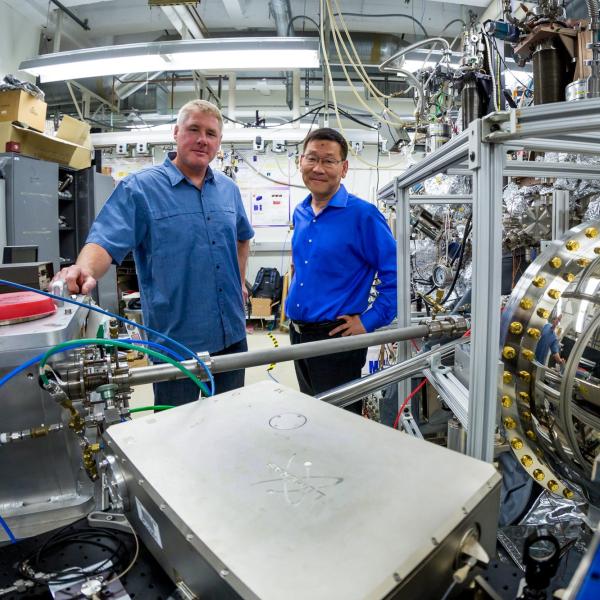
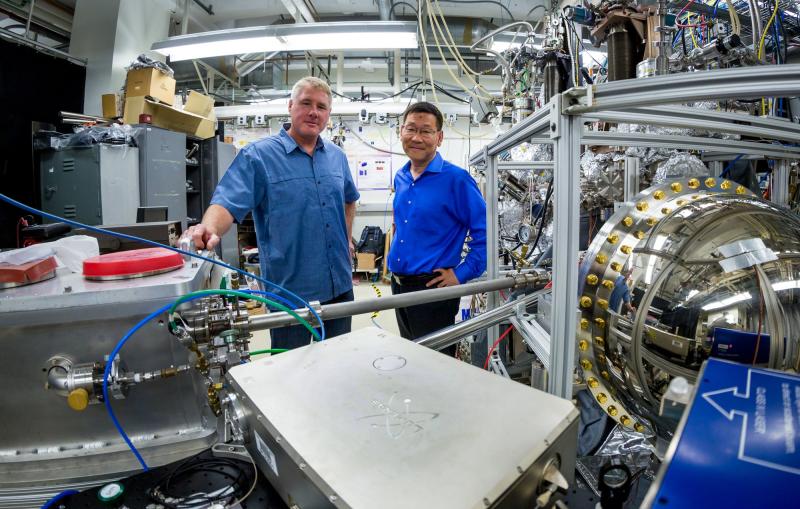
Lumeras founder Andrew Merriam, left, and SLAC/Stanford Professor Zhi-Xun Shen with a tabletop laser the company developed
Feature

Yi Cui and colleagues have developed new ways to improve hydrogen production and rechargeable zinc batteries.

Feature

Taken at SLAC, microscopic footage of exploding liquids will give researchers more control over experiments at X-ray lasers.

Feature

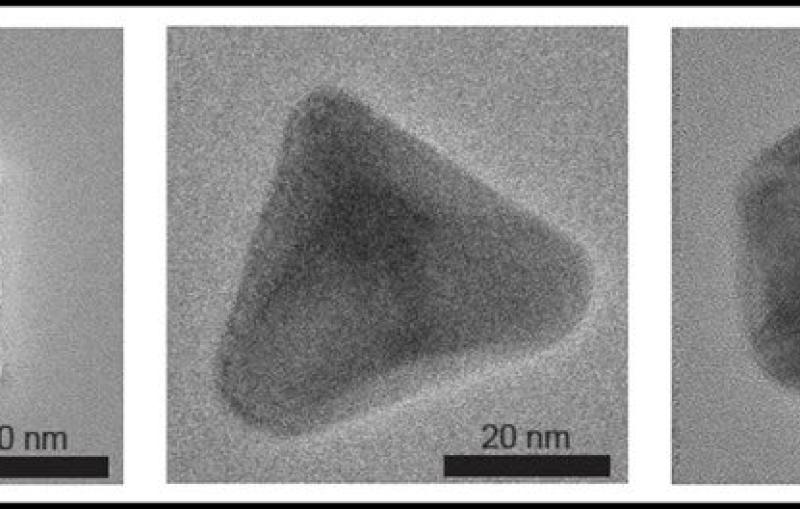
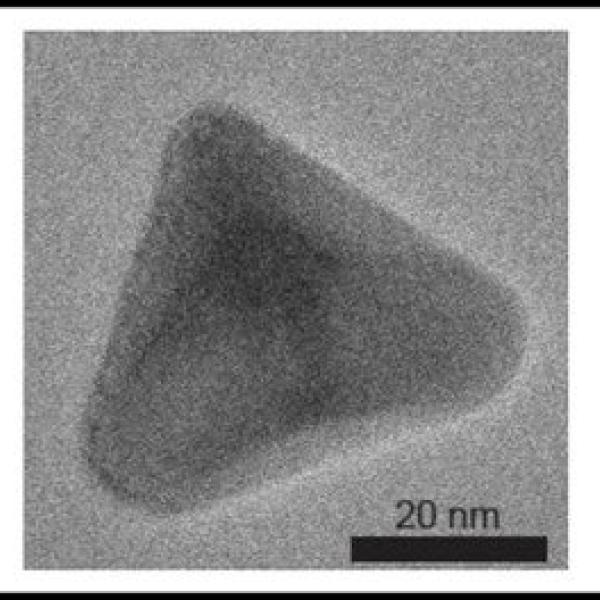
Many technologies rely upon nanomaterials that can absorb or release atoms quickly and repeatedly. New work provides a first look inside these phase-changing nanoparticles.

Feature

Adding pressure could improve the performance of solar cells made of perovskites, a promising photovoltaic material.

News Release

Scientists have used X-rays to observe exactly how silver electrical contacts form during manufacturing of solar modules.

News Release

Wrapping silicon anode particles in custom-fit graphene cages could solve two major obstacles to using silicon in high-capacity lithium ion batteries.

Illustration of silicon particles with and without graphene cages
Feature

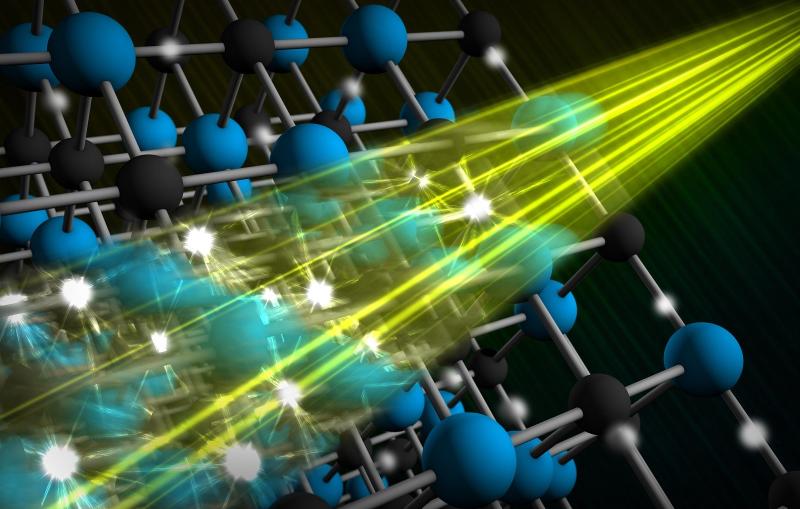
SLAC and Stanford scientists discovered that a single layer of tiny diamonds increases an electron gun’s emission 13,000 fold. Potential applications include electron microscopes...

Nick Melosh holds a model of a diamondoid
Feature

Researchers at SLAC have found a simple new way to study very delicate biological samples – like proteins at work in photosynthesis and components...

Feature

SLAC, Stanford scientists discover that bombarding and stretching a catalyst opens holes on its surface and makes it much more reactive. Potential applications include...

Illustration of a catalyst being bombarded with argon atoms to create holes where chemical reactions can take place.
News Release

A team led by SLAC scientists combined powerful magnetic pulses with some of the brightest X-rays on the planet to discover a surprising 3-D...

Image - In this artistic rendering, a magnetic pulse (right) and X-ray laser light (left) converge on a superconductor material to study the behavior of its electrons. (SLAC National Accelerator Laboratory)
Feature

A process developed by Stanford and SLAC scientists has potential for scaling up to manufacture clear, flexible electrodes for solar cells, displays and other...

Stanford and SLAC postdoctoral researcher Sean Andrews with solution shearing instrument