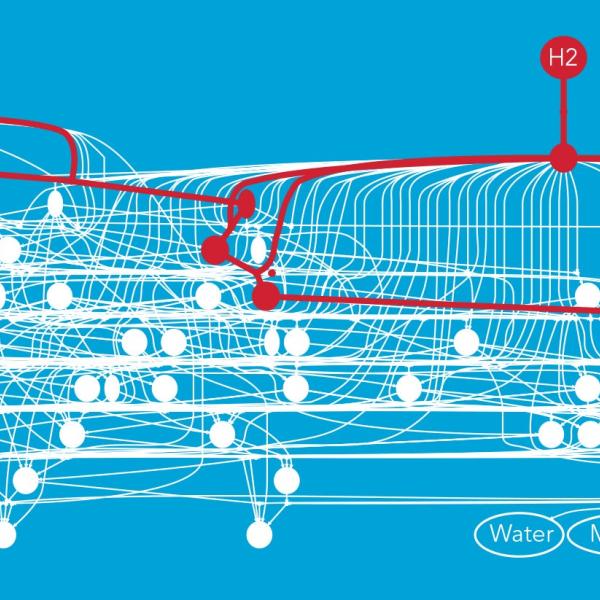
Catalysts are the unsung heroes of chemistry, accelerating reactions used to make fertilizers, fuels and consumer products. Our work aims to make catalysts more efficient and reduce the use of fossil fuels.
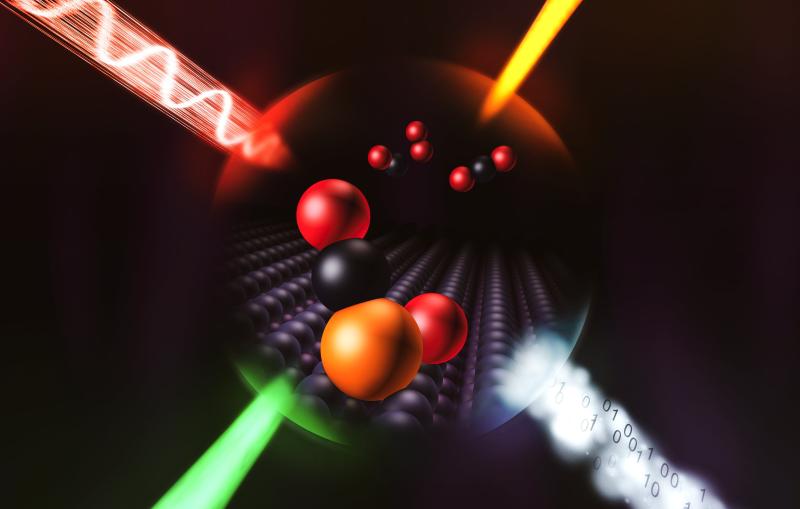
Scientists used a combination of four techniques, represented here by four incoming beams, to reveal in unprecedented detail how a single atom of iridium catalyzes a chemical reaction.
(Greg Stewart/SLAC National Accelerator Laboratory)
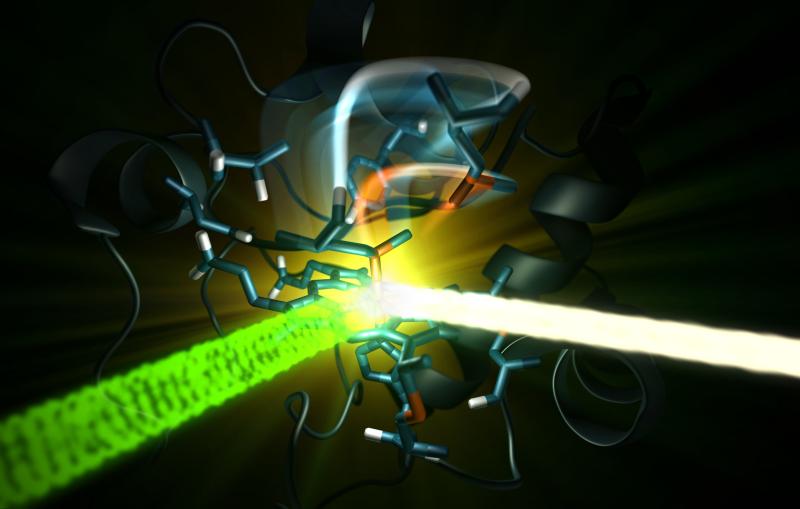
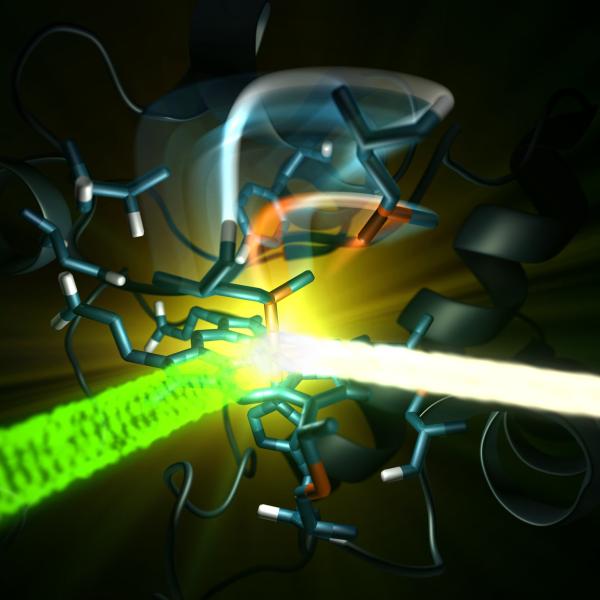
With SLAC’s X-ray laser and synchrotron, scientists measured exactly how much energy goes into keeping this crucial bond from triggering a cell's death spiral.
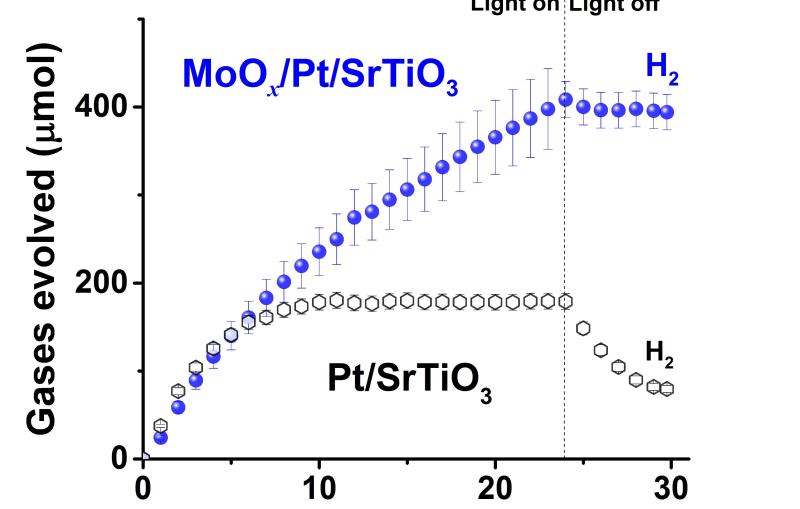
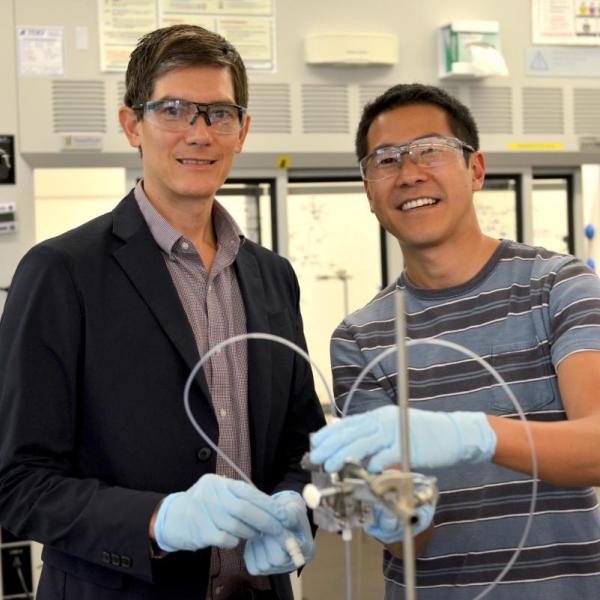
Scientists have developed a new molybdenum-coated catalyst that more efficiently generates hydrogen gas, which could lead to a sustainable clean fuel source in the...
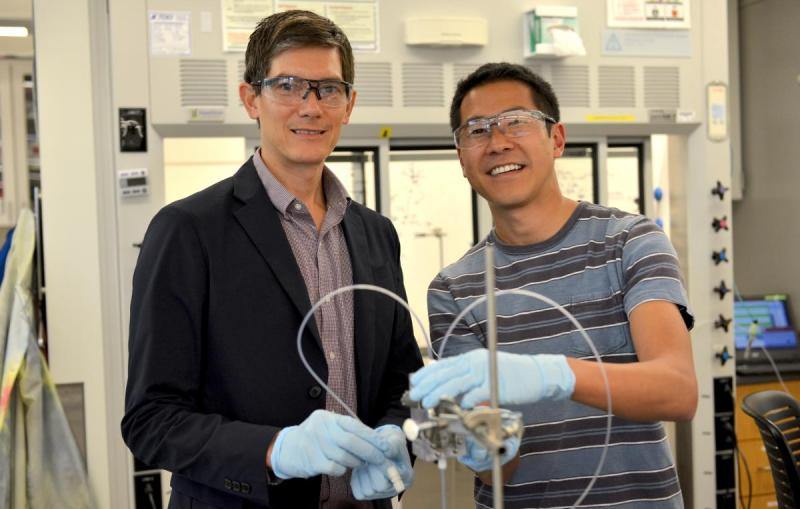
An advance by SLAC and Stanford researchers greatly reduces the time needed to analyze complex catalytic reactions for making fuel, industrial chemicals and other...
With SLAC’s X-ray laser and synchrotron, scientists measured exactly how much energy goes into keeping this crucial bond from triggering a cell's death spiral.
A recent discovery by scientists from the SUNCAT Center for Interface Science and Catalysis could lead to a new, more sustainable way to make ethanol without corn or other crops.
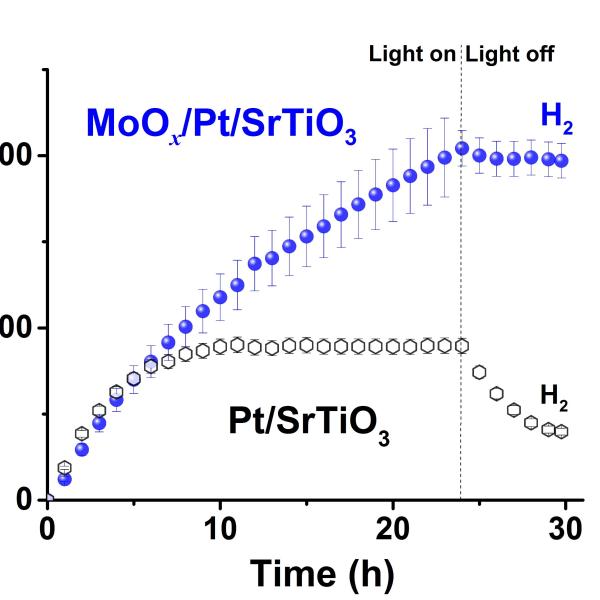
Scientists have developed a new molybdenum-coated catalyst that more efficiently generates hydrogen gas, which could lead to a sustainable clean fuel source in the future.
An advance by SLAC and Stanford researchers greatly reduces the time needed to analyze complex catalytic reactions for making fuel, industrial chemicals and other products, and should improve computational analysis throughout chemistry.