
SLAC topics

AI and machine learning RSS feed

Artificial intelligence (AI) simply means intelligence in machines, in contrast to natural intelligence found in humans and other natural organisms. Machine learning involves systems that automatically learn from the data they analyze and the results they obtain to improve their ability to work with that data in the future.

AI and ML at SLAC

DOE explains... artificial intelligence

Browse tagged content

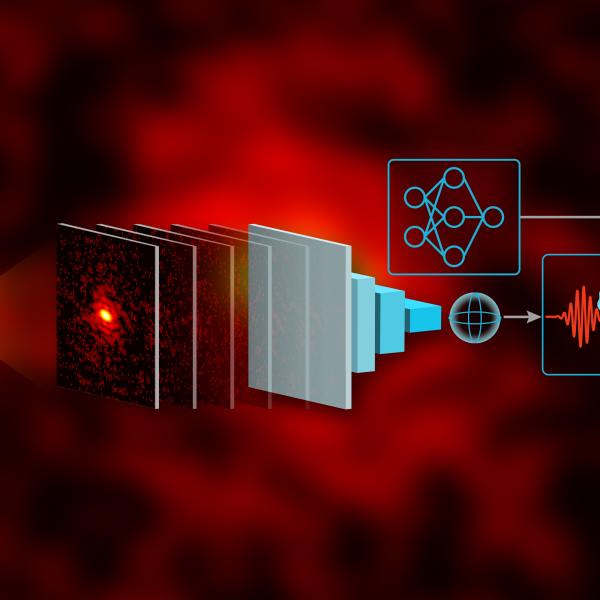
Artistic representation of a neural network superimposed on an electron beam profile
Video
Public lecture presented by Julia Gonski
Public lecture illustration
Video
Past Event
Register to watch in person in the  Kavli Auditorium,  or watch the lecture live on our YouTube page.  In particle physics, we search for...
Public lecture illustration
Feature

AI is playing a key role in helping SLAC researchers find new galaxies and tiny neutrinos, and discover new drugs.

Diffraction pattern
Feature

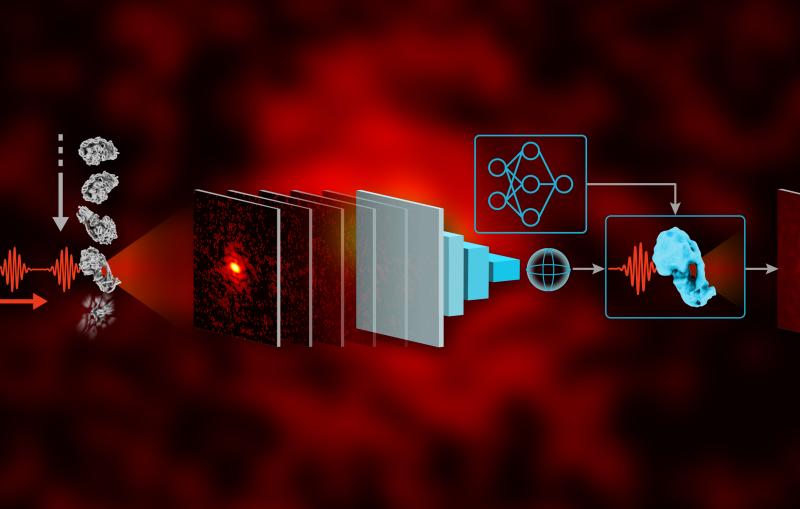
Researchers across the lab are developing AI tools to harness data and particle beams in real time and make molecular movies, speeding up the...

Graphic of AI in several science areas
Feature

SLAC is leading an effort to build a network that will enable AI and machine learning to steer experiments and more.

Images of molecules, spirals, and lasers surround a lens peering on the earth.
Feature

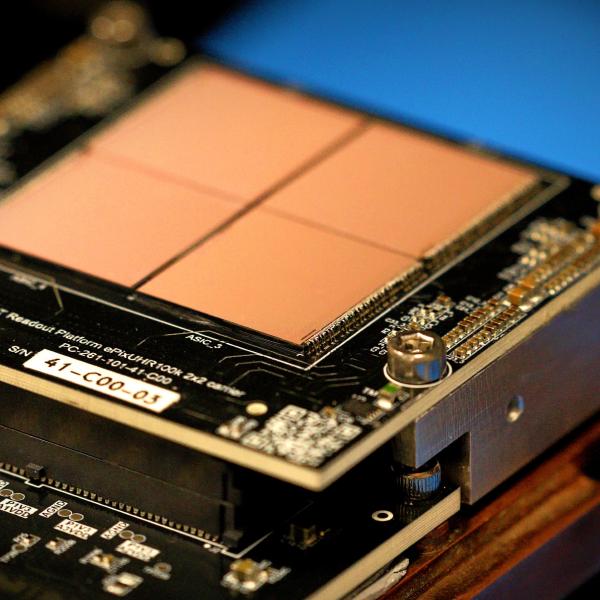
The prototype DUNE 2x2 detector will capture up to 10,000 neutrino interactions per day.

Two people in blue helmets examine experimental equipment.
Feature

Digital design engineer Abhilasha Dave’s passion for connecting machine learning and hardware is helping SLAC solve big data challenges.

Photo of Abhilasha Dave in her office
Feature

David Cesar, Julia Gonski and W.L. Kimmy Wu will each receive $2.75 million issued over five years for their research in X-ray and ultrafast...

Early Career Award Winners 2024
News Release

Charging lithium-ion batteries at high currents just before they leave the factory is 30 times faster and increases battery lifespans by 50%, according to...

An illustration shows batteries flow down an assembly line, turning them from gray to green.
Illustration
Scientists have developed an AI-based method that helps gather data more efficiently in the search for new materials, allowing researchers...
self driving experiments
Feature

The method could lead to the development of new materials with tailored properties, with potential applications in fields such as climate change, quantum computing...

self driving experiments
Feature

Improvements to the lab’s “electron camera” use AI and “time stamping” to help reveal nature’s speedy processes more accurately. 

Film strip showing images of the MeV-UED, experimental setups and graphics.