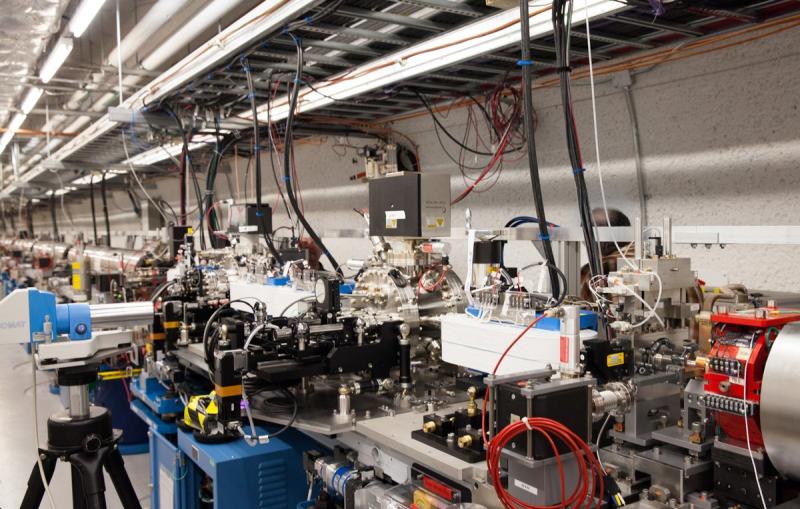
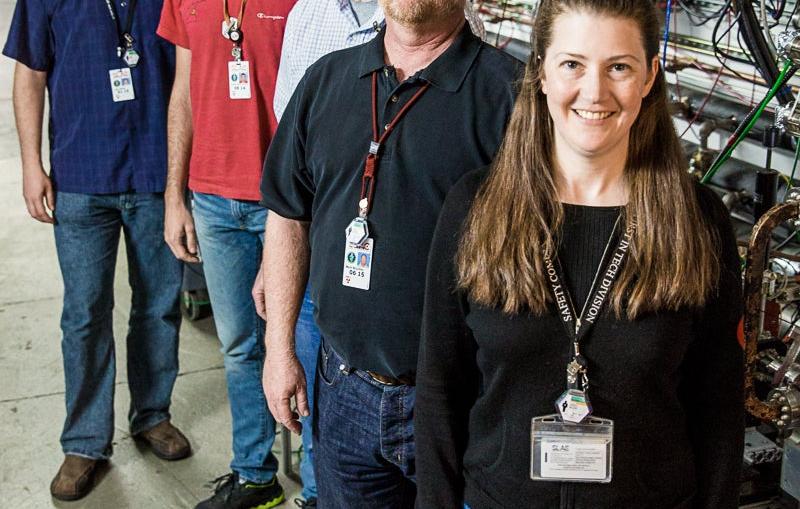
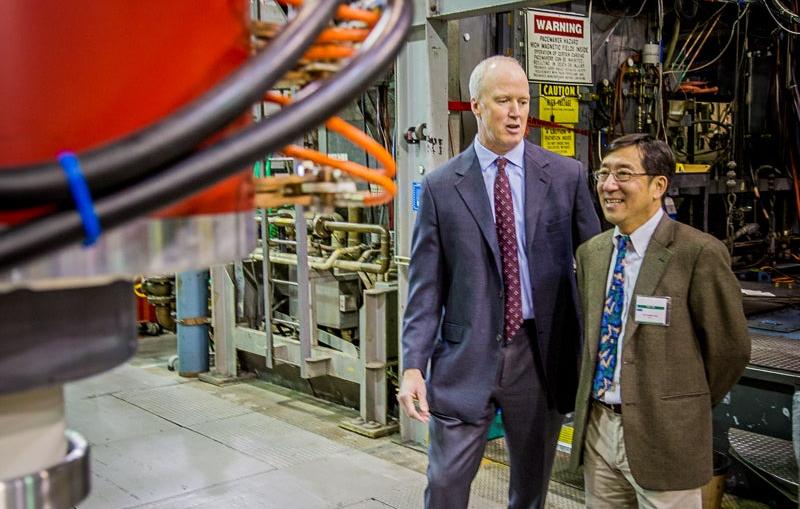
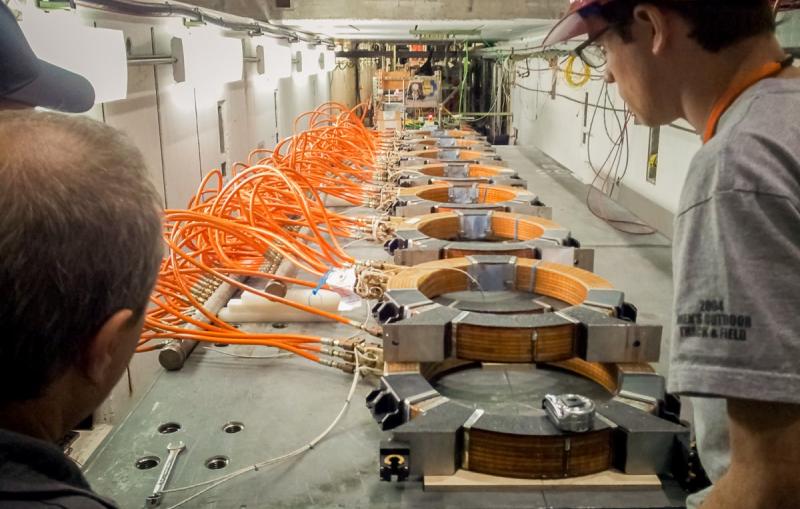
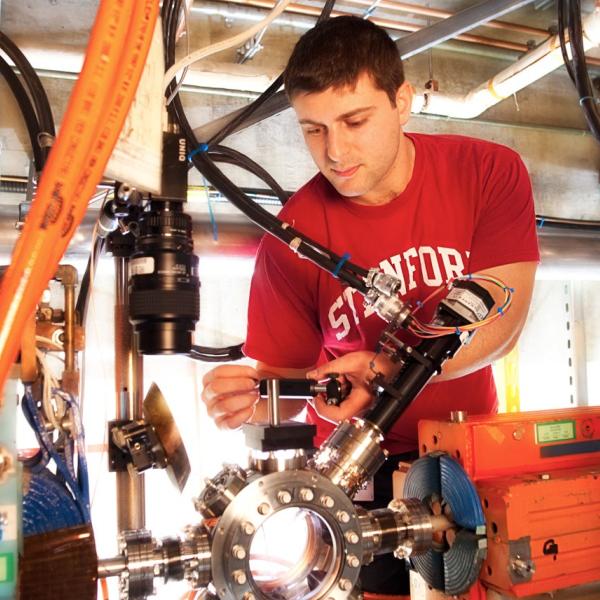
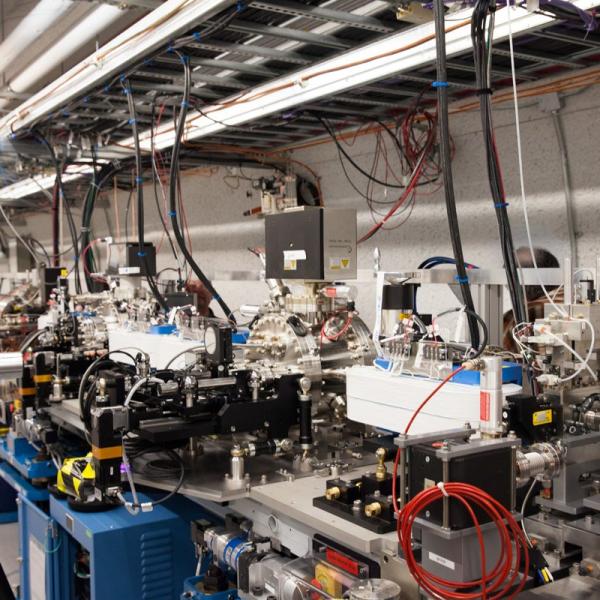
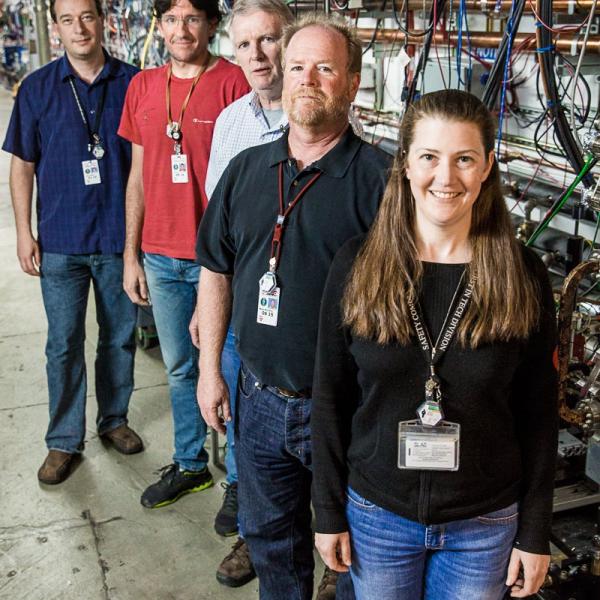
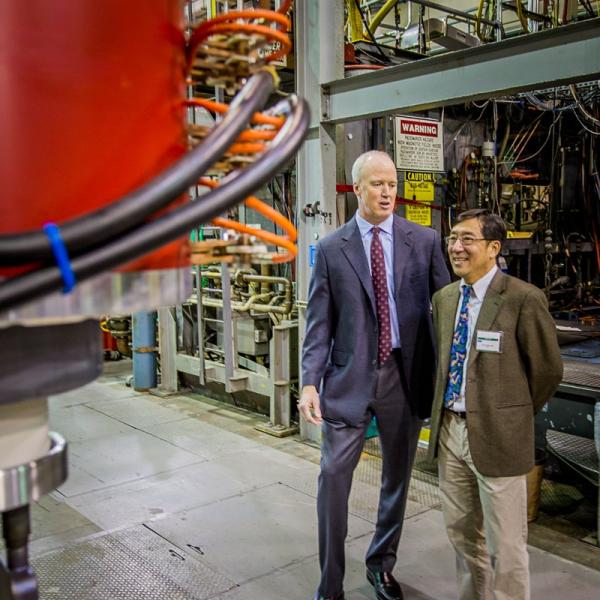
Accelerators form the backbone of SLAC’s national user facilities. They generate some of the highest quality particle beams in the world, helping thousands of scientists perform groundbreaking experiments each year.
Browse tagged content
Linac towards SLAC campus.
(Olivier Bonin/SLAC National Accelerator Laboratory)
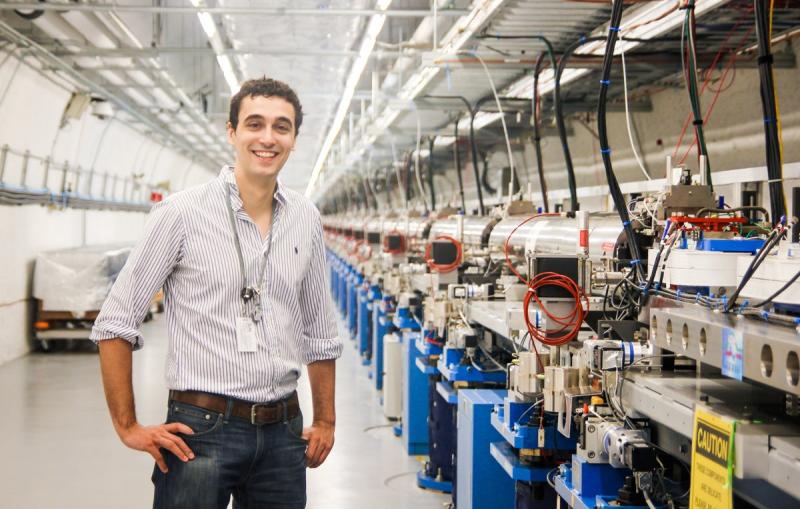
Agostino Marinelli, a postdoctoral researcher in the Accelerator Directorate, has been named the 2014 recipient of the Frank Sacherer Prize from the European Physical...
From accelerators unexpectedly beneath your feet to a ferret that once cleaned accelerator components, symmetry shares some lesser-known facts about particle accelerators.
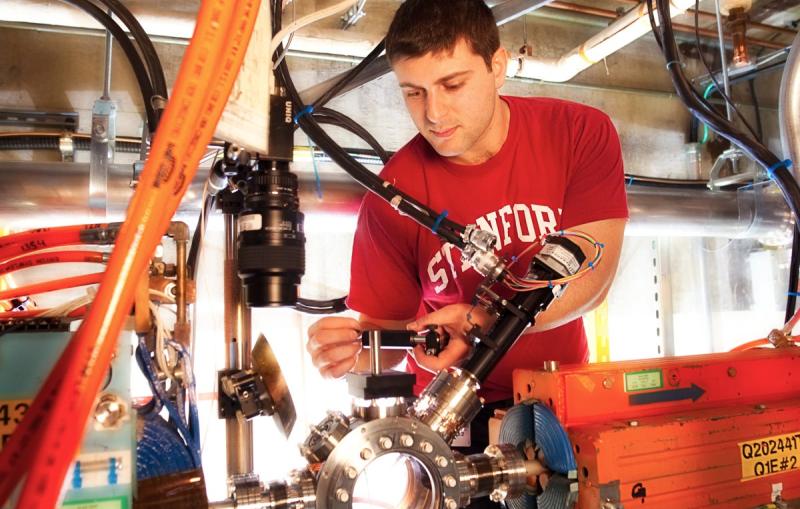
Stanford graduate student Spencer Gessner has received a Siemann fellowship to help him continue his research into cutting-edge accelerator physics at SLAC's Facility for...
SLAC accelerator physicists have been instrumental in creating a vital part of a future Higgs boson-producing linear accelerator, from developing the initial design nearly...
A cooperative agreement with Palo-Alto based CPI opens the door to routine commercial manufacturing of these powerful vacuum tube devices, which convert electron beams...
Growing up in China shortly after the Cultural Revolution, Zhirong Huang may have been the only middle-school child in Beijing who knew anything about...
In a SLAC test facility, scientists have set the stage for an experiment that mimics what happens when incredibly energetic cosmic ray particles hit...
In an advance that could dramatically shrink particle accelerators for science and medicine, researchers used a laser to accelerate electrons at a rate 10...
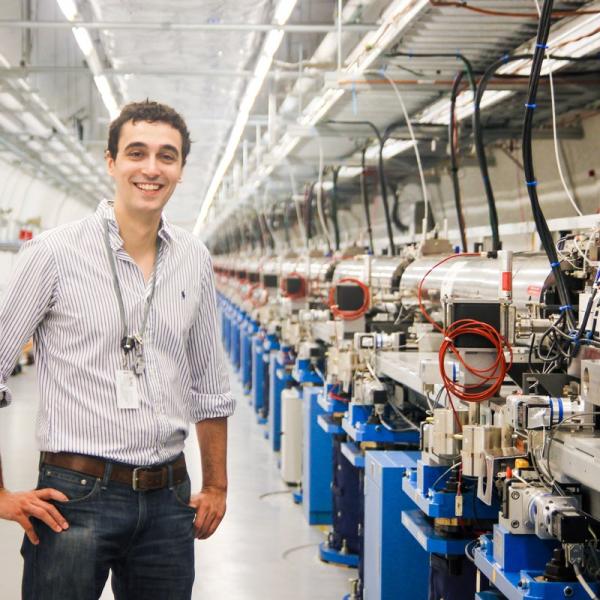
Agostino Marinelli, a postdoctoral researcher in the Accelerator Directorate, has been named the 2014 recipient of the Frank Sacherer Prize from the European Physical Society.
From accelerators unexpectedly beneath your feet to a ferret that once cleaned accelerator components, symmetry shares some lesser-known facts about particle accelerators.
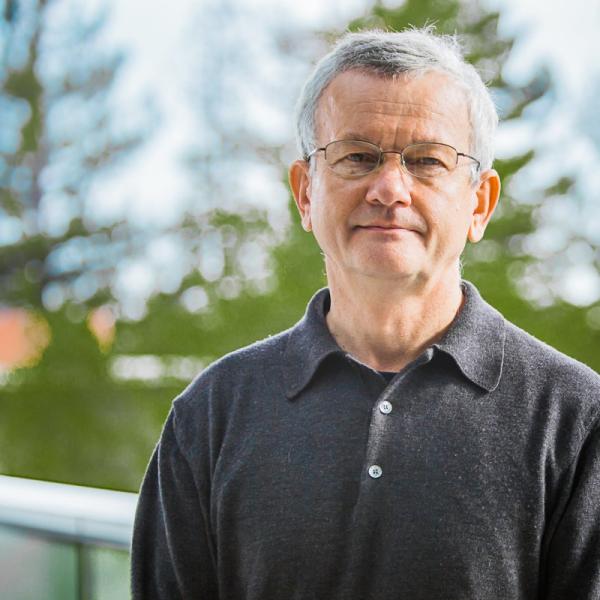
One common stereotype of a theoretical physicist is the solitary scientist, scribbling away in his or her office and only emerging when there’s a "Eureka!" in the offing. SLAC accelerator physicist Gennady Stupakov would beg to differ.
Stanford graduate student Spencer Gessner has received a Siemann fellowship to help him continue his research into cutting-edge accelerator physics at SLAC's Facility for Advanced Accelerator Experimental Tests.
A new system at SLAC National Accelerator Laboratory's X-ray laser narrows a rainbow spectrum of X-ray colors to a more intense band of light, creating a much more powerful way to view fine details in samples at the scale of...
SLAC accelerator physicists have been instrumental in creating a vital part of a future Higgs boson-producing linear accelerator, from developing the initial design nearly 15 years ago to its successful demonstration in 2013.
A cooperative agreement with Palo-Alto based CPI opens the door to routine commercial manufacturing of these powerful vacuum tube devices, which convert electron beams into microwaves that are used to accelerate subatomic particles.
Growing up in China shortly after the Cultural Revolution, Zhirong Huang may have been the only middle-school child in Beijing who knew anything about SLAC. Today he’s a notable innovator in the design of particle accelerators and free-electron lasers.
In a SLAC test facility, scientists have set the stage for an experiment that mimics what happens when incredibly energetic cosmic ray particles hit our atmosphere. While the experiment is part of ANITA, which sends balloon-borne instruments into the upper...
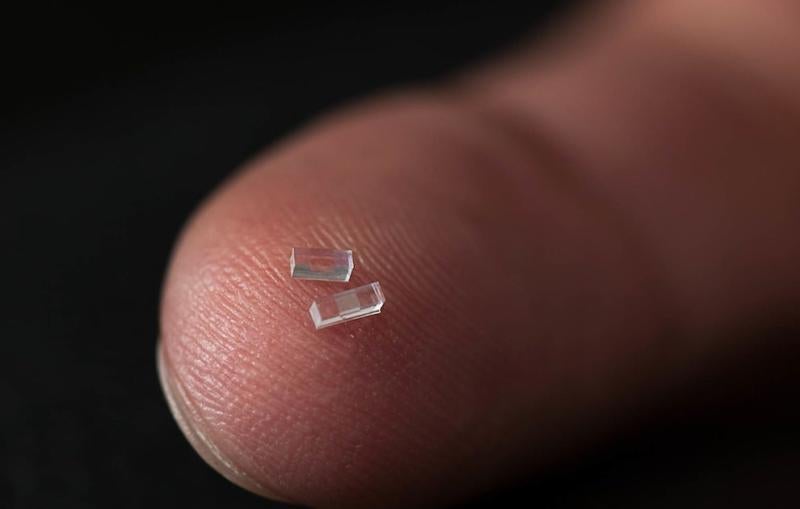
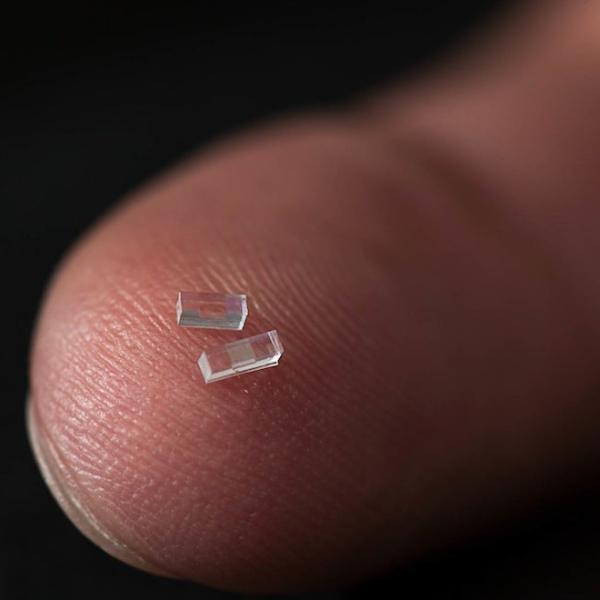
In an advance that could dramatically shrink particle accelerators for science and medicine, researchers used a laser to accelerate electrons at a rate 10 times higher than conventional technology in a nanostructured glass chip smaller than a grain of rice.