Finding something expected has brought researchers at the Department of Energy's Stanford Linear Accelerator Center (SLAC) one step closer to discovering the unexpected.
Finally, after more than 1000 years in obscurity, the last unreadable pages of the works of ancient mathematician Archimedes are being deciphered, thanks to...
On July 14, the Department of Energy's Stanford Linear Accelerator Center (SLAC) was officially accepted into the ATLAS collaboration, a consortium of researchers and...
B factory experiments at the Department of Energy's Stanford Linear Accelerator Center (SLAC) and at the High Energy Accelerator Research Organization (KEK) in Japan...
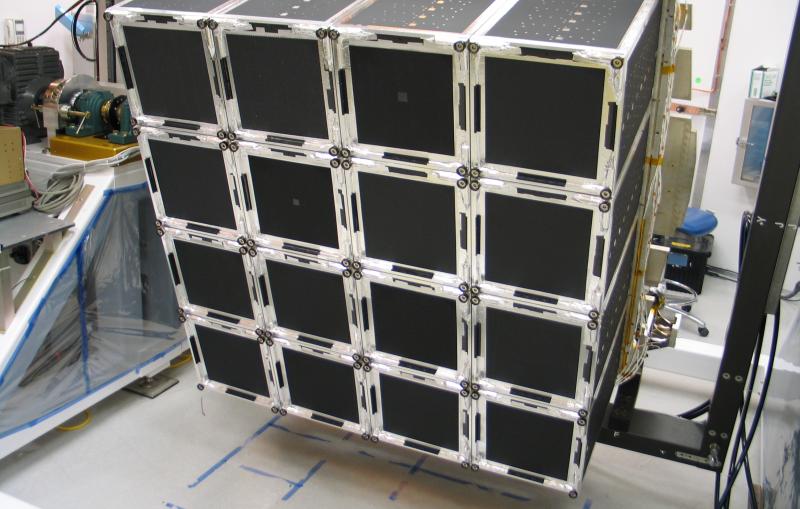
The pioneering space telescope recently assembled at the Stanford Linear Accelerator Center (SLAC) has taken a continent-sized step in its journey toward launch.
Researchers from the U.S. Department of Energy's Fermi National Accelerator Laboratory and Stanford Linear Accelerator Center recently joined an international team in shattering the...
Stanford Professors Piero Pianetta, a physicist, and Britt Hedman, a chemist, will become the new deputy directors of the Stanford Synchrotron Radiation Laboratory (SSRL)...