SLAC National Accelerator Laboratory
    • About

      Learn about our science, people, facilities and partners. Discover our history and vision for the future.

    • OUR STORY
      • Mission, vision, values
      • History
    • LAB OVERVIEW
      • SLAC at a glance
      • Lab organization
      • Our partnerships
    • OUR PEOPLE
      • Leadership
      • Meet our teams
      • Faculty
    • VISIT SLAC
      • Public tours
      • Contact us
    • Resources
      • Images, videos & more
      • Brochures & fact sheets
    • Connect With Us
      • Facebook
      • Flickr
      • Instagram
      • LinkedIn
      • Twitter
      • YouTube
    video

    Who we are

    We explore radically new ideas with an entrepreneurial mindset.

    Science and User Support Building to the left and Arrillaga Science Center building to the right from above the Main Quad at SLAC's campus.
    • Research

      Get an overview of research at SLAC: X-ray and ultrafast science, particle and astrophysics, cosmology, particle accelerators, biology, energy and technology.

    • X-ray and Ultrafast science icon X-ray & ultrafast science

      Revealing nature’s fastest processes with X-rays, lasers and electrons

    • Physics of the universe science icon Physics of the universe

      Studying the particles and forces that knit the cosmos together

    • Advanced Accelerators science icon Advanced accelerators

      Building smaller, faster, more powerful accelerators for all

    • Science of life science icon Science of life

      Understanding the machinery of life at its most basic level

    • New technologies science icon New technologies

      Inventing new tools for science and society

    • Energy sciences science icon Energy sciences

      Finding clean, sustainable solutions for the world’s energy challenges

    Spotlight

    SLAC science explained

    Cut through the jargon while exploring our research.

    SAGE campers have fun experimenting with a Van de Graff generator
    • Facilities & Centers

      Learn more about the places where science happens at SLAC: our major facilities, institutes and centers.

    • SCIENTIFIC FACILITIES
      • LCLS website

        Linac Coherent Light Source

      • SSRL website

        Stanford Synchrotron Radiation Lightsource

      • FACET-II website

        Facility for Advanced Accelerator Experimental Tests

      • CryoEM website

        Cryogenic Electron Microscopy

    • JOINT INSTITUTES & CENTERS
      • SIMES website

        Stanford Institute for Materials & Energy Science

      • KIPAC website

        Kavli Institute for Particle Astrophysics & Cosmology

      • PULSE website

        Stanford PULSE Institute

      • SUNCAT website

        Center for Interface Science & Catalysis

      • SLAC-Stanford Battery Center

    NSF-DOE Vera C. Rubin Observatory LSST

    SLAC & Stanford build the world’s largest digital camera for the Legacy Survey of Space and Time (LSST).

    A drone photo of Rubin Observatory while taking pictures during the First Look observing campaign
    • Work with Us

      Find a career, partner with us or apply to use our tools and facilities.

    • PARTNER WITH US
      • For industry partners
      • Research partnerships & tech transfer
      • Technology Innovation
    • CAREERS AT SLAC
      • Job openings
      • Internships
      • Life at SLAC
    • USE OUR FACILITIES

      Apply to become a user of our scientific research facilities and instruments.

    • COMING TO SLAC
    • BECOME A SUPPLIER

    Careers at SLAC

    Join our united workforce.

    SLAC staff in main quad
    • News & Events

      Get the latest news about the lab, our science and discoveries. Explore SLAC events and learn how to participate.

    • NEWS CENTER
      • News archive
      • Media resources
      • Images & videos
    • SLAC EVENTS
      • Public lectures
      • Scientific seminars
      • Community events
    • SYMMETRY MAGAZINE

      This joint publication of SLAC and Fermilab is your view into the world of particle physics.

    • EDUCATIONAL PROGRAMS
      • Educational tours
      • Resources for students & educators
    • Connect With Us
      • Facebook
      • Flickr
      • Instagram
      • LinkedIn
      • Twitter
      • YouTube
    Upcoming public lecture

    Reinventing the way we break down plastic waste

    Thursday, March 26, 2026
    7:00–8:00 p.m. PDT

    Public Lecture: Ozge Bozkurt
Filter search by
Staff portalStanford directoryComing to SLACResources for…
  1. Home
  2. …
Filter by research area
  • X-ray and ultrafast science (179)
  • Physics of the universe (127)
  • Energy sciences (43)
  • Science of life (28)
  • New technologies (22)
  • Advanced accelerators (10)
Filter by Type
  • (-) News (1774)
  • Image (387)
  • Video (227)
  • Event (157)
  • Page (67)
  • Person (66)
  • resource (64)
  • News Collection (4)
Sort by
1774 results
Display Grid Display List
Clear all
Feature

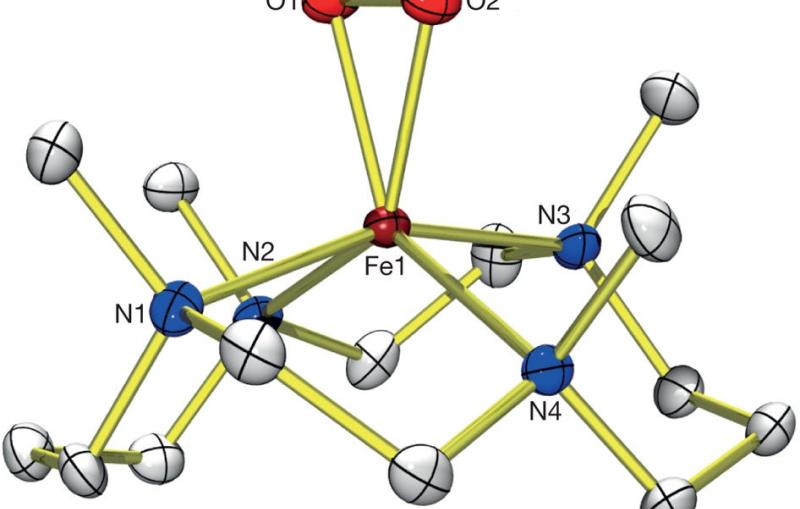
Forces Within Molecules Can Strengthen Extra-long Carbon-carbon Bonds

The strength of a chemical bond between atoms is the fundamental basis for a molecule’s stability and reactivity.

September 15, 2011  ·  3 min read
Representation of the longest carbon-carbon bond ever seen in an alkane
Feature

Xradia: A Pioneering Provider of Innovative X-Ray Microscopes

In the first of an occasional series of articles profiling companies that supply or use SLAC facilities, we look at Pleasanton-based Xradia, Inc., which...

August 16, 2012  ·  4 min read
Pianetta and Yun at SSRL
Feature

SSRL Data Advances Prostate Cancer Drug Design

Prostate cancer, the most common cancer in men, is often a localized, slow-growing cancer, which aids treatment and improves survival rates. However, highly aggressive...

July 23, 2012  ·  2 min read
Structure of CYP17A1
Feature

Innovative SIMES Solar-Energy Technology Funded by DOE

The U.S. Department of Energy has awarded a research group at the Stanford Institute for Materials and Energy Sciences (SIMES) a grant of up...

July 18, 2012  ·  2 min read
diagram showing how the photon-enhanced thermionic emission (PETE) device works
Feature

Creating the Heart of a Planet in the Heart of a Gem

Although materials scientists have theorized for years that a form of super-dense aluminum exists under the extreme pressures found inside a planet’s core, no...

August 23, 2011  ·  2 min read
Image - Sapphire crystal with laser-carved cavity (Image by Arturas Vailionis.)
News Release

Proof: Cosmic Rays Come from Exploding Stars

A new study confirms what scientists have long suspected: Cosmic rays – energetic particles that pelt Earth from all directions – are born in...

February 14, 2013  ·  5 min read
Artist's rendition of a supernova shock wave
Feature

SLAC, Stanford Materials Scientists Develop Topological Insulator With a Switch

Scientists at Stanford and SLAC have found a potential way to harness the amazing properties of topological insulators – materials that conduct electricity only...

October 4, 2011  ·  4 min read
Diagram of electrons traveling through topological insulator
Feature

Former SLAC Intern is Youngest to Lead LCLS Experiment

Stephanie Mack, 20, read and reread the email in disbelief.

April 4, 2013  ·  4 min read
Photo - Shih-Wen Huang, left, and Stephanie Mack in Soft X-ray Instrument  control room
Feature

Researchers at SLAC Test Collider Closer to Creating Fully Coherent X-rays

Many advanced laser technologies, such as laser spectroscopy, that use precise wavelengths of infrared, visible or ultraviolet laser light could benefit from using X-ray...

January 31, 2012  ·  3 min read
Two spectra of EEG-boosted beams
Feature

SLAC Scientists Awarded Grants from Stanford Energy Institute

Stanford University's Precourt Institute for Energy (PIE), TomKat Center for Sustainable Energy and Precourt Energy Efficiency Center (PEEC) have awarded nine faculty seed grants...

September 17, 2012  ·  1 min read
Field of yellow flowers with large power lines. Photo: iStockphoto.com
Feature

SSRL Yields Clues to Function of Vital Protein Family

A team of Stanford University researchers used the Stanford Synchrotron Radiation Lightsource to gain a deeper understanding of a vital family of signaling proteins...

October 23, 2012  ·  1 min read
Image – diagram of XWnt8 structure
News Release

X-ray Laser Takes Aim at Cosmic Mystery

Menlo Park, Calif. – Scientists have used powerful X-rays from the Linac Coherent Light Source (LCLS) at the U.S. Department of Energy's (DOE) SLAC...

December 12, 2012  ·  4 min read
Image - Chandra spacecraft overlaid on astronomical image
  • Go to previous page
  • Page 1
  • …
  • Page 69
  • Page 70
  • Page 71
  • Page 72
  • Currently on page 73
  • Page 74
  • Page 75
  • Page 76
  • Page 77
  • …
  • Page 148
  • Go to next page

SLAC National Accelerator Laboratory 
2575 Sand Hill Road  
Menlo Park, CA 94025-7015  
650.926.3300

  • Coming to SLAC
  • Connect with us
  • Contact us
  • Facebook
  • Flickr
  • Instagram
  • LinkedIn
  • Twitter
  • YouTube

Sign up for our email

Monthly newsletter for cutting-edge science, SLAC milestones and events.

Sign up

Bold People
Visionary Science
Real Impact

We explore how the universe works at the biggest, smallest and fastest scales and invent powerful tools used by scientists around the globe.

  • About
    • Our story
    • Our people
    • Lab overview
    • Visit SLAC
    • Resources
    • Connect with us
  • Research
    • X-ray & ultrafast science
    • Advanced accelerators
    • New technologies
    • Physics of the universe
    • Science of life
    • Energy sciences
    • SLAC science explained
  • Facilities & centers
    • Scientific facilities
    • Joint institutes & centers
  • Work with us
    • Partner with us
    • Become a supplier
    • Use our facilities
    • Careers at SLAC
  • News & events
    • News center
    • Symmetry Magazine
    • Media resources
    • Events
    • Educational programs
    • Connect with us
  • Staff portal
  • Privacy policy
  • Accessibility
  • Vulnerability disclosure
  • A–Z index
  • Website feedback
Home
  • SLAC home
  • Maps & directions
  • Emergency info
  • Careers

© 2026 SLAC National Accelerator Laboratory is operated by Stanford University for the U.S. Department of Energy Office of Science.

Stanford University U.S. Department of Energy
Top Top
Back to top Back to top