Learn about our science, people, facilities and partners. Discover our history and vision for the future.
Who we are
We explore radically new ideas with an entrepreneurial mindset.
Get an overview of research at SLAC: X-ray and ultrafast science, particle and astrophysics, cosmology, particle accelerators, biology, energy and technology.
Revealing nature’s fastest processes with X-rays, lasers and electrons
Studying the particles and forces that knit the cosmos together
Building smaller, faster, more powerful accelerators for all
Understanding the machinery of life at its most basic level
Inventing new tools for science and society
Finding clean, sustainable solutions for the world’s energy challenges
SLAC science explained
Cut through the jargon while exploring our research.
Learn more about the places where science happens at SLAC: our major facilities, institutes and centers.
Linac Coherent Light Source
Stanford Synchrotron Radiation Lightsource
Facility for Advanced Accelerator Experimental Tests
Cryogenic Electron Microscopy
Stanford Institute for Materials & Energy Science
Kavli Institute for Particle Astrophysics & Cosmology
Stanford PULSE Institute
Center for Interface Science & Catalysis
NSF-DOE Vera C. Rubin Observatory LSST
SLAC & Stanford build the world’s largest digital camera for the Legacy Survey of Space and Time (LSST).
Find a career, partner with us or apply to use our tools and facilities.
Apply to become a user of our scientific research facilities and instruments.
Careers at SLAC
Join our united workforce.
Get the latest news about the lab, our science and discoveries. Explore SLAC events and learn how to participate.
This joint publication of SLAC and Fermilab is your view into the world of particle physics.
Reinventing the way we break down plastic waste
Thursday, March 26, 20267:00–8:00 p.m. PDT
About 400 people attended the annual conference and workshops for scientists who conduct experiments at SLAC’s light sources.
The Advanced LIGO gravitational wave detectors have announced their first observation of a binary neutron star coalescence.
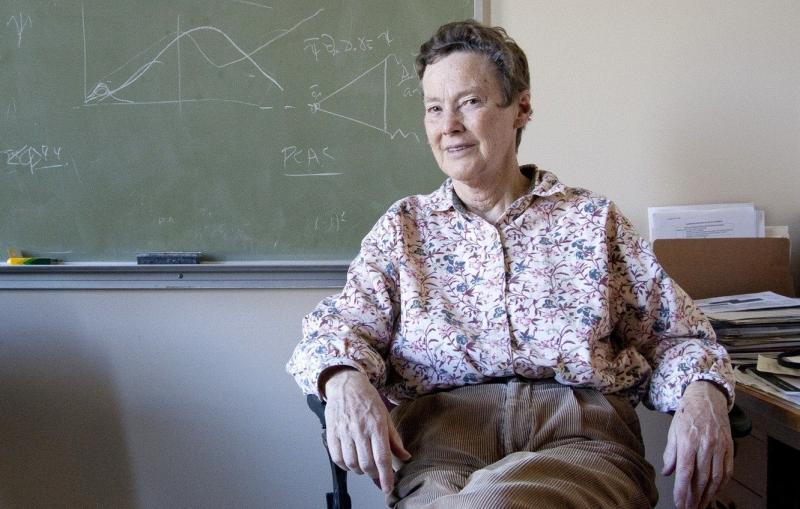
The astrophysicist is recognized for her leadership, mentorship and innovative work in understanding how galaxies form.
Remarkable cryo-EM images that reveal details down to the individual atom will yield new insights into why high-energy batteries fail.
He is recognized for his numerous contributions to the advancement of accelerator physics, community service and education.
Cross sections tell physicists how likely particles are to interact in a given way.
In October, SLAC installed the first of LCLS-II’s cryogenic “feed caps” and “end caps.”
The cryogenic plant responsible for keeping LCLS-II’s superconducting linear accelerator at just a few degrees above absolute zero recently received its first warm helium...
Around the world, scientists and non-scientists alike celebrated the first international Dark Matter Day.
SLAC engineer Knut Skarpaas designs some of physics’ most challenging machines, finding inspiration in unexpected places.
Analysis of data from the BaBar experiment rules out theorized particle’s explanation for muon mystery.
Effort to improve the next generation of gravitational wave detectors includes atomic studies of new and better coatings for LIGO’s mirrors at SSRL.