Learn about our science, people, facilities and partners. Discover our history and vision for the future.
Who we are
We explore radically new ideas with an entrepreneurial mindset.
Get an overview of research at SLAC: X-ray and ultrafast science, particle and astrophysics, cosmology, particle accelerators, biology, energy and technology.
Revealing nature’s fastest processes with X-rays, lasers and electrons
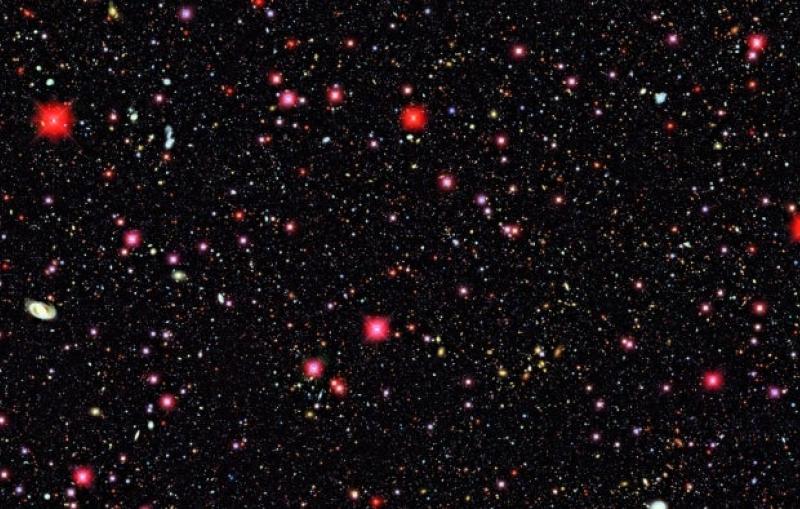
Studying the particles and forces that knit the cosmos together
Building smaller, faster, more powerful accelerators for all
Understanding the machinery of life at its most basic level
Inventing new tools for science and society
Breaking new ground in securing abundant, affordable and reliable energy.
SLAC science explained
Cut through the jargon while exploring our research.
Learn more about the places where science happens at SLAC: our major facilities, institutes and centers.
Linac Coherent Light Source
Stanford Synchrotron Radiation Lightsource
Facility for Advanced Accelerator Experimental Tests
Cryogenic Electron Microscopy
Stanford Institute for Materials & Energy Science
Kavli Institute for Particle Astrophysics & Cosmology
Stanford PULSE Institute
Center for Interface Science & Catalysis
NSF-DOE Vera C. Rubin Observatory LSST
SLAC & Stanford build the world’s largest digital camera for the Legacy Survey of Space and Time (LSST).
Find a career, partner with us or apply to use our tools and facilities.
Apply to become a user of our scientific research facilities and instruments.
Careers at SLAC
Join our united workforce.
Get the latest news about the lab, our science and discoveries. Explore SLAC events and learn how to participate.
This joint publication of SLAC and Fermilab is your view into the world of particle physics.
Blazing the path to a fusion future
Thursday, October 8, 7:00 p.m.
Efforts are already underway to ensure that the data the Large Synoptic Survey Telescope collects will be ready to be mined for scientific gold.
Stanford researcher Thomas F. Jaramillo has been named SUNCAT’s new deputy director for experiments. He succeeds SLAC’s Anders Nilsson.
Two dark matter hunters with decades of experience between them are turning SLAC into their base of operations for LZ, the next big dark...
Grad Students and Postdocs Get a Crash Course in Using X-ray Lasers
SLAC scientist Michael Kelsey sees connections between the communities of physicists and do-it-yourselfers.
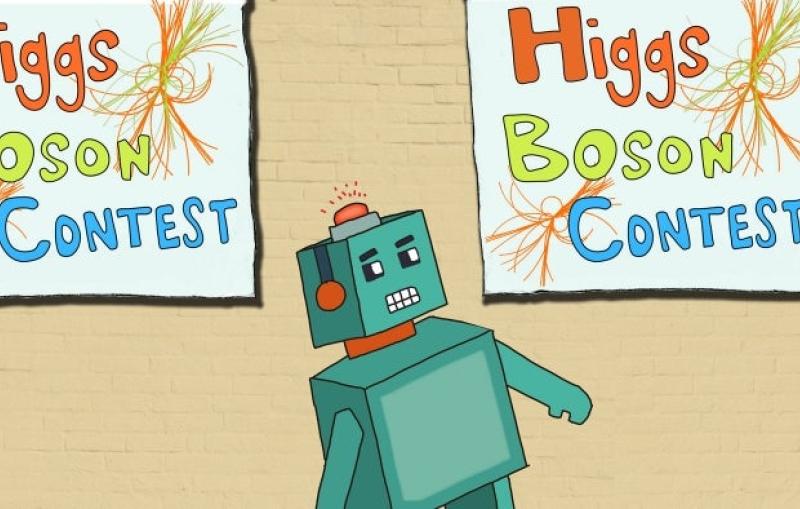
Two years after the groundbreaking discovery of the Higgs boson, physicists are still hard at work.
Using high-brilliance X-rays, researchers track the process that fuel cells use to produce electricity, knowledge that will help make large-scale
SLAC, Stanford Advance Will Benefit Thousands of Computational Studies in Wide Range of Fields
Together, three experiments, two with major SLAC contributions, will search for a variety of types of dark matter particles.
Sulfur Cathode Experiments Test Chemistry Beyond Conventional Lithium-Ion
SLAC and Stanford's Yi Cui leads the quest to build more energetic batteries. For SSRL's involvement, read the sidebar "Batteries: An Inside Story."
Detecting new physics isn’t quite like detecting cat videos—yet.