SLAC National Accelerator Laboratory
    • About

      Learn about our science, people, facilities and partners. Discover our history and vision for the future.

    • OUR STORY
      • Mission, vision, values
      • History
    • LAB OVERVIEW
      • SLAC at a glance
      • Lab organization
      • Our partnerships
    • OUR PEOPLE
      • Leadership
      • Meet our teams
      • Faculty
    • VISIT SLAC
      • Public tours
      • Contact us
    • Resources
      • Images, videos & more
      • Brochures & fact sheets
    • Connect With Us
      • Facebook
      • Flickr
      • Instagram
      • LinkedIn
      • Twitter
      • YouTube
    video

    Who we are

    We explore radically new ideas with an entrepreneurial mindset.

    Science and User Support Building to the left and Arrillaga Science Center building to the right from above the Main Quad at SLAC's campus.
    • Research

      Get an overview of research at SLAC: X-ray and ultrafast science, particle and astrophysics, cosmology, particle accelerators, biology, energy and technology.

    • X-ray and Ultrafast science icon X-ray & ultrafast science

      Revealing nature’s fastest processes with X-rays, lasers and electrons

    • Physics of the universe science icon Physics of the universe

      Studying the particles and forces that knit the cosmos together

    • Advanced Accelerators science icon Advanced accelerators

      Building smaller, faster, more powerful accelerators for all

    • Science of life science icon Science of life

      Understanding the machinery of life at its most basic level

    • New technologies science icon New technologies

      Inventing new tools for science and society

    • Energy sciences science icon Energy sciences

      Breaking new ground in securing abundant, affordable and reliable energy.

    Spotlight

    SLAC science explained

    Cut through the jargon while exploring our research.

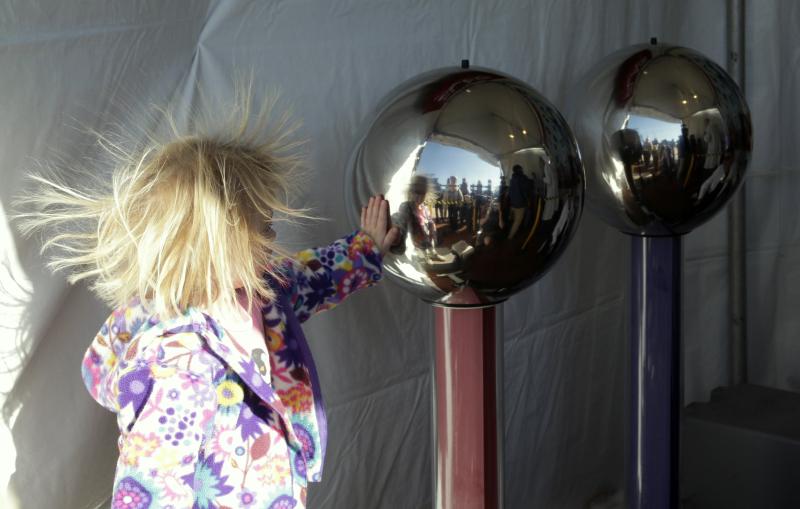
    SAGE campers have fun experimenting with a Van de Graff generator
    • Facilities & Centers

      Learn more about the places where science happens at SLAC: our major facilities, institutes and centers.

    • SCIENTIFIC FACILITIES
      • LCLS website

        Linac Coherent Light Source

      • SSRL website

        Stanford Synchrotron Radiation Lightsource

      • FACET-II website

        Facility for Advanced Accelerator Experimental Tests

      • CryoEM website

        Cryogenic Electron Microscopy

    • JOINT INSTITUTES & CENTERS
      • SIMES website

        Stanford Institute for Materials & Energy Science

      • KIPAC website

        Kavli Institute for Particle Astrophysics & Cosmology

      • PULSE website

        Stanford PULSE Institute

      • SUNCAT website

        Center for Interface Science & Catalysis

      • SLAC-Stanford Battery Center

    NSF-DOE Vera C. Rubin Observatory LSST

    SLAC & Stanford build the world’s largest digital camera for the Legacy Survey of Space and Time (LSST).

    A drone photo of Rubin Observatory while taking pictures during the First Look observing campaign
    • Work with Us

      Find a career, partner with us or apply to use our tools and facilities.

    • PARTNER WITH US
      • For industry partners
      • Research partnerships & tech transfer
      • Technology Innovation
    • CAREERS AT SLAC
      • Job openings
      • Internships
      • Life at SLAC
    • USE OUR FACILITIES

      Apply to become a user of our scientific research facilities and instruments.

    • COMING TO SLAC
    • BECOME A SUPPLIER

    Careers at SLAC

    Join our united workforce.

    SLAC staff in main quad
    • News & Events

      Get the latest news about the lab, our science and discoveries. Explore SLAC events and learn how to participate.

    • NEWS CENTER
      • News archive
      • Media resources
      • Images & videos
    • SLAC EVENTS
      • Public lectures
      • Scientific seminars
      • Community events
    • SYMMETRY MAGAZINE

      This joint publication of SLAC and Fermilab is your view into the world of particle physics.

    • EDUCATIONAL PROGRAMS
      • Educational tours
      • Resources for students & educators
    • Connect With Us
      • Facebook
      • Flickr
      • Instagram
      • LinkedIn
      • Twitter
      • YouTube
    Upcoming Public Lecture

    Blazing the path to a fusion future

    Thursday, October 8, 7:00 p.m.

    Public Lecture: Arianna Gleason
Filter search by
Staff portalStanford directoryComing to SLACResources for…
  1. Home
  2. …
Filter by research area
  • X-ray and ultrafast science (201)
  • Physics of the universe (139)
  • Energy sciences (48)
  • Science of life (31)
  • New technologies (26)
  • Advanced accelerators (11)
Filter by Type
  • (-) News (1807)
  • Image (387)
  • Video (226)
  • Event (161)
  • Person (68)
  • (-) Page (67)
  • resource (59)
  • News Collection (5)
Sort by
1874 results
Display Grid Display List
Clear all
Feature

What Can You Study In Femtoseconds? High Energy Density Science

Read about how SLAC professor Siegfried Glenzer creates extreme conditions like those in the cores of planets and studies nuclear fusion.

April 20, 2017
Feature

How Do You Make Femtosecond Light?

Accelerator physicist Agostino Marinelli discusses how SLAC's X-ray laser makes femtosecond light.

April 17, 2017
Feature

Scales of time

Explore the fourth dimension, from processes that occur in billions of years down to tiny slivers of a second.

April 18, 2017
Feature

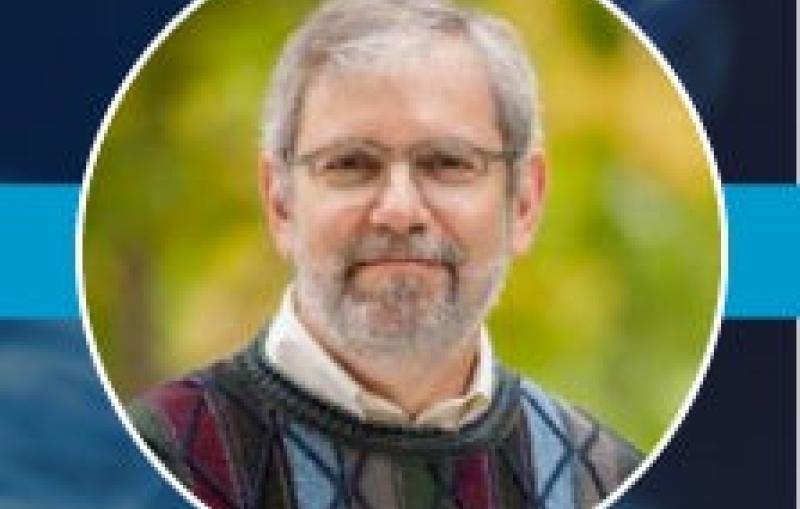
Why Study in Femtoseconds?

Physicist Phil Bucksbaum gives a brief introduction to Femtosecond Week at SLAC.

April 17, 2017
Feature

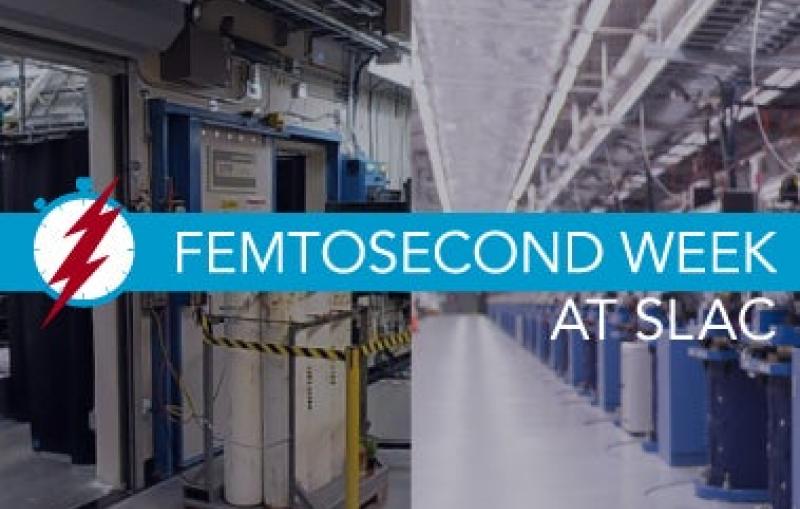
Virtual Tours of LCLS

Take a digital tour of the undulators and near experimental hall at the Linac Coherent Light Source.

April 19, 2017
News Brief

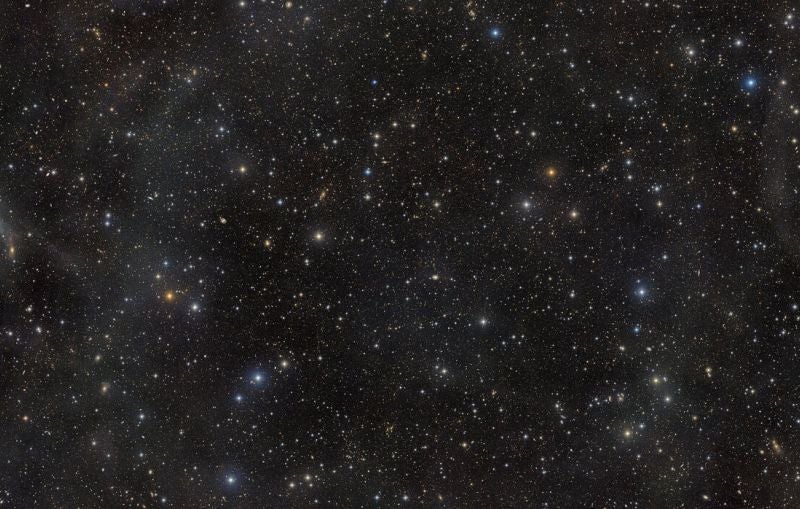
DOE-NSF Rubin Observatory opens a deep window on a famous cosmic field

A new NSF–DOE Vera C. Rubin Observatory image featuring hundreds of thousands of distant galaxies in and around the COSMOS field marks the Observatory’s...

July 31, 2026  ·  12 min read
Field of night sky with stars and galaxies
News Release

LZ sees surprising result in search for dark matter

The LUX-ZEPLIN experiment observed a particle interaction that could be interpreted as a signal from WIMPs, a dark matter candidate – but researchers will...

September 1, 2026  ·  7 min read
A researcher in protective gear works near a tall, cylindrical scientific instrument with visible wiring. The visible walls surrounding it are reflective Teflon.
Feature

SLAC Goes to Bat for Science at Discovery Day

Science wonderland at the San Francisco Giants ballpark draws a science-enthusiastic crowd of 35,000 visitors.

November 12, 2015  ·  2 min read
Feature

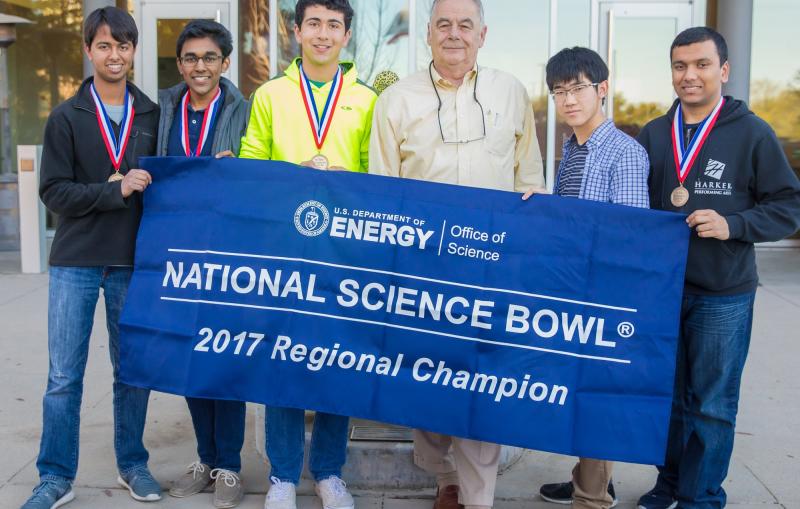
Harker School Wins 2017 SLAC Regional Science Bowl Competition

After losing its first match of the day to the defending champions, The Harker School’s team won 10 consecutive rounds to claim victory in...

February 23, 2017  ·  4 min read
Harker's championship team
News Brief

To make computers more energy efficient, SLAC researchers follow the heat

A SLAC-Stanford team developed a new way to precisely measure just how much energy has dissipated into heat in an electrical system – and...

September 8, 2026  ·  5 min read
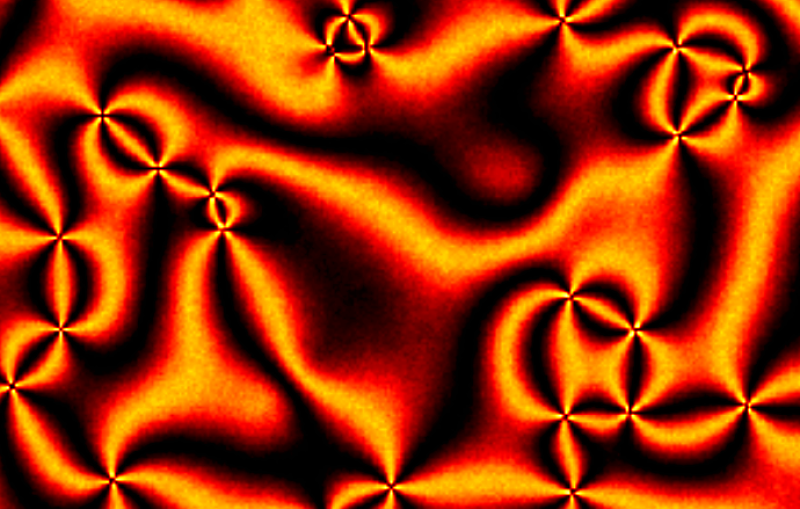
Black swirls and bar-like shapes against an orange background
News Brief

Ultrafast electrons and lasers open possibilities for better imaging and sensing technologies

SLAC and Stanford scientists used ultrafast electrons and a laser to reveal an unexpectedly strong optical response to ionization, opening new possibilities for radiological...


September 3, 2026  ·  4 min read
An incoming orange beam strikes a layer of purple and green spheres spread horizontally across the image. A blue beam is located to the left of the orange beam.

Science Bowl

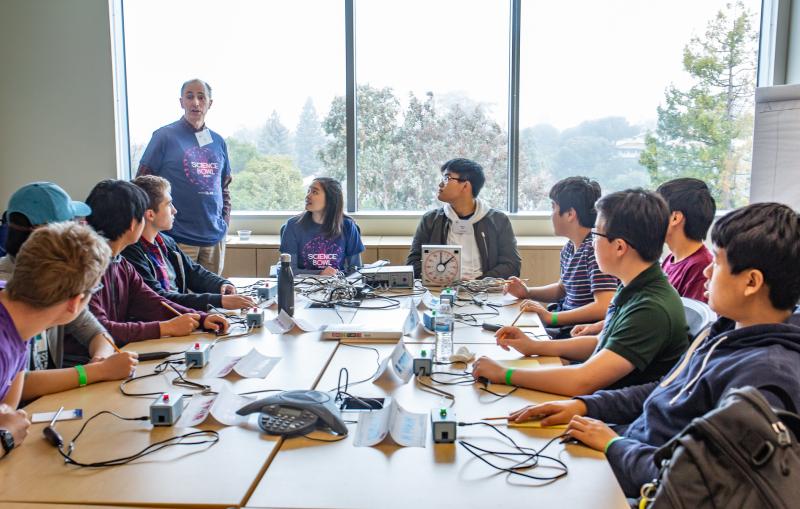
SLAC will be hosting two  annual Regional Science Bowls for teams of Bay Area high school and middle school students in 2026.

SLAC Regional Science Bowl 2020-competition photo
  • Go to previous page
  • Page 1
  • …
  • Page 149
  • Page 150
  • Page 151
  • Page 152
  • Page 153
  • Page 154
  • Page 155
  • Currently on page 156
  • Page 157
  • Go to next page

SLAC National Accelerator Laboratory 
2575 Sand Hill Road  
Menlo Park, CA 94025-7015  
650.926.3300

  • Coming to SLAC
  • Connect with us
  • Contact us
  • Facebook
  • Flickr
  • Instagram
  • LinkedIn
  • Twitter
  • YouTube

Sign up for our email

Monthly newsletter for cutting-edge science, SLAC milestones and events.

Sign up

Bold People
Visionary Science
Real Impact

We explore how the universe works at the biggest, smallest and fastest scales and invent powerful tools used by scientists around the globe.

  • About
    • Our story
    • Our people
    • Lab overview
    • Visit SLAC
    • Resources
    • Connect with us
  • Research
    • X-ray & ultrafast science
    • Advanced accelerators
    • New technologies
    • Physics of the universe
    • Science of life
    • SLAC science explained
  • Facilities & centers
    • Scientific facilities
    • Joint institutes & centers
  • Work with us
    • Partner with us
    • Become a supplier
    • Use our facilities
    • Careers at SLAC
  • News & events
    • News center
    • Symmetry Magazine
    • Media resources
    • Events
    • Educational programs
    • Connect with us
  • Staff portal
  • Privacy policy
  • Accessibility
  • Vulnerability disclosure
  • A–Z index
  • Website feedback
Home
  • SLAC home
  • Maps & directions
  • Emergency info
  • Careers

© 2026 SLAC National Accelerator Laboratory is operated by Stanford University for the U.S. Department of Energy Office of Science.

Stanford University U.S. Department of Energy
Top Top
Back to top Back to top