
SLAC National Accelerator Laboratory
    • About

      Learn about our science, people, facilities and partners. Discover our history and vision for the future.

    • OUR STORY
      • Mission, vision, values
      • History
    • LAB OVERVIEW
      • SLAC at a glance
      • Lab organization
      • Our partnerships
    • OUR PEOPLE
      • Leadership
      • Meet our teams
      • Faculty
    • VISIT SLAC
      • Public tours
      • Contact us
    • Resources
      • Images, videos & more
      • Brochures & fact sheets
    • Connect With Us
      • Facebook
      • Flickr
      • Instagram
      • LinkedIn
      • Twitter
      • YouTube
    video

    Who we are

    We explore radically new ideas with an entrepreneurial mindset.

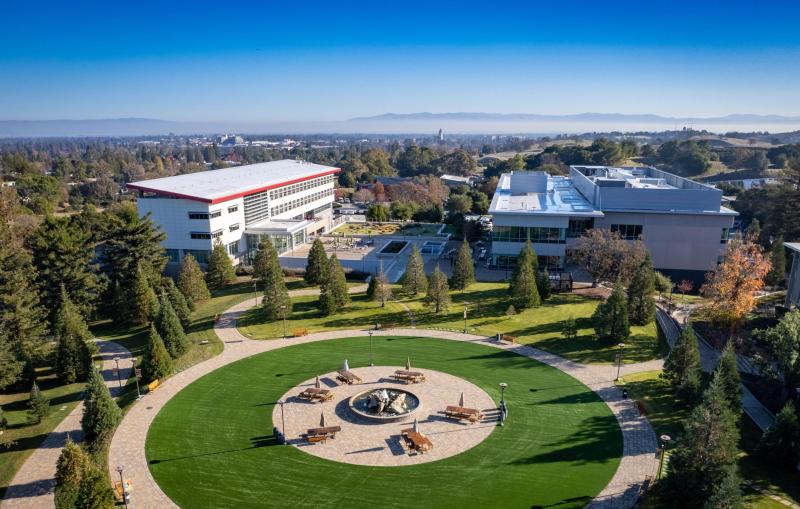
    Science and User Support Building to the left and Arrillaga Science Center building to the right from above the Main Quad at SLAC's campus.
    • Research

      Get an overview of research at SLAC: X-ray and ultrafast science, particle and astrophysics, cosmology, particle accelerators, biology, energy and technology.

    • X-ray and Ultrafast science icon X-ray & ultrafast science

      Revealing nature’s fastest processes with X-rays, lasers and electrons

    • Physics of the universe science icon Physics of the universe

      Studying the particles and forces that knit the cosmos together

    • Advanced Accelerators science icon Advanced accelerators

      Building smaller, faster, more powerful accelerators for all

    • Science of life science icon Science of life

      Understanding the machinery of life at its most basic level

    • New technologies science icon New technologies

      Inventing new tools for science and society

    • Energy sciences science icon Energy sciences

      Finding clean, sustainable solutions for the world’s energy challenges

    Spotlight

    SLAC science explained

    Cut through the jargon while exploring our research.

    SAGE campers have fun experimenting with a Van de Graff generator
    • Facilities & Centers

      Learn more about the places where science happens at SLAC: our major facilities, institutes and centers.

    • SCIENTIFIC FACILITIES
      • LCLS website

        Linac Coherent Light Source

      • SSRL website

        Stanford Synchrotron Radiation Lightsource

      • FACET-II website

        Facility for Advanced Accelerator Experimental Tests

      • CryoEM website

        Cryogenic Electron Microscopy

    • JOINT INSTITUTES & CENTERS
      • SIMES website

        Stanford Institute for Materials & Energy Science

      • KIPAC website

        Kavli Institute for Particle Astrophysics & Cosmology

      • PULSE website

        Stanford PULSE Institute

      • SUNCAT website

        Center for Interface Science & Catalysis

      • SLAC-Stanford Battery Center

    NSF-DOE Vera C. Rubin Observatory LSST

    SLAC & Stanford build the world’s largest digital camera for the Legacy Survey of Space and Time (LSST).

    A drone photo of Rubin Observatory while taking pictures during the First Look observing campaign
    • Work with Us

      Find a career, partner with us or apply to use our tools and facilities.

    • PARTNER WITH US
      • For industry partners
      • Research partnerships & tech transfer
      • Technology Innovation
    • CAREERS AT SLAC
      • Job openings
      • Internships
      • Life at SLAC
    • USE OUR FACILITIES

      Apply to become a user of our scientific research facilities and instruments.

    • COMING TO SLAC
    • BECOME A SUPPLIER

    Careers at SLAC

    Join our united workforce.

    SLAC staff in main quad
    • News & Events

      Get the latest news about the lab, our science and discoveries. Explore SLAC events and learn how to participate.

    • NEWS CENTER
      • News archive
      • Media resources
      • Images & videos
    • SLAC EVENTS
      • Public lectures
      • Scientific seminars
      • Community events
    • SYMMETRY MAGAZINE

      This joint publication of SLAC and Fermilab is your view into the world of particle physics.

    • EDUCATIONAL PROGRAMS
      • Educational tours
      • Resources for students & educators
    • Connect With Us
      • Facebook
      • Flickr
      • Instagram
      • LinkedIn
      • Twitter
      • YouTube
    Spotlight

    SLAC events

    Event attendees listen to a science lecture
Filter search by
Staff portalStanford directoryComing to SLACResources for…
  1. Home
  2. …
Filter by research area
  • X-ray and ultrafast science (344)
  • (-) Physics of the universe (285)
  • Energy sciences (96)
  • (-) Science of life (87)
  • New technologies (58)
  • Advanced accelerators (41)
Filter by Type
  • News (160)
  • Image (84)
  • Video (84)
  • Event (31)
  • resource (5)
  • Page (4)
  • Person (3)
  • News Collection (1)
Sort by
372 results
Display Grid Display List
Clear all
Past Event
Public Lectures

Mercury Rising: The Toxicology of a Global Pollutant

Presented by Ashley James

Date Thursday, May 23, 2024
7:00 p.m.  –  8:00 p.m.  PT
Public Lecture: Ashley James
Feature
VIA Symmetry Magazine

Symmetry: AI for control rooms

Scientists inside and outside of particle physics and astrophysics are leaning on AI for assistance with complex tasks.

May 1, 2024
Illustration of a scientist pinpointing part of a galaxy through the lens of a magnifying glass
Feature
VIA Symmetry Magazine

Symmetry: A physicists’ guide to the ethics of artificial intelligence

Physics may seem like its own world, but different sectors using machine learning are all part of the same universe. 

May 6, 2024
Illustration of a scientist cutting a piece of bias tape with scissors
Feature
VIA Symmetry Magazine

Tomorrow’s physics test: machine learning

Machine learning is becoming an essential part of a physicist’s toolkit. How should new students learn to use it?

May 7, 2024
Illustration: A student scientist embroiders their graduation cap with atom
Feature

Rubin Observatory will help unravel mysteries of dark matter and dark energy

Vera C. Rubin Observatory’s unprecedented deep and wide survey will create most precise map of Universe ever.

October 11, 2023  ·  5 min read
Illustration of warped galaxy shapes scattered across the cosmic web.
Feature

KIPAC’s future is bright – and full of data

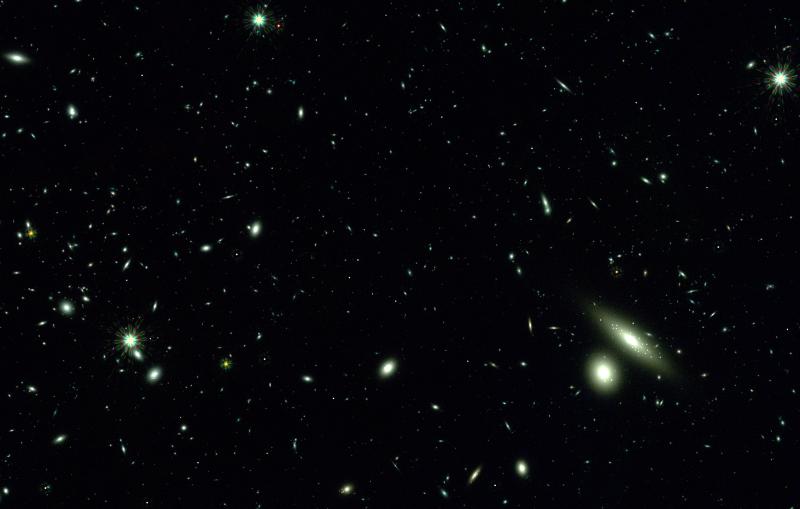
As the SLAC-Stanford institute celebrates its 20th anniversary, three Kavli Institute for Particle Astrophysics and Cosmology researchers share what they’re most excited for in...

October 13, 2023  ·  5 min read
A cluster of bright galaxies on a black background.
Past Event
KIPAC public lecture

Unveiling the Sun: Exploring the Wonders of Solar Astrophysics

In this lecture, we will together embark on an adventure to uncover the enigmatic and awe-inspiring secrets of the Sun through the lens of...

Date Tuesday, October 31, 2023
7:00 p.m.  –  8:00 p.m.  PT
View of the sun with different filters
Feature
Stanford School of Humanities and Sciences 

Stanford-SLAC study shows how modifying enzymes’ electric fields boosts their speed

A   swap of metals and a mutation ramp up the electric field strength at the active site of an enzyme, making it  ...

October 25, 2023
Illustration of an enzyme modified to work 50 times faster
Feature

Physicists ask: Can we make a particle collider more energy efficient?

The future of experimental particle physics is exciting –  and energy intensive. SLAC physicists are thinking about how to make one proposal, the Cool...

November 3, 2023  ·  4 min read
The view down a copper tube.

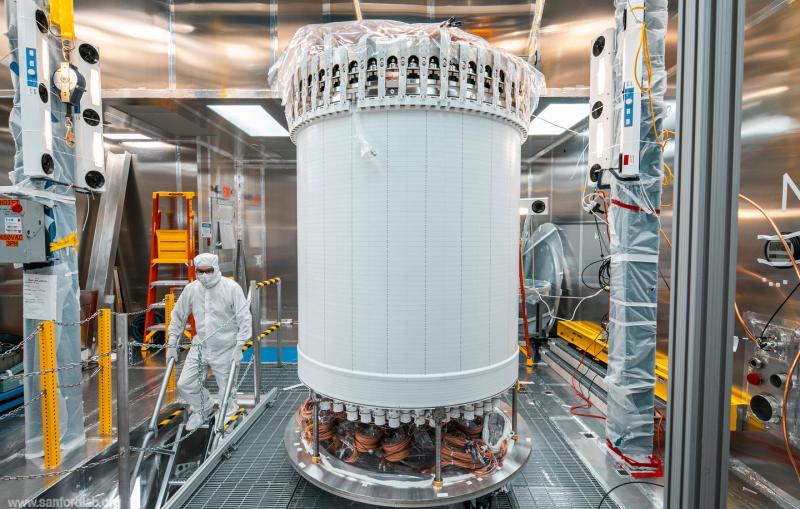
Super Cryogenic Dark Matter Search

The collaboration is searching for dark matter particles with masses smaller than ten times the mass of the proton.

SuperCDMS Detector 2
Feature

How tiny hinges bend the infection-spreading spikes of a coronavirus

Disabling those hinges could be a good strategy for designing vaccines and treatments against a broad range of coronavirus infections.

November 14, 2023  ·  5 min read
A 3D image of a round, spiky coronavirus with inset showing how far its spikes can bend.

Fundamental Physics Directorate

The Fundamental Physics Directorate brings together scientists and technologies that support national priorities in particle physics, astrophysics and cosmology to explore the basic particles and forces that knit the cosmos together.

Dark matter stream visualization
  • Go to previous page
  • Page 1
  • …
  • Page 23
  • Page 24
  • Page 25
  • Page 26
  • Currently on page 27
  • Page 28
  • Page 29
  • Page 30
  • Page 31
  • Go to next page

SLAC National Accelerator Laboratory 
2575 Sand Hill Road  
Menlo Park, CA 94025-7015  
650.926.3300

  • Coming to SLAC
  • Connect with us
  • Contact us
  • Facebook
  • Flickr
  • Instagram
  • LinkedIn
  • Twitter
  • YouTube

Sign up for our email

Monthly newsletter for cutting-edge science, SLAC milestones and events.

Sign up

Bold People
Visionary Science
Real Impact

We explore how the universe works at the biggest, smallest and fastest scales and invent powerful tools used by scientists around the globe.

  • About
    • Our story
    • Our people
    • Lab overview
    • Visit SLAC
    • Resources
    • Connect with us
  • Research
    • X-ray & ultrafast science
    • Advanced accelerators
    • New technologies
    • Physics of the universe
    • Science of life
    • Energy sciences
    • SLAC science explained
  • Facilities & centers
    • Scientific facilities
    • Joint institutes & centers
  • Work with us
    • Partner with us
    • Become a supplier
    • Use our facilities
    • Careers at SLAC
  • News & events
    • News center
    • Symmetry Magazine
    • Media resources
    • Events
    • Educational programs
    • Connect with us
  • Staff portal
  • Privacy policy
  • Accessibility
  • Vulnerability disclosure
  • A–Z index
  • Website feedback
Home
  • SLAC home
  • Maps & directions
  • Emergency info
  • Careers

© 2026 SLAC National Accelerator Laboratory is operated by Stanford University for the U.S. Department of Energy Office of Science.

Stanford University U.S. Department of Energy
Top Top
Back to top Back to top