SLAC National Accelerator Laboratory
    • About

      Learn about our science, people, facilities and partners. Discover our history and vision for the future.

    • OUR STORY
      • Mission, vision, values
      • History
    • LAB OVERVIEW
      • SLAC at a glance
      • Lab organization
      • Our partnerships
    • OUR PEOPLE
      • Leadership
      • Meet our teams
      • Faculty
    • VISIT SLAC
      • Public tours
      • Contact us
    • Resources
      • Images, videos & more
      • Brochures & fact sheets
    • Connect With Us
      • Facebook
      • Flickr
      • Instagram
      • LinkedIn
      • Twitter
      • YouTube
    video

    Who we are

    We explore radically new ideas with an entrepreneurial mindset.

    Science and User Support Building to the left and Arrillaga Science Center building to the right from above the Main Quad at SLAC's campus.
    • Research

      Get an overview of research at SLAC: X-ray and ultrafast science, particle and astrophysics, cosmology, particle accelerators, biology, energy and technology.

    • X-ray and Ultrafast science icon X-ray & ultrafast science

      Revealing nature’s fastest processes with X-rays, lasers and electrons

    • Physics of the universe science icon Physics of the universe

      Studying the particles and forces that knit the cosmos together

    • Advanced Accelerators science icon Advanced accelerators

      Building smaller, faster, more powerful accelerators for all

    • Science of life science icon Science of life

      Understanding the machinery of life at its most basic level

    • New technologies science icon New technologies

      Inventing new tools for science and society

    • Energy sciences science icon Energy sciences

      Breaking new ground in securing abundant, affordable and reliable energy.

    Spotlight

    SLAC science explained

    Cut through the jargon while exploring our research.

    SAGE campers have fun experimenting with a Van de Graff generator
    • Facilities & Centers

      Learn more about the places where science happens at SLAC: our major facilities, institutes and centers.

    • SCIENTIFIC FACILITIES
      • LCLS website

        Linac Coherent Light Source

      • SSRL website

        Stanford Synchrotron Radiation Lightsource

      • FACET-II website

        Facility for Advanced Accelerator Experimental Tests

      • CryoEM website

        Cryogenic Electron Microscopy

    • JOINT INSTITUTES & CENTERS
      • SIMES website

        Stanford Institute for Materials & Energy Science

      • KIPAC website

        Kavli Institute for Particle Astrophysics & Cosmology

      • PULSE website

        Stanford PULSE Institute

      • SUNCAT website

        Center for Interface Science & Catalysis

      • SLAC-Stanford Battery Center

    NSF-DOE Vera C. Rubin Observatory LSST

    SLAC & Stanford build the world’s largest digital camera for the Legacy Survey of Space and Time (LSST).

    A drone photo of Rubin Observatory while taking pictures during the First Look observing campaign
    • Work with Us

      Find a career, partner with us or apply to use our tools and facilities.

    • PARTNER WITH US
      • For industry partners
      • Research partnerships & tech transfer
      • Technology Innovation
    • CAREERS AT SLAC
      • Job openings
      • Internships
      • Life at SLAC
    • USE OUR FACILITIES

      Apply to become a user of our scientific research facilities and instruments.

    • COMING TO SLAC
    • BECOME A SUPPLIER

    Careers at SLAC

    Join our united workforce.

    SLAC staff in main quad
    • News & Events

      Get the latest news about the lab, our science and discoveries. Explore SLAC events and learn how to participate.

    • NEWS CENTER
      • News archive
      • Media resources
      • Images & videos
    • SLAC EVENTS
      • Public lectures
      • Scientific seminars
      • Community events
    • SYMMETRY MAGAZINE

      This joint publication of SLAC and Fermilab is your view into the world of particle physics.

    • EDUCATIONAL PROGRAMS
      • Educational tours
      • Resources for students & educators
    • Connect With Us
      • Facebook
      • Flickr
      • Instagram
      • LinkedIn
      • Twitter
      • YouTube
    Upcoming Public Lecture

    Blazing the path to a fusion future

    Thursday, October 8, 7:00 p.m.

    Public Lecture: Arianna Gleason
Filter search by
Staff portalStanford directoryComing to SLACResources for…
  1. Home
  2. …
Filter by research area
  • X-ray and ultrafast science (353)
  • (-) Physics of the universe (286)
  • (-) Energy sciences (102)
  • Science of life (88)
  • New technologies (61)
  • Advanced accelerators (40)
Filter by Type
  • News (183)
  • Video (83)
  • Image (78)
  • Event (26)
  • Person (6)
  • resource (5)
  • Page (4)
  • News Collection (3)
Sort by
388 results
Display Grid Display List
Clear all
News Release

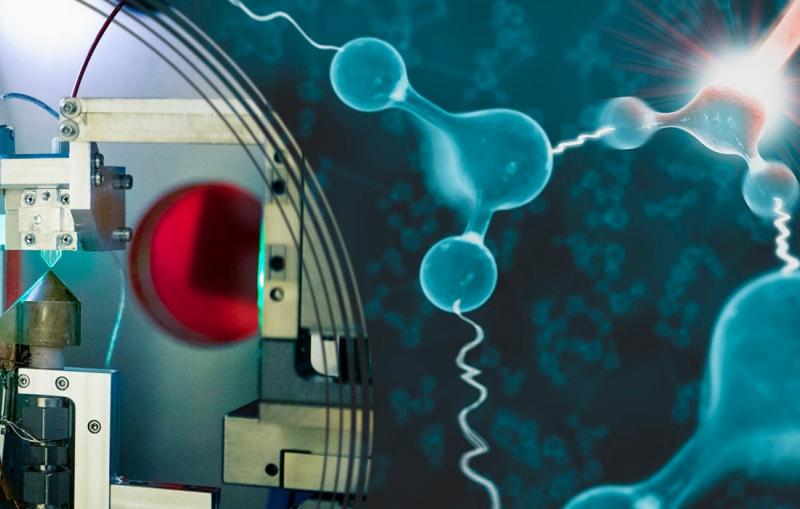
In a first, scientists capture a ‘quantum tug’ between neighboring water molecules

The work sheds light on the web of hydrogen bonds that gives water its strange properties, which play a vital role in many chemical...

August 25, 2021  ·  4 min read
UED Water
Past Event
public lecture

The Tug of War that Shapes the Universe

Presented by Justin Myles. As the universe expanded from the Big Bang, regions where the density of matter was higher than average grew into...

Date Thursday, September 30, 2021
10:00 a.m.  –  11:00 a.m.  PT
illustration of a tug of war in the universe
Feature

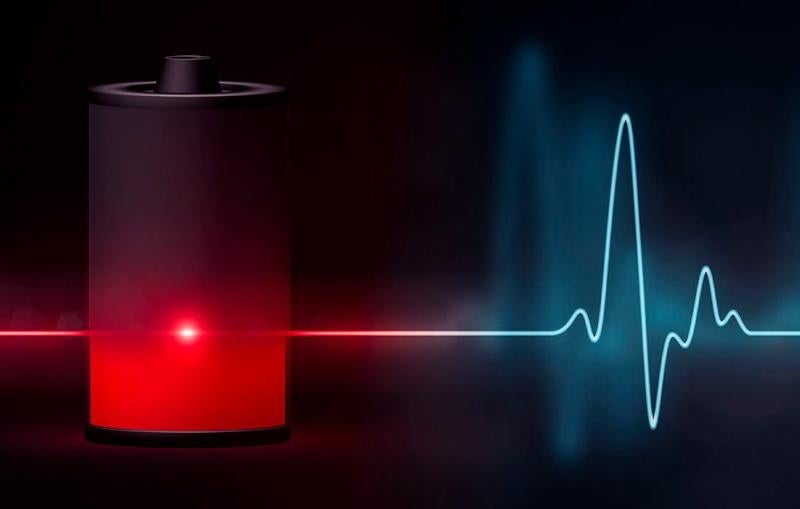
Revitalizing batteries by bringing ‘dead’ lithium back to life

Islands of inactive lithium creep like worms to reconnect with their electrodes, restoring a battery’s capacity and lifespan.

January 3, 2022  ·  4 min read
Conceptual illustration shows an EKG-like pulse of energy flatlining as it enters a battery, then coming back to life as it exits
Feature

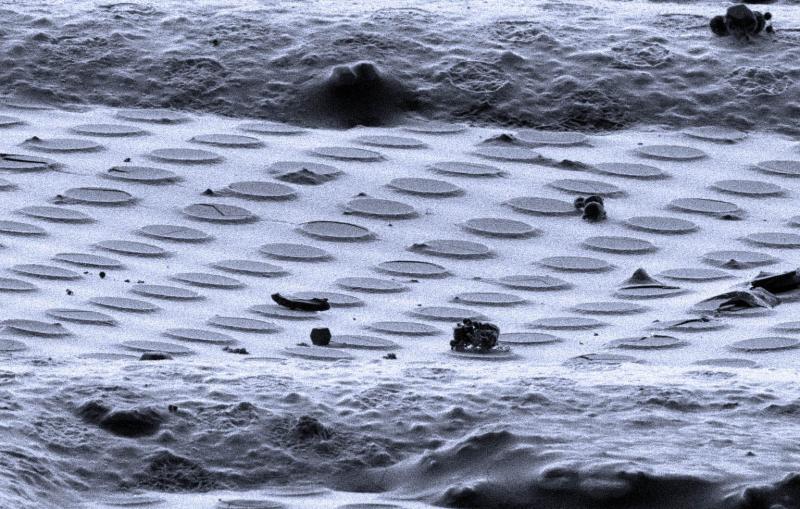
First realistic portraits of squishy layer that’s key to battery performance

Cryo-EM snapshots of the solid-electrolyte interphase, or SEI, reveal its natural swollen state and offer a new approach to lithium-metal battery design.

January 6, 2022  ·  7 min read
A battery's liquid electrolyte clings to small holes in a cryo-EM sample holder.
Feature

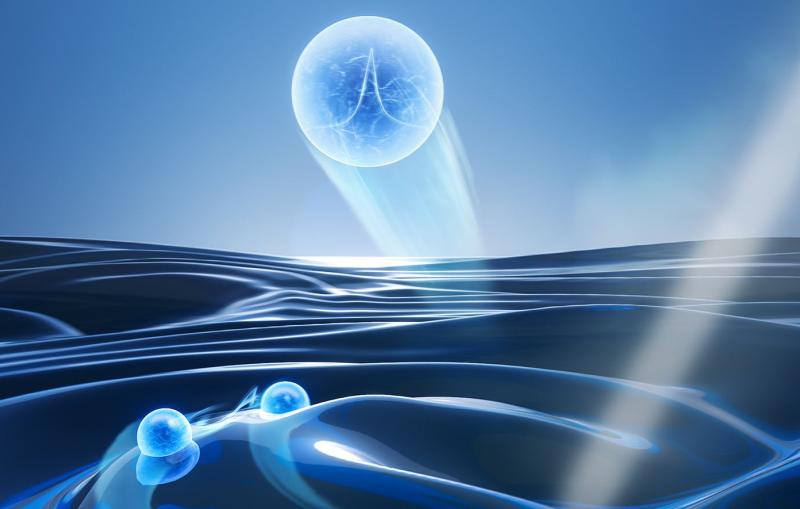
SLAC and Stanford researchers reveal the fourth signature of the superconducting transition in cuprates

The results cap 15 years of detective work aimed at understanding how these materials transition into a superconducting state where they can conduct electricity...

January 26, 2022  ·  5 min read
Conceptual illlustration showing a beam of light entering from the right and hitting a material, ejecting a sphere representing an electron
News Brief

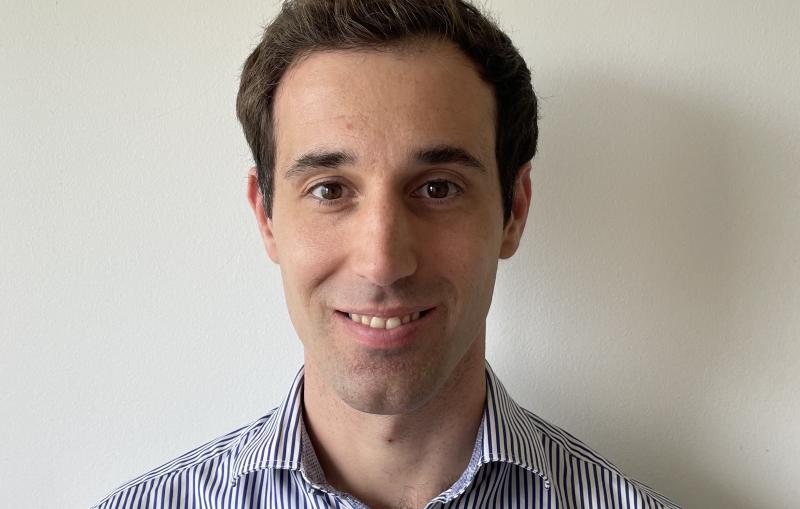
SLAC physicist wins American Physical Society early career award

Bernhard Mistlberger will receive the APS's 2023 Henry Primakoff Award for Early-Career Particle Physics for his work on precision Standard Model calculations.

October 17, 2022  ·  2 min read
A man smiles at the camera.
Feature
via Stanford News

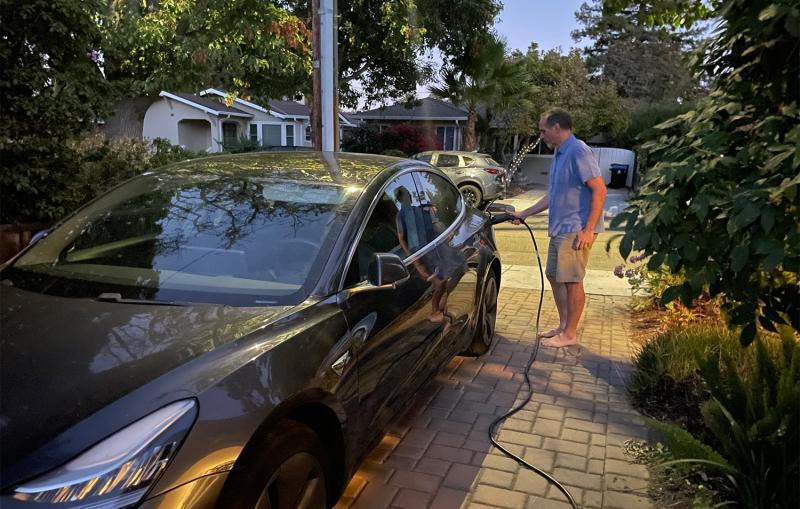
Charging cars at home at night is not the way to go, Stanford study finds

A research team including SLAC staff engineer Gustavo Cezar shows that charging electric vehicles in the daytime would spread the load on the electric...

September 22, 2022
Photograph of a man plugging an electric cord into a gray car on a driveway.
Feature

Lights, camera, cosmos: the cast and crew behind Rubin Observatory

NSF–DOE Vera C. Rubin Observatory is about to embark on its quest to capture the cosmos, marking the culmination of decades of work by...

June 12, 2025  ·  12 min read
A group photo in front of a large telescope mounting system.
Feature

Remote eyes on the sky: Inside SLAC’s Rubin control room

With survey operations set to begin this fall, the Rubin control room at SLAC will serve as a key hub for training and remote...

September 18, 2025  ·  5 min read
First Photons in the Rubin control room at SLAC
News Release

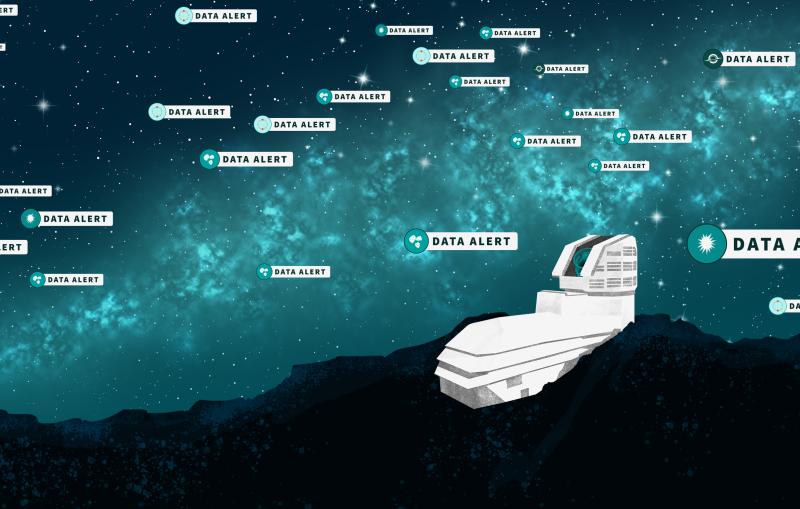
NSF–DOE Vera C. Rubin Observatory launches real-time discovery machine for monitoring the night sky

NSF-DOE Rubin Observatory has issued its first scientific alerts, marking a historic milestone in astrophysics and kicking off a new era of dynamic, real-time...
February 25, 2026  ·  10 min read
Star-filled teal night sky with turquoise glowing band, scattered “DATA ALERT” tags, and a white icon of the Rubin Observatory atop dark mountains.
News Release

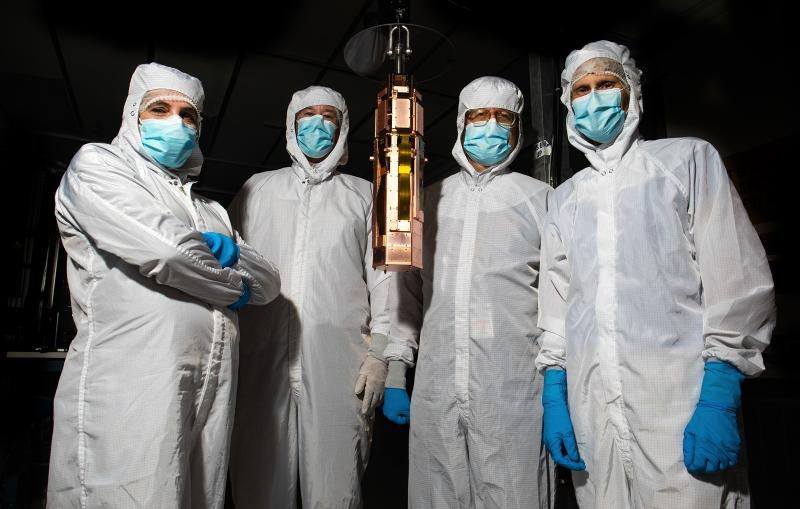
SuperCDMS SNOLAB cools down to near absolute zero, setting the stage for one of the world’s most sensitive dark matter searches

The experiment’s detectors have reached their operating temperature, almost a thousand times colder than outer space.

March 17, 2026  ·  6 min read
SuperCDMS team members posing with a detector tower.
News Brief
VIA Rubin Observatory

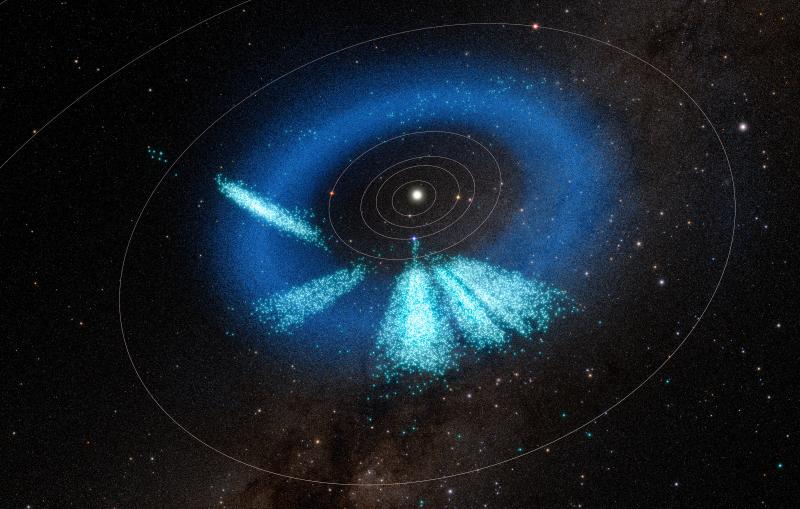
Early data from NSF–DOE Vera C. Rubin Observatory reveals over 11,000 new asteroids

Rubin’s largest asteroid haul yet, gathered before the Legacy Survey of Space and Time even begins, is just the “tip of the iceberg.”

April 2, 2026
Illustration of asteroids
  • Go to previous page
  • Page 1
  • …
  • Page 25
  • Page 26
  • Page 27
  • Page 28
  • Page 29
  • Currently on page 30
  • Page 31
  • Page 32
  • Page 33
  • Go to next page

SLAC National Accelerator Laboratory 
2575 Sand Hill Road  
Menlo Park, CA 94025-7015  
650.926.3300

  • Coming to SLAC
  • Connect with us
  • Contact us
  • Facebook
  • Flickr
  • Instagram
  • LinkedIn
  • Twitter
  • YouTube

Sign up for our email

Monthly newsletter for cutting-edge science, SLAC milestones and events.

Sign up

Bold People
Visionary Science
Real Impact

We explore how the universe works at the biggest, smallest and fastest scales and invent powerful tools used by scientists around the globe.

  • About
    • Our story
    • Our people
    • Lab overview
    • Visit SLAC
    • Resources
    • Connect with us
  • Research
    • X-ray & ultrafast science
    • Advanced accelerators
    • New technologies
    • Physics of the universe
    • Science of life
    • SLAC science explained
  • Facilities & centers
    • Scientific facilities
    • Joint institutes & centers
  • Work with us
    • Partner with us
    • Become a supplier
    • Use our facilities
    • Careers at SLAC
  • News & events
    • News center
    • Symmetry Magazine
    • Media resources
    • Events
    • Educational programs
    • Connect with us
  • Staff portal
  • Privacy policy
  • Accessibility
  • Vulnerability disclosure
  • A–Z index
  • Website feedback
Home
  • SLAC home
  • Maps & directions
  • Emergency info
  • Careers

© 2026 SLAC National Accelerator Laboratory is operated by Stanford University for the U.S. Department of Energy Office of Science.

Stanford University U.S. Department of Energy
Top Top
Back to top Back to top