SLAC National Accelerator Laboratory
    • About

      Learn about our science, people, facilities and partners. Discover our history and vision for the future.

    • OUR STORY
      • Mission, vision, values
      • History
    • LAB OVERVIEW
      • SLAC at a glance
      • Lab organization
      • Our partnerships
    • OUR PEOPLE
      • Leadership
      • Meet our teams
      • Faculty
    • VISIT SLAC
      • Public tours
      • Contact us
    • Resources
      • Images, videos & more
      • Brochures & fact sheets
    • Connect With Us
      • Facebook
      • Flickr
      • Instagram
      • LinkedIn
      • Twitter
      • YouTube
    video

    Who we are

    We explore radically new ideas with an entrepreneurial mindset.

    Science and User Support Building to the left and Arrillaga Science Center building to the right from above the Main Quad at SLAC's campus.
    • Research

      Get an overview of research at SLAC: X-ray and ultrafast science, particle and astrophysics, cosmology, particle accelerators, biology, energy and technology.

    • X-ray and Ultrafast science icon X-ray & ultrafast science

      Revealing nature’s fastest processes with X-rays, lasers and electrons

    • Physics of the universe science icon Physics of the universe

      Studying the particles and forces that knit the cosmos together

    • Advanced Accelerators science icon Advanced accelerators

      Building smaller, faster, more powerful accelerators for all

    • Science of life science icon Science of life

      Understanding the machinery of life at its most basic level

    • New technologies science icon New technologies

      Inventing new tools for science and society

    • Energy sciences science icon Energy sciences

      Finding clean, sustainable solutions for the world’s energy challenges

    Spotlight

    SLAC science explained

    Cut through the jargon while exploring our research.

    SAGE campers have fun experimenting with a Van de Graff generator
    • Facilities & Centers

      Learn more about the places where science happens at SLAC: our major facilities, institutes and centers.

    • SCIENTIFIC FACILITIES
      • LCLS website

        Linac Coherent Light Source

      • SSRL website

        Stanford Synchrotron Radiation Lightsource

      • FACET-II website

        Facility for Advanced Accelerator Experimental Tests

      • CryoEM website

        Cryogenic Electron Microscopy

    • JOINT INSTITUTES & CENTERS
      • SIMES website

        Stanford Institute for Materials & Energy Science

      • KIPAC website

        Kavli Institute for Particle Astrophysics & Cosmology

      • PULSE website

        Stanford PULSE Institute

      • SUNCAT website

        Center for Interface Science & Catalysis

      • SLAC-Stanford Battery Center

    NSF-DOE Vera C. Rubin Observatory LSST

    SLAC & Stanford build the world’s largest digital camera for the Legacy Survey of Space and Time (LSST).

    A drone photo of Rubin Observatory while taking pictures during the First Look observing campaign
    • Work with Us

      Find a career, partner with us or apply to use our tools and facilities.

    • PARTNER WITH US
      • For industry partners
      • Research partnerships & tech transfer
      • Technology Innovation
    • CAREERS AT SLAC
      • Job openings
      • Internships
      • Life at SLAC
    • USE OUR FACILITIES

      Apply to become a user of our scientific research facilities and instruments.

    • COMING TO SLAC
    • BECOME A SUPPLIER

    Careers at SLAC

    Join our united workforce.

    SLAC staff in main quad
    • News & Events

      Get the latest news about the lab, our science and discoveries. Explore SLAC events and learn how to participate.

    • NEWS CENTER
      • News archive
      • Media resources
      • Images & videos
    • SLAC EVENTS
      • Public lectures
      • Scientific seminars
      • Community events
    • SYMMETRY MAGAZINE

      This joint publication of SLAC and Fermilab is your view into the world of particle physics.

    • EDUCATIONAL PROGRAMS
      • Educational tours
      • Resources for students & educators
    • Connect With Us
      • Facebook
      • Flickr
      • Instagram
      • LinkedIn
      • Twitter
      • YouTube
    Spotlight

    SLAC events

    Event attendees listen to a science lecture
Filter search by
Staff portalStanford directoryComing to SLACResources for…
  1. Home
  2. …
Filter by research area
  • (-) X-ray and ultrafast science (344)
  • Physics of the universe (285)
  • Energy sciences (96)
  • Science of life (87)
  • New technologies (58)
  • (-) Advanced accelerators (41)
Filter by Type
  • News (194)
  • Image (96)
  • Video (54)
  • Event (19)
  • resource (9)
  • Page (7)
  • Person (4)
  • News Collection (2)
Sort by
385 results
Display Grid Display List
Clear all
Feature

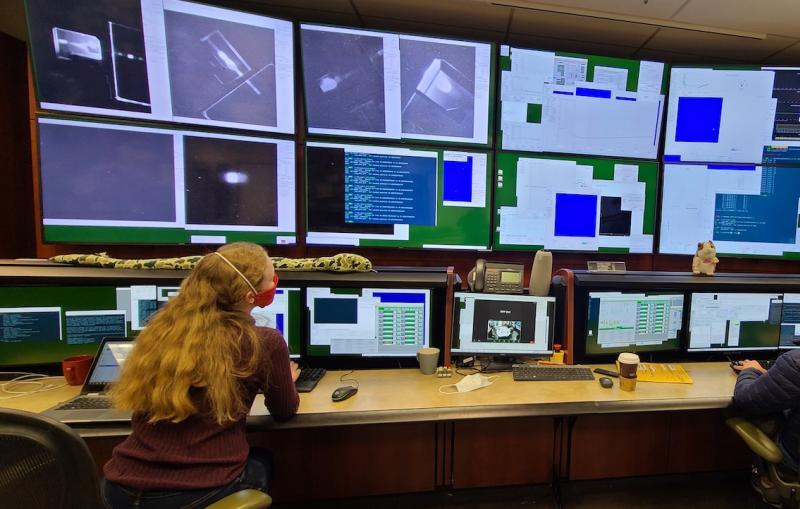
During COVID-19, SLAC experiments continue with the help of remote technology

The lab’s X-ray laser recently joined other facilities in making remote science possible from any corner of the world, a trend that will likely...

December 14, 2020  ·  7 min read
Remote experiments in the control room at LCLS
Feature

SLAC fires up electron gun for LCLS-II X-ray laser upgrade

Its electron beams will drive the generation of up to a million ultrabright X-ray flashes per second.

May 30, 2019  ·  5 min read
LCLS-II first electron beam
Feature

How the catalytic converters in cars go bad and why it matters

A new way to arrange the hard-working atoms in this part of an exhaust system could lower the cost of curbing pollution from automotive...

August 13, 2019
Feature

Q&A: From particle beams to cancer treatment – fundamental research that affects everyday life

SLAC’s Matt Garrett and Susan Simpkins talk about tech transfer that brings innovations from the national lab to the people, including advances for medical...

March 7, 2022  ·  7 min read
Tech Transfer
Feature

How a soil microbe could rev up artificial photosynthesis

Researchers discover that a spot of molecular glue and a timely twist help a bacterial enzyme convert carbon dioxide into carbon compounds 20 times...

April 29, 2022  ·  8 min read
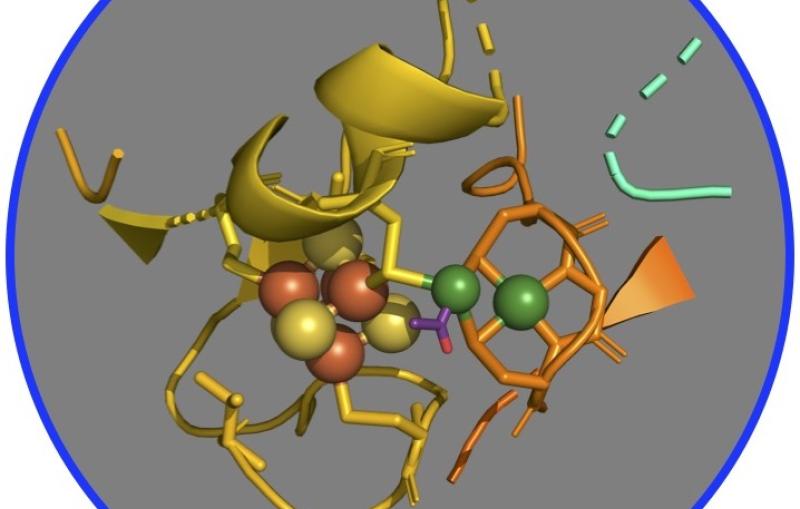
An illustration shows the pocket in an enzyme called ECR where the carbon fixing reaction takes place.
News Release

SLAC’s superconducting X-ray laser reaches operating temperature colder than outer space

The facility, LCLS-II, will soon sharpen our view of how nature works on ultrasmall, ultrafast scales, impacting everything from quantum devices to clean energy.

May 10, 2022  ·  6 min read
LCLS-II cooldown
News Brief

Researchers model accelerator magnets' history using machine learning approach

Knowing a magnet’s past will allow scientists to customize particle beams more precisely in the future. As accelerators stretch for higher levels of performance...

June 15, 2022  ·  2 min read
A magnet on a test stand inside SLAC National Accelerator Laboratory.
Feature

X-rays help researchers piece together treasured cellular gateway for first time

After almost two decades of synchrotron experiments, Caltech scientists have captured a clear picture of a cell’s nuclear pores, which are the doors and...

July 11, 2022  ·  4 min read
The nuclear pore and its components.
News Brief

Mysterious soil virus gene seen for first time

The protein could play a key role in soil carbon cycling and soil decomposition.

September 19, 2022  ·  4 min read
A three-dimensional structure of the soil virus AMG product, an enzyme known as a chitosanase.
Feature

SLAC expands and centralizes computing infrastructure to prepare for data challenges of the future

An extension of the Stanford Research Computing Facility will host several data centers to handle the unprecedented data streams that will be produced by...

July 27, 2022  ·  7 min read
SRCF-II
News Release

SARS-CoV-2 protein caught severing critical immunity pathway

Powerful X-rays from SLAC’s synchrotron reveal that our immune system’s primary wiring seems to be no match for a brutal SARS-CoV-2 protein.

September 8, 2022  ·  4 min read
SARS-CoV-2-NEMO
Feature

Helium’s chilling journey to cool a particle accelerator

En route to record-breaking X-rays, SLAC’s Cryogenic team built a helium-refrigeration plant that lowers the LCLS-II accelerator to superconducting temperatures.

August 31, 2022  ·  6 min read
Images of frost and a thermometer superimposed over an aerial view of an accelerator building.
  • Go to previous page
  • Page 1
  • …
  • Page 12
  • Page 13
  • Page 14
  • Page 15
  • Currently on page 16
  • Page 17
  • Page 18
  • Page 19
  • Page 20
  • …
  • Page 33
  • Go to next page

SLAC National Accelerator Laboratory 
2575 Sand Hill Road  
Menlo Park, CA 94025-7015  
650.926.3300

  • Coming to SLAC
  • Connect with us
  • Contact us
  • Facebook
  • Flickr
  • Instagram
  • LinkedIn
  • Twitter
  • YouTube

Sign up for our email

Monthly newsletter for cutting-edge science, SLAC milestones and events.

Sign up

Bold People
Visionary Science
Real Impact

We explore how the universe works at the biggest, smallest and fastest scales and invent powerful tools used by scientists around the globe.

  • About
    • Our story
    • Our people
    • Lab overview
    • Visit SLAC
    • Resources
    • Connect with us
  • Research
    • X-ray & ultrafast science
    • Advanced accelerators
    • New technologies
    • Physics of the universe
    • Science of life
    • Energy sciences
    • SLAC science explained
  • Facilities & centers
    • Scientific facilities
    • Joint institutes & centers
  • Work with us
    • Partner with us
    • Become a supplier
    • Use our facilities
    • Careers at SLAC
  • News & events
    • News center
    • Symmetry Magazine
    • Media resources
    • Events
    • Educational programs
    • Connect with us
  • Staff portal
  • Privacy policy
  • Accessibility
  • Vulnerability disclosure
  • A–Z index
  • Website feedback
Home
  • SLAC home
  • Maps & directions
  • Emergency info
  • Careers

© 2026 SLAC National Accelerator Laboratory is operated by Stanford University for the U.S. Department of Energy Office of Science.

Stanford University U.S. Department of Energy
Top Top
Back to top Back to top