SLAC National Accelerator Laboratory
    • About

      Learn about our science, people, facilities and partners. Discover our history and vision for the future.

    • OUR STORY
      • Mission, vision, values
      • History
    • LAB OVERVIEW
      • SLAC at a glance
      • Lab organization
      • Our partnerships
    • OUR PEOPLE
      • Leadership
      • Meet our teams
      • Faculty
    • VISIT SLAC
      • Public tours
      • Contact us
    • Resources
      • Images, videos & more
      • Brochures & fact sheets
    • Connect With Us
      • Facebook
      • Flickr
      • Instagram
      • LinkedIn
      • Twitter
      • YouTube
    video

    Who we are

    We explore radically new ideas with an entrepreneurial mindset.

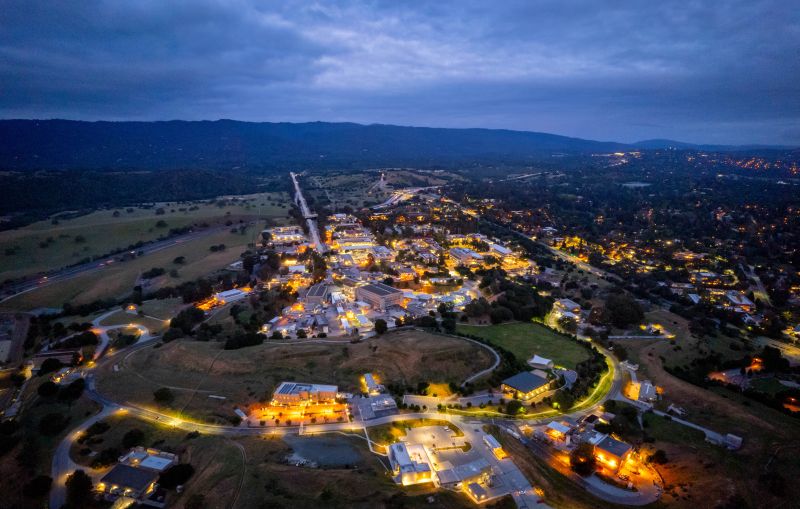
    Science and User Support Building to the left and Arrillaga Science Center building to the right from above the Main Quad at SLAC's campus.
    • Research

      Get an overview of research at SLAC: X-ray and ultrafast science, particle and astrophysics, cosmology, particle accelerators, biology, energy and technology.

    • X-ray and Ultrafast science icon X-ray & ultrafast science

      Revealing nature’s fastest processes with X-rays, lasers and electrons

    • Physics of the universe science icon Physics of the universe

      Studying the particles and forces that knit the cosmos together

    • Advanced Accelerators science icon Advanced accelerators

      Building smaller, faster, more powerful accelerators for all

    • Science of life science icon Science of life

      Understanding the machinery of life at its most basic level

    • New technologies science icon New technologies

      Inventing new tools for science and society

    • Energy sciences science icon Energy sciences

      Breaking new ground in securing abundant, affordable and reliable energy.

    Spotlight

    SLAC science explained

    Cut through the jargon while exploring our research.

    A girl experiences static electricity from a Van de Graaff generator at a outdoor SLAC STEM Community Day event, making her hair stand on end.
    • Facilities & Centers

      Learn more about the places where science happens at SLAC: our major facilities, institutes and centers.

    • SCIENTIFIC FACILITIES
      • LCLS website

        Linac Coherent Light Source

      • SSRL website

        Stanford Synchrotron Radiation Lightsource

      • FACET-II website

        Facility for Advanced Accelerator Experimental Tests

      • CryoEM website

        Cryogenic Electron Microscopy

    • JOINT INSTITUTES & CENTERS
      • SIMES website

        Stanford Institute for Materials & Energy Science

      • KIPAC website

        Kavli Institute for Particle Astrophysics & Cosmology

      • PULSE website

        Stanford PULSE Institute

      • SUNCAT website

        Center for Interface Science & Catalysis

      • SLAC-Stanford Battery Center

    NSF-DOE Vera C. Rubin Observatory LSST

    SLAC & Stanford build the world’s largest digital camera for the Legacy Survey of Space and Time (LSST).

    A drone photo of Rubin Observatory while taking pictures during the First Look observing campaign
    • Work with Us

      Find a career, partner with us or apply to use our tools and facilities.

    • PARTNER WITH US
      • For industry partners
      • Research partnerships & tech transfer
      • Technology Innovation
    • CAREERS AT SLAC
      • Job openings
      • Internships
      • Life at SLAC
    • USE OUR FACILITIES

      Apply to become a user of our scientific research facilities and instruments.

    • COMING TO SLAC
    • BECOME A SUPPLIER

    Careers at SLAC

    Join our united workforce.

    SLAC staff in main quad
    • News & Events

      Get the latest news about the lab, our science and discoveries. Explore SLAC events and learn how to participate.

    • NEWS CENTER
      • News archive
      • Media resources
      • Images & videos
    • SLAC EVENTS
      • Public lectures
      • Scientific seminars
      • Community events
    • SYMMETRY MAGAZINE

      This joint publication of SLAC and Fermilab is your view into the world of particle physics.

    • EDUCATIONAL PROGRAMS
      • Educational tours
      • Resources for students & educators
    • Connect With Us
      • Facebook
      • Flickr
      • Instagram
      • LinkedIn
      • Twitter
      • YouTube
    Upcoming

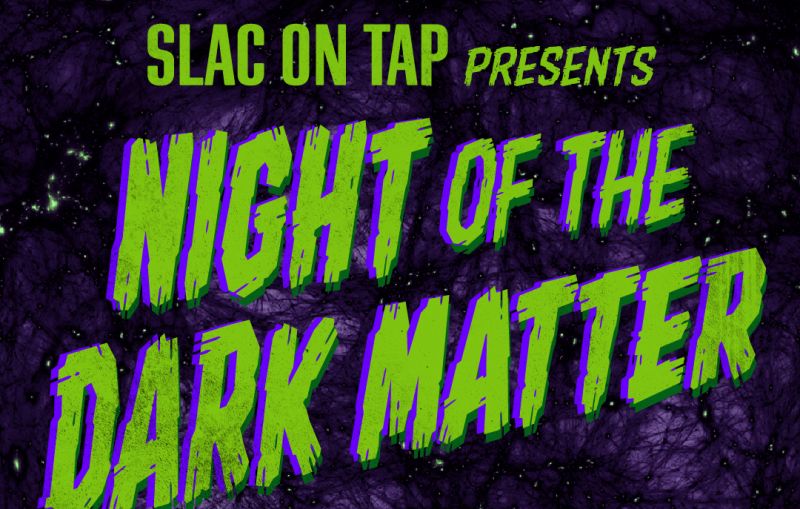
    SLAC on Tap: Night of the Dark Matter

    Wednesday, October 28, 5:30pm

    SLAC on Tap
Filter search by
Staff portalStanford directoryComing to SLACResources for…
  1. Home
  2. …
Filter by research area
  • (-) X-ray and ultrafast science (358)
  • (-) Physics of the universe (288)
  • Energy sciences (104)
  • Science of life (89)
  • New technologies (61)
  • Advanced accelerators (40)
Filter by Type
  • News (337)
  • Image (131)
  • Video (111)
  • Event (40)
  • Page (9)
  • resource (9)
  • Person (6)
  • News Collection (3)
Sort by
646 results
Display Grid Display List
Clear all
News Release

LZ sets a world’s best in the hunt for galactic dark matter and gets a new look at neutrinos from the sun’s core

In the largest dataset ever collected by a dark matter detector, LUX-ZEPLIN's latest results provide the strongest constraints on low-mass WIMPs and detect boron-8...

December 8, 2025  ·  9 min read
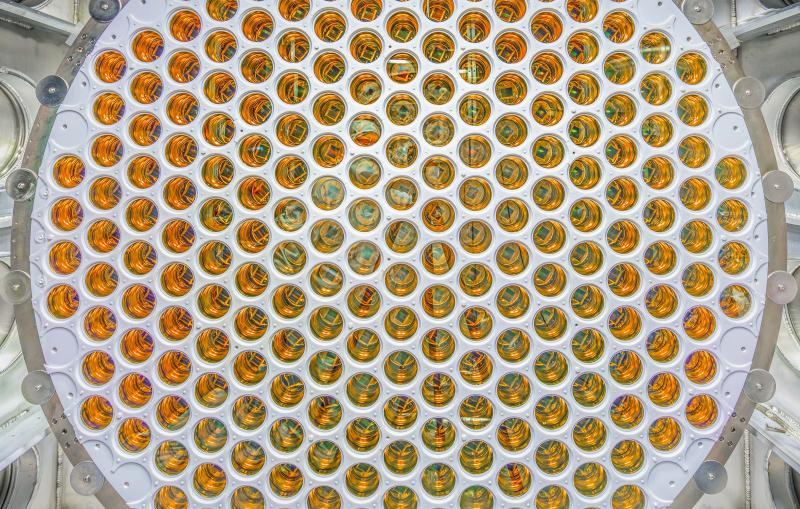
Overhead view looking down into a white structure with dozens of orange circular components arranged radially.
News Release

SuperCDMS SNOLAB cools down to near absolute zero, setting the stage for one of the world’s most sensitive dark matter searches

The experiment’s detectors have reached their operating temperature, almost a thousand times colder than outer space.

March 17, 2026  ·  6 min read
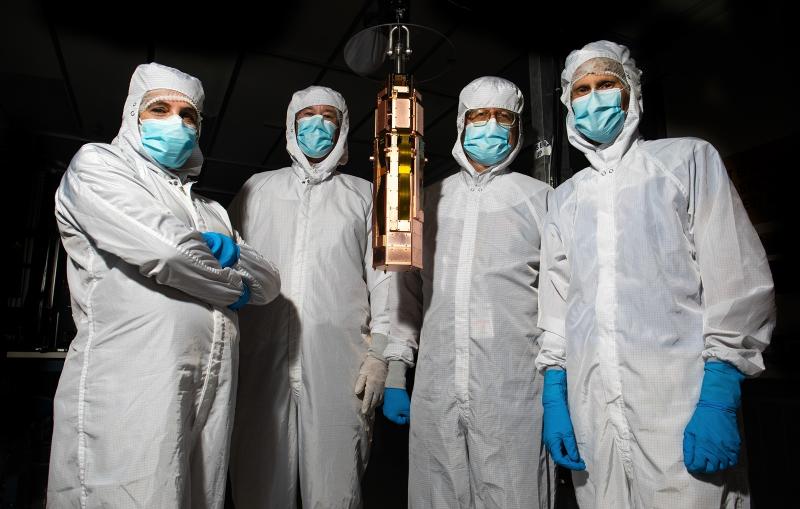
SuperCDMS team members posing with a detector tower.
Feature

SLAC’s 2025 Panofsky Fellow Ann Wang hunts for dark matter

Her work will advance a next-generation experiment in the hope of detecting this mysterious ingredient of the universe.

September 24, 2025  ·  3 min read
Portrait of Ann Wang
News Release

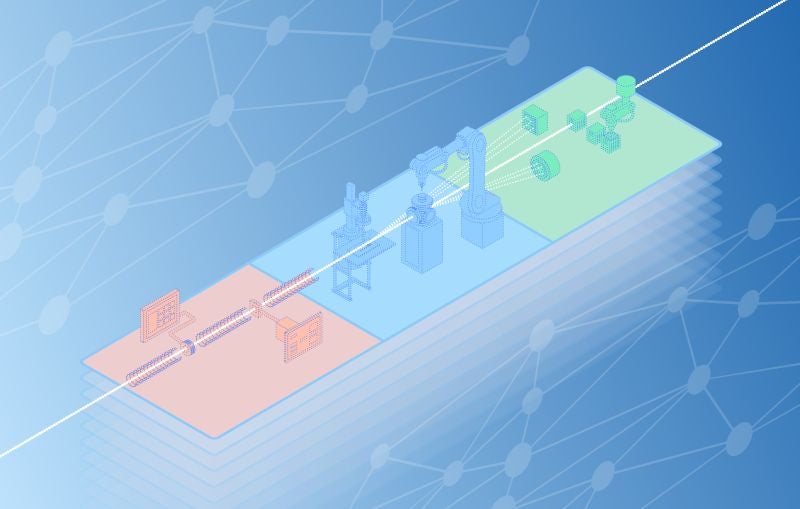
SLAC leads new project to build the self-driving laboratory of the future

Tomorrow's innovations will come from autonomous labs that slash discovery time, and SLAC's facilities are taking the lead in a new collaboration with Stanford...

October 8, 2026  ·  13 min read
Illustration depicting self-driving lab from accelerator to experiment
News Brief

Researchers make ‘molecular movies’ with powerful X-rays to help advance therapeutics

Using X-ray free-electron lasers like SLAC’s LCLS, researchers study how enzymes catalyze reactions, which could help them develop drugs and other medical treatments.

October 9, 2026  ·  6 min read
Movie projector shining light on molecular models
Upcoming Event
SLAC on Tap

SLAC on Tap: Night of the Dark Matter

Something is lurking in the dark. Dark matter makes up most of the matter in the universe, yet it continues to slip through our...
Date Wednesday, October 28, 2026
5:30 p.m.  –  7:00 p.m.  PT
Location The Dutch Goose, 3567 Alameda de las Pulgas, Menlo Park, CA 94025
SLAC on Tap
Oct 28
News Brief

Shaun Burd and Miguel Correia awarded 2026 Panofsky Fellowships at SLAC

They will explore proteins that are sensitive to magnetic fields and equations that explain our universe at the smallest and largest scales. 

October 19, 2026  ·  7 min read
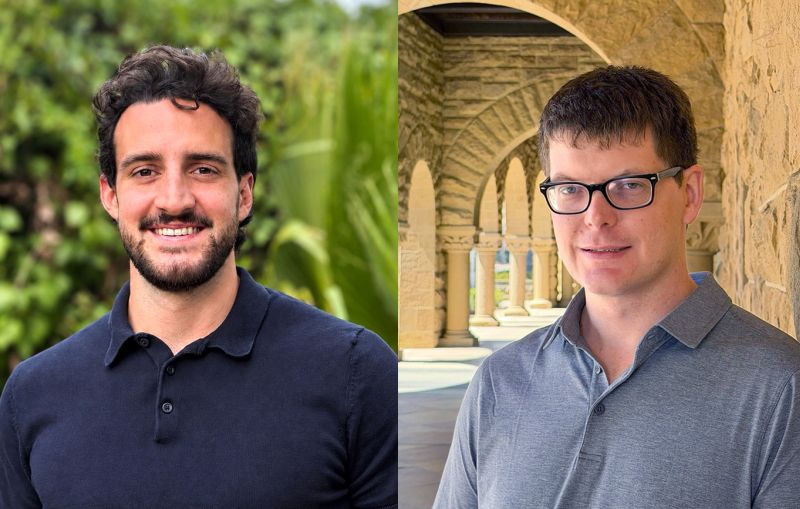
Miguel Correia and Shaun Burd
Feature

SLAC’s X-ray laser sets a record for shortest high-energy pulses ever generated by an XFEL

Researchers at SLAC are using high-energy X-ray pulses probe electronic motion deep within atoms and dense plasmas. 

October 20, 2026  ·  5 min read
Aerial View of The Linac Coherent Light Source (LCLS) at SLAC at sunrise.
News Release

Ground Breaking New Science at SLAC

The Department of Energy's Stanford Linear Accelerator Center officially broke ground today for the Linac Coherent Light Source (LCLS), the world's first X-ray free-electron...

October 20, 2006  ·  2 min read
LCLS ground breaking ceremony
News Brief
VIA Rubin Observatory

Seagull Nebula through the eyes of NSF–DOE Vera C. Rubin Observatory Commissioning Camera
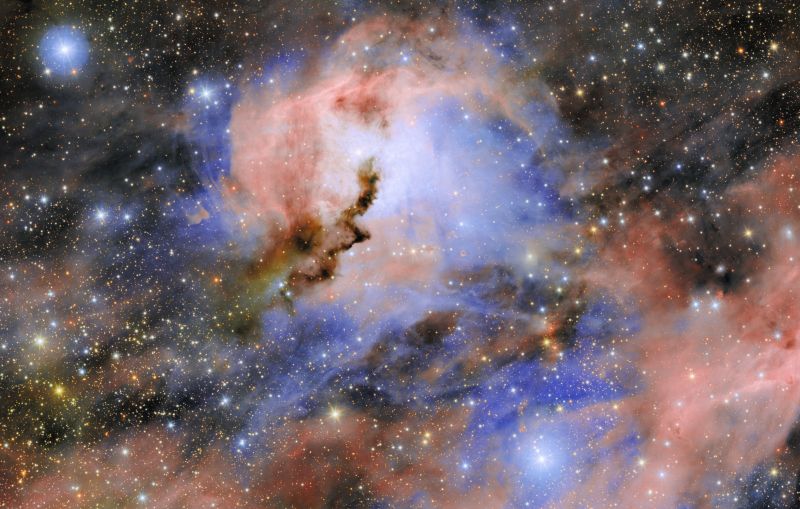
Star formation populates this image of the Seagull Nebula taken in Fall 2024 by Rubin Observatory’s engineering test camera.

October 22, 2026
Blue and pink swirls against a starry black background
  • Go to previous page
  • Page 1
  • …
  • Page 46
  • Page 47
  • Page 48
  • Page 49
  • Page 50
  • Page 51
  • Page 52
  • Page 53
  • Currently on page 54

SLAC National Accelerator Laboratory 
2575 Sand Hill Road  
Menlo Park, CA 94025-7015  
650.926.3300

  • Coming to SLAC
  • Connect with us
  • Contact us
  • Facebook
  • Flickr
  • Instagram
  • LinkedIn
  • Twitter
  • YouTube

Sign up for our email

Monthly newsletter for cutting-edge science, SLAC milestones and events.

Sign up

Bold People
Visionary Science
Real Impact

We explore how the universe works at the biggest, smallest and fastest scales and invent powerful tools used by scientists around the globe.

  • About
    • Our story
    • Our people
    • Lab overview
    • Visit SLAC
    • Resources
    • Connect with us
  • Research
    • X-ray & ultrafast science
    • Advanced accelerators
    • New technologies
    • Physics of the universe
    • Science of life
    • SLAC science explained
  • Facilities & centers
    • Scientific facilities
    • Joint institutes & centers
  • Work with us
    • Partner with us
    • Become a supplier
    • Use our facilities
    • Careers at SLAC
  • News & events
    • News center
    • Symmetry Magazine
    • Media resources
    • Events
    • Educational programs
    • Connect with us
  • Staff portal
  • Privacy policy
  • Accessibility
  • Vulnerability disclosure
  • A–Z index
  • Website feedback
Home
  • SLAC home
  • Maps & directions
  • Emergency info
  • Careers

© 2026 SLAC National Accelerator Laboratory is operated by Stanford University for the U.S. Department of Energy Office of Science.

Stanford University U.S. Department of Energy
Top Top
Back to top Back to top