
Learn about our science, people, facilities and partners. Discover our history and vision for the future.
Who we are
We explore radically new ideas with an entrepreneurial mindset.
Get an overview of research at SLAC: X-ray and ultrafast science, particle and astrophysics, cosmology, particle accelerators, biology, energy and technology.
Revealing nature’s fastest processes with X-rays, lasers and electrons
Studying the particles and forces that knit the cosmos together
Building smaller, faster, more powerful accelerators for all
Understanding the machinery of life at its most basic level
Inventing new tools for science and society
Finding clean, sustainable solutions for the world’s energy challenges
SLAC science explained
Cut through the jargon while exploring our research.
Learn more about the places where science happens at SLAC: our major facilities, institutes and centers.
Linac Coherent Light Source
Stanford Synchrotron Radiation Lightsource
Facility for Advanced Accelerator Experimental Tests
Cryogenic Electron Microscopy
Stanford Institute for Materials & Energy Science
Kavli Institute for Particle Astrophysics & Cosmology
Stanford PULSE Institute
Center for Interface Science & Catalysis
NSF-DOE Vera C. Rubin Observatory LSST
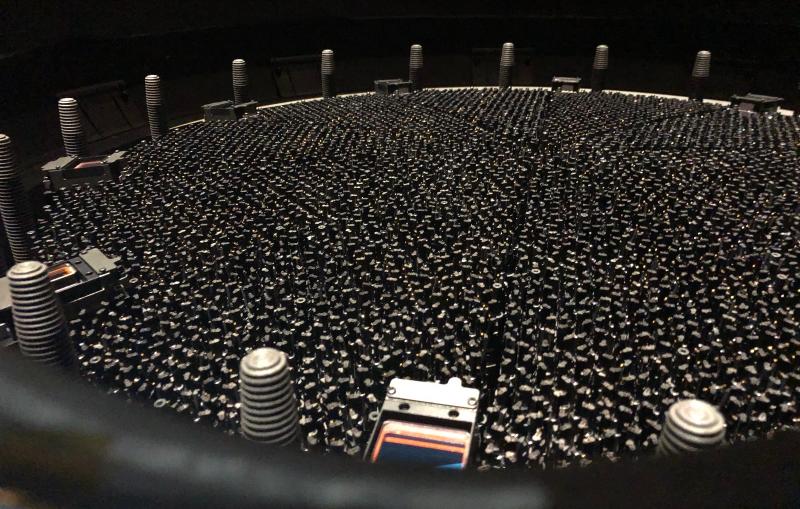
SLAC & Stanford build the world’s largest digital camera for the Legacy Survey of Space and Time (LSST).
Find a career, partner with us or apply to use our tools and facilities.
Apply to become a user of our scientific research facilities and instruments.
Careers at SLAC
Join our united workforce.
Get the latest news about the lab, our science and discoveries. Explore SLAC events and learn how to participate.
This joint publication of SLAC and Fermilab is your view into the world of particle physics.
SLAC events
Presented by Arianna Gleason. When and where life originated on Earth – and if, or where, life exists elsewhere in the cosmos – are...
Petroglyphs are carved in a material called rock varnish, the origins of which have been debated for years. Now, scientists argue it’s the result...
The Large Synoptic Survey Telescope will be named for an influential astronomer who left the field better than she found it.
Presented by Maria Elena Monzani. The nature and origin of dark matter are among the most compelling mysteries of contemporary science.
Presented by Diana Gamzina. In particle accelerators, electrons are pushed to extreme energies by electromagnetic fields that oscillate inside evacuated metal cavities. Those cavities...
Images reveal how some antibodies may block SARS-CoV-2 infection.
The results of a new scientific study reveal how photosynthetic reaction centers adapt to make light-driven reactions more efficient.
The lab’s X-ray laser recently joined other facilities in making remote science possible from any corner of the world, a trend that will likely...
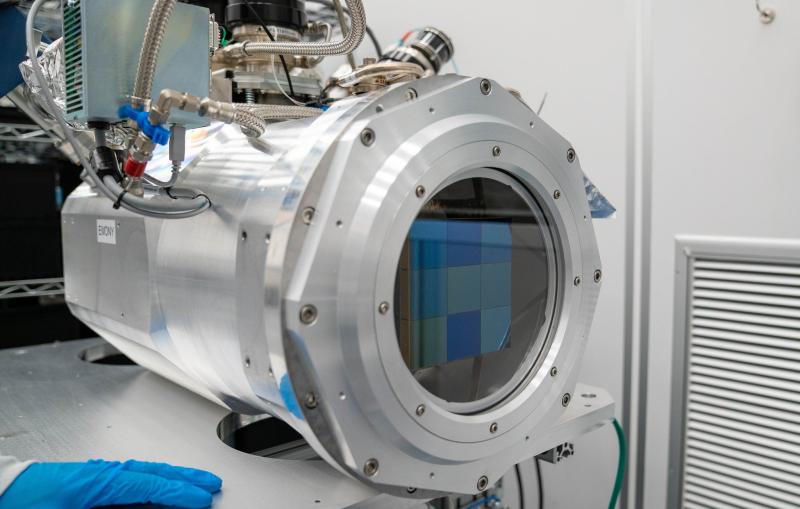
The LSST camera integration and testing team inserted a raft of nine imaging sensors into the body of the ComCam. This miniature version of...
Its electron beams will drive the generation of up to a million ultrabright X-ray flashes per second.
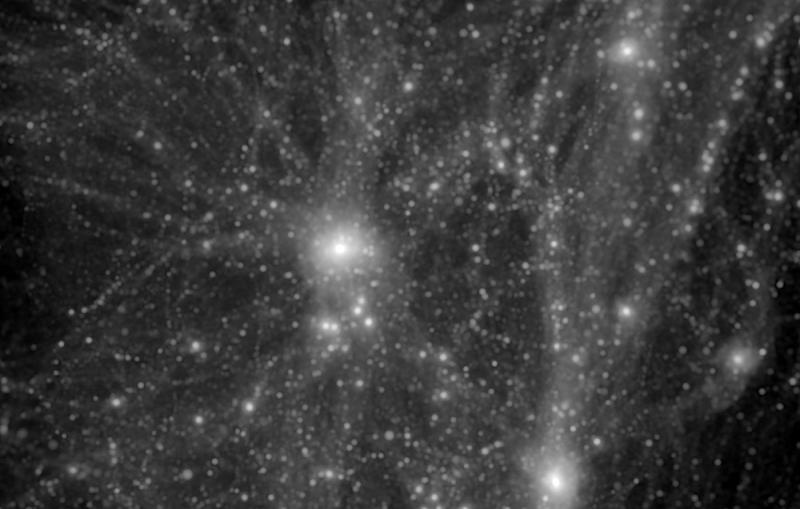
A SLAC/Stanford study of the population of satellite galaxies orbiting the Milky Way provides new clues about the particle nature of dark matter.
A new way to arrange the hard-working atoms in this part of an exhaust system could lower the cost of curbing pollution from automotive...