Professor Burton Richter has been named the winner of the 2007 Philip Hauge Abelson Prize by the American Association for the Advancement of Science (AAAS).
William Madia, a former director of two national laboratories and senior executive overseeing research laboratories for Battelle, has been appointed to the position of vice president for the Stanford Linear Accelerator Center (SLAC), Stanford President John Hennessy announced today.
Persis S. Drell has been named director of the Stanford Linear Accelerator Center (SLAC), effective immediately, Stanford University President John Hennessy announced Thursday.
Stanford astrophysicist Sarah Church is the new deputy director of the Kavli Institute for Particle Astrophysics and Cosmology (KIPAC), a joint institute based at Stanford University and the Department of Energy's Stanford Linear Accelerator Center.
Wolfgang K. H. “Pief” Panofsky, professor of physics at Stanford University and director emeritus of the Stanford Linear Accelerator Center (SLAC), died of a heart attack at his home in Los Altos, Calif., Monday, Sept. 24.
ersis Drell, deputy director of the Stanford Linear Accelerator Center (SLAC), has been appointed acting director by university President John Hennessy while the search for the successor to Jonathan Dorfan continues during the fall.
Steven Kahn, the current Deputy Director of the Kavli Institute for Particle Astrophysics and Cosmology (KIPAC), has been named the next Director of Particle and Particle Astrophysics (PPA) at the Department of Energy's Stanford Linear Accelerator Center (SLAC).
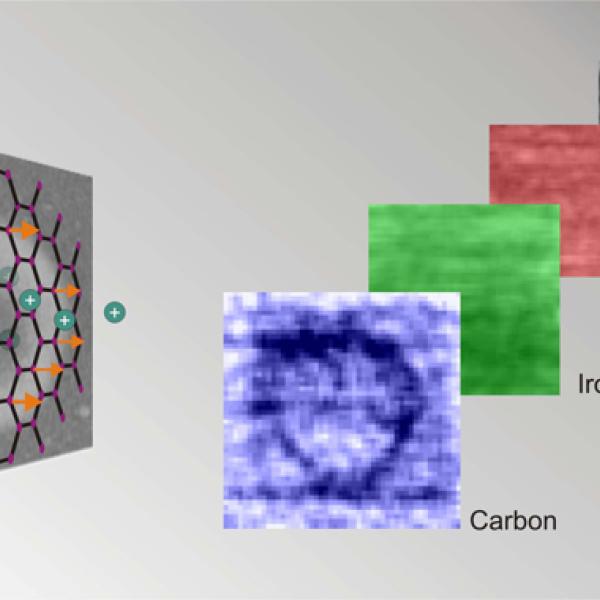
The exclusive club of magnetic elements officially has a new member—carbon. Using a proton beam and advanced x-ray techniques, researchers at the Department of Energy's Stanford Linear Accelerator Center (SLAC) in collaboration with colleagues from the University of Leipzig in...
Somebody who's racked up thousands of hours of community service has been either very bad or very good. Michael Hughes, a carpenter at the Stanford Linear Accelerator Center (SLAC), has been very, very good.
Just as astronomers use specialized observatories to study distant galaxies, chemists and molecular biologists need advanced tools for studying nano-scale structures—in some ways as inaccessible as the far reaches of the cosmos.
For the first time, scientists of the BaBar experiment at the Department of Energy's Stanford Linear Accelerator Center (SLAC) have observed the transition of one type of particle, the neutral D-meson, into its antimatter particle.