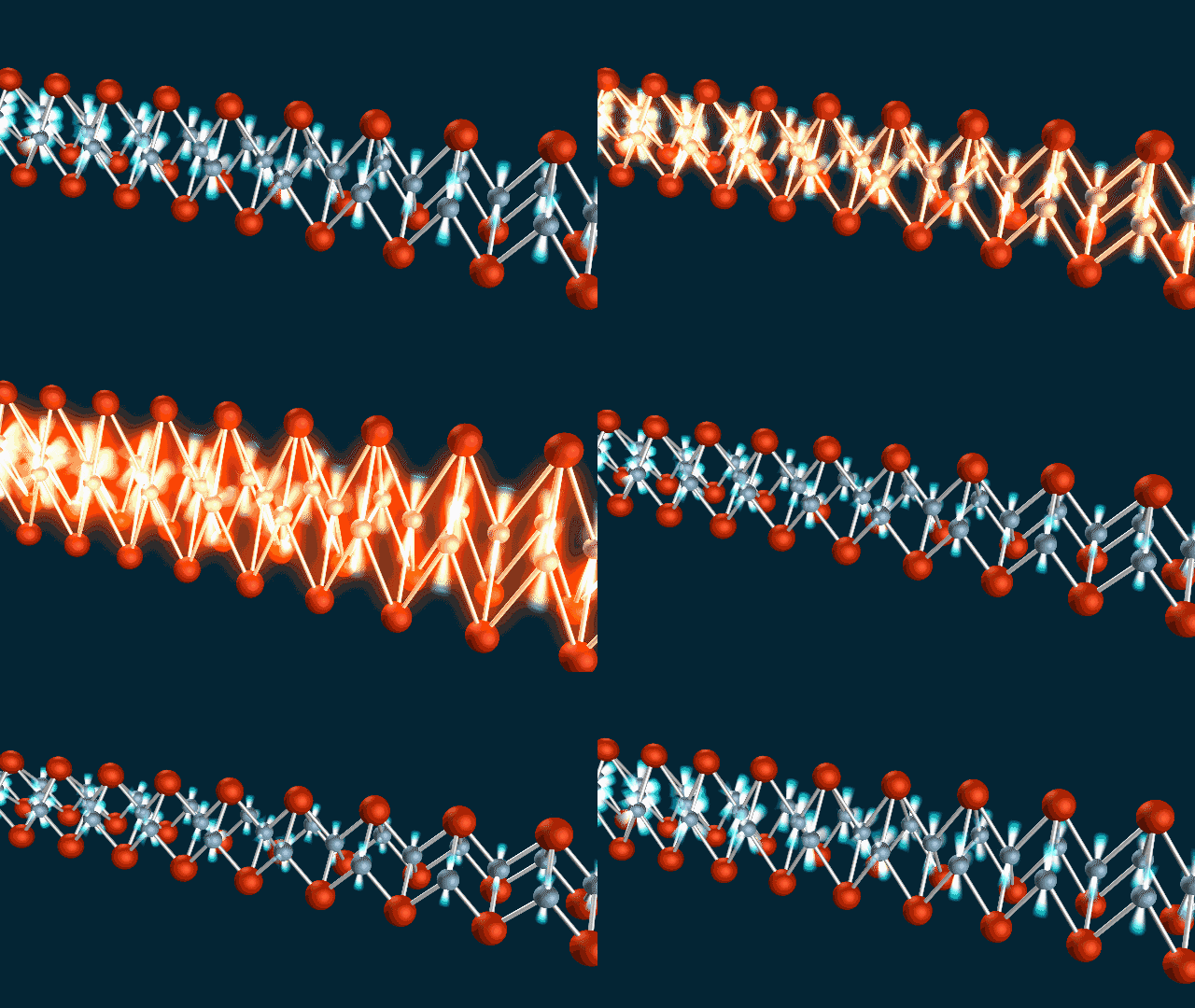
An animation shows how an infrared laser beam (orange) triggers atomic vibrations in a thin layer of iron selenide, which are then recorded by ultrafast X-ray laser pulses (white) to create an ultrafast movie.
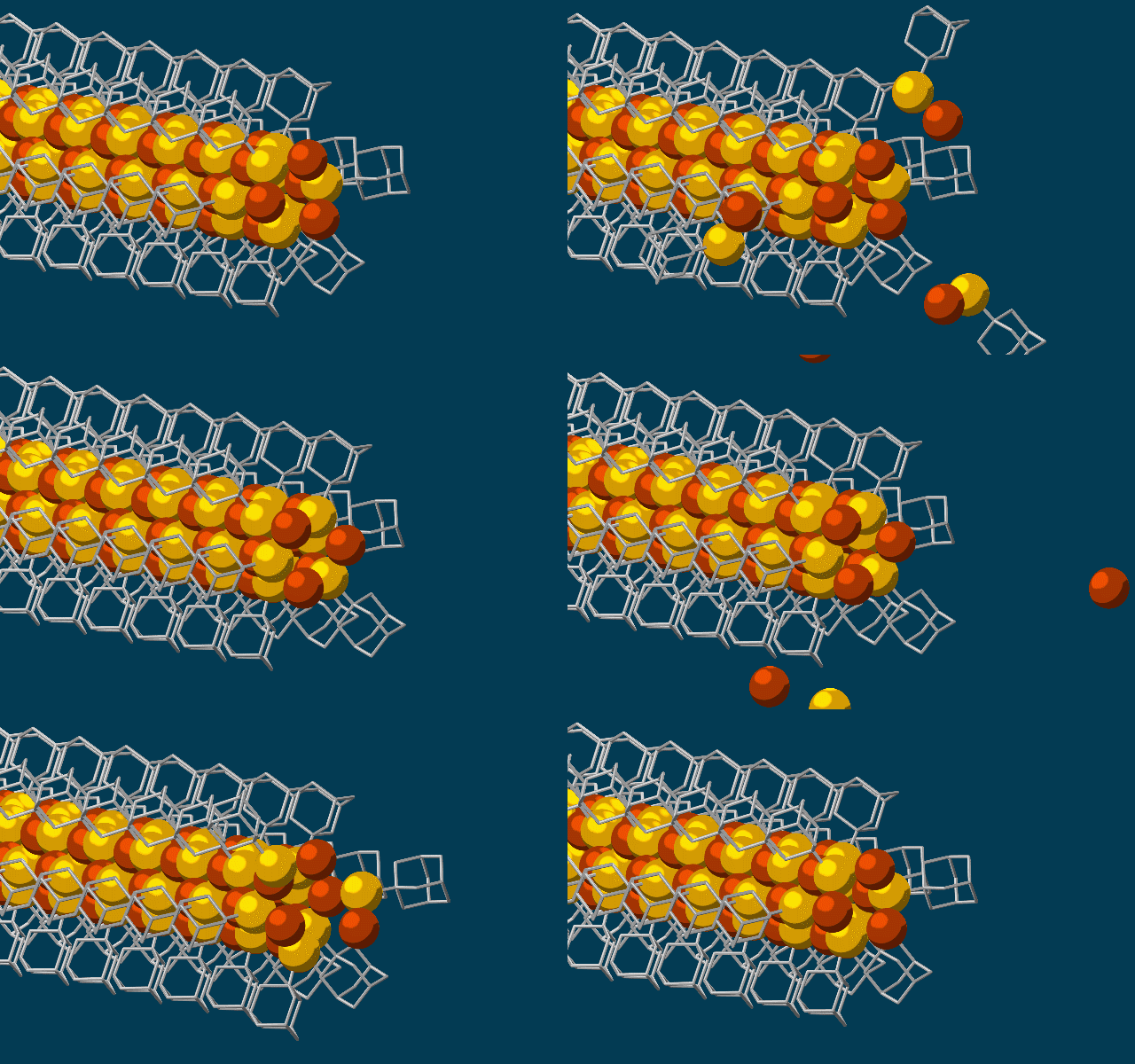
This animation shows molecular building blocks joining the tip of a growing nanowire. Each block consists of a diamondoid – the smallest possible bit of diamond – attached to sulfur and copper atoms (yellow and brown spheres). Like LEGO blocks...
The Grid Integration, Systems & Mobility lab works with universities, state agencies, utilities and industry to develop technology solutions for the next-generation electric grid.
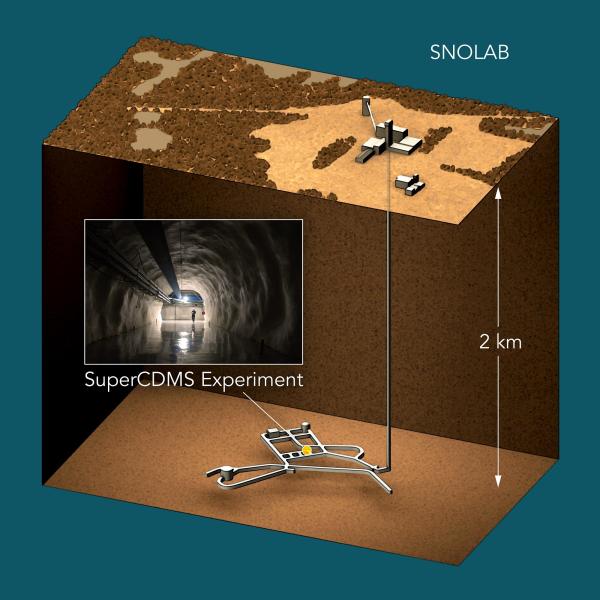
The SuperCDMS dark matter experiment will be located at the Canadian laboratory SNOLAB, 2 kilometers (6,800 feet) underground inside a nickel mine near the city of Sudbury. It’s the deepest underground laboratory in North America. There it will be protected...
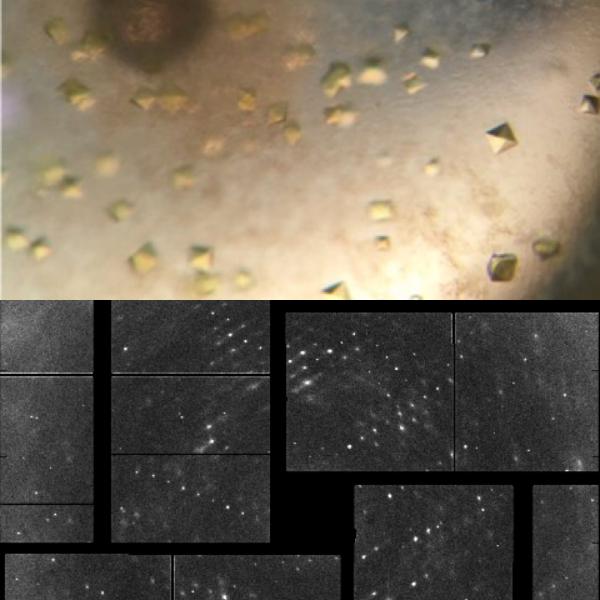
Top: An optical microscope image of crystallized photolyase enzymes before they are probed by the LCLS X-ray laser. Bottom: An X-ray diffraction pattern from the photolyase crystals. These patterns, made by X-rays interacting with atoms in the crystal, are used...