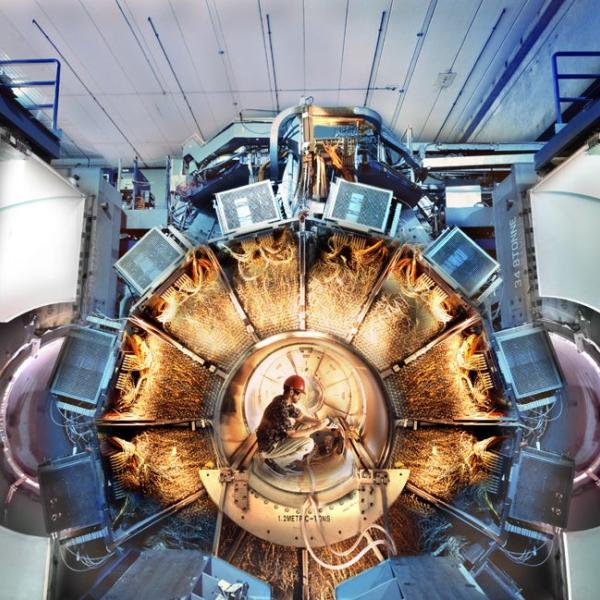
View of the BaBar detector (about six meters in diameter) with staff scientist Michael Kelsey analyzing problems during a shutdown of SLAC’s PEP-II electron-positron storage rings.
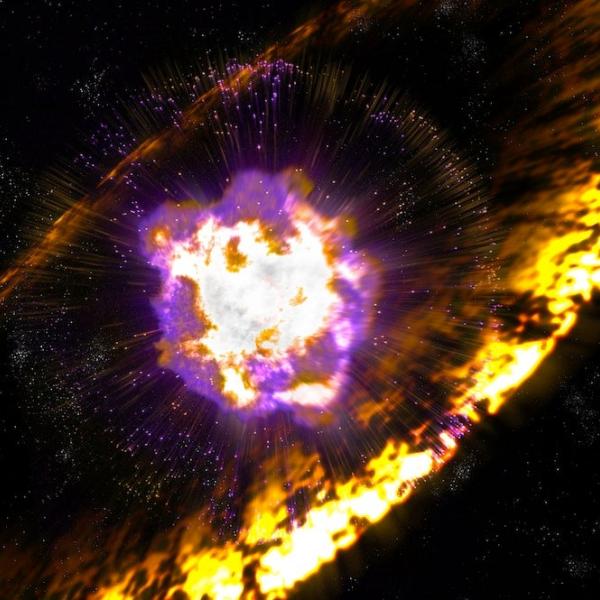
When stars explode, the supernovas send off shock waves like the one shown in this artist's rendition, which accelerate protons to cosmic-ray energies through a process known as Fermi acceleration.
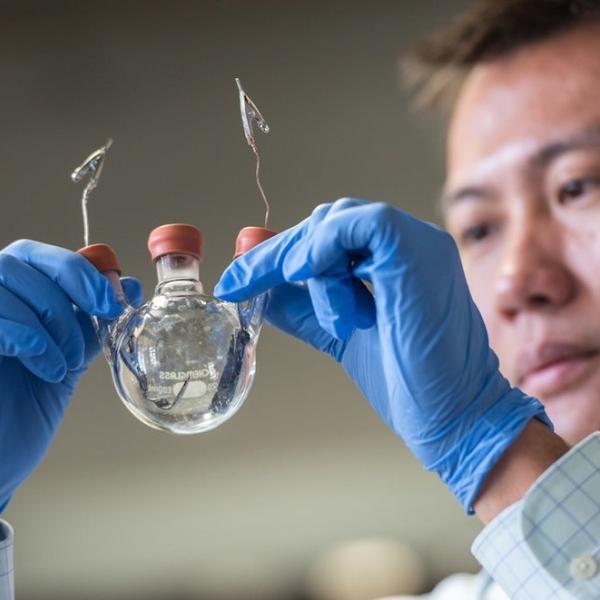
Yi Cui is an associate professor of materials science and engineering and a member of the Stanford Institute for Materials and Energy Sciences, a SLAC/Stanford joint institute.
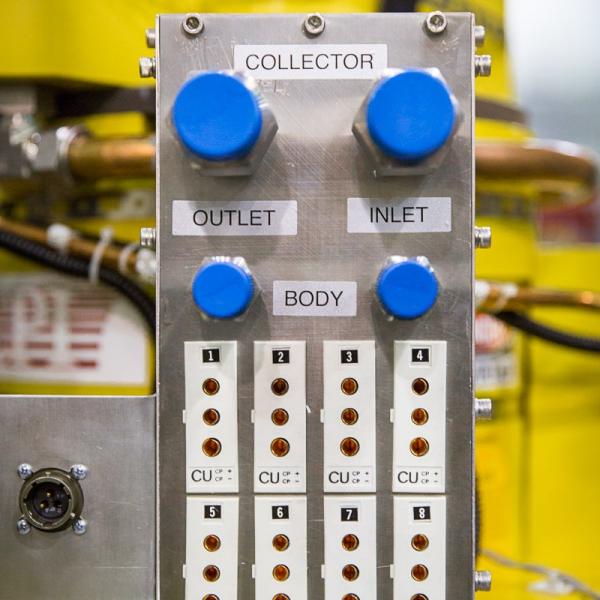
A close-upof the XL5 klystron. Manufactured by CPI, it was brought to SLAC for testing at a unique facility that can power the tube with 400,000-volt pulses. Building its own test facility would have cost the company at least...
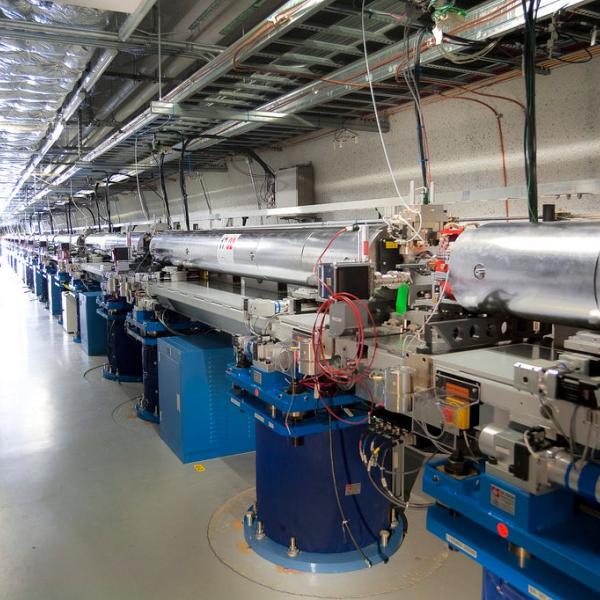
Electrons accelerated by SLAC’s linear accelerator ender the LCLS undulator hall and run a gauntlet of 32 powerful undulators. Each undulator contains 224 magnets whose alternating poles force the electrons to zigzag violently and radiate X-rays. By the time they...