Dark matter is one of the most mysterious components of the universe. Yet it makes up 23 percent of the mass of the universe – six times the mass of ordinary, atomic matter. Physicists have never observed dark matter particles...
The distribution of galaxies in the universe is patchy. Galaxies are bound together in clusters made of stars, hot gas and invisible dark matter. These galaxy clusters are part of a cosmic web of filaments, nodes and empty voids that...
For decades, scientists have been working to understand the building blocks of life by studying the structures of proteins and other large biological molecules. Using clever tricks with microscopes, electrons, and X-rays, it is possible to see the precise arrangements...
Presented by James Cryan. SLAC has just unveiled the world's first X-ray laser, the LCLS. This machine produces pulses of X-rays that are ten billion times brighter than those from conventional sources. One of the goals of this machine is...
Among the many beautiful, unexpected and sometimes revolutionary discoveries to emerge from subatomic physics, probably none is more bizarre than an elementary particle known as the "neutrino". More than a trillion of these microscopic phantoms pass unnoticed through our bodies...
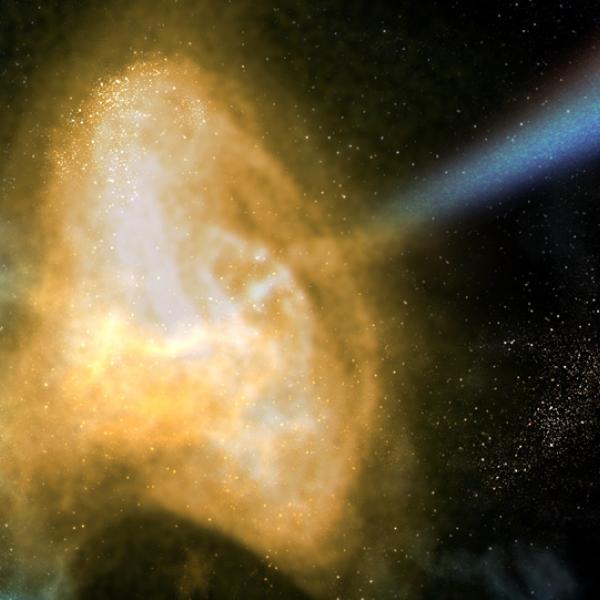
The universe is home to numerous exotic and beautiful phenomena, some of which can generate almost inconceivable amounts of energy. While the night sky appears calm, it is populated by colossal explosions, jets from supermassive black holes, rapidly rotating neutron...
Diamonds exist in all sizes, from the Hope Diamond to minuscule crystals only a few atoms across. The smallest of these diamonds are created naturally by the same processes that make petroleum. Recently, researchers discovered that these "diamondoids" are formed...
How will we improve computer technology to create chips that are smaller, faster, and more efficient? For leaps in performance, we need to create new types of semiconductors. In this lecture, the speaker will describe a new class of materials...
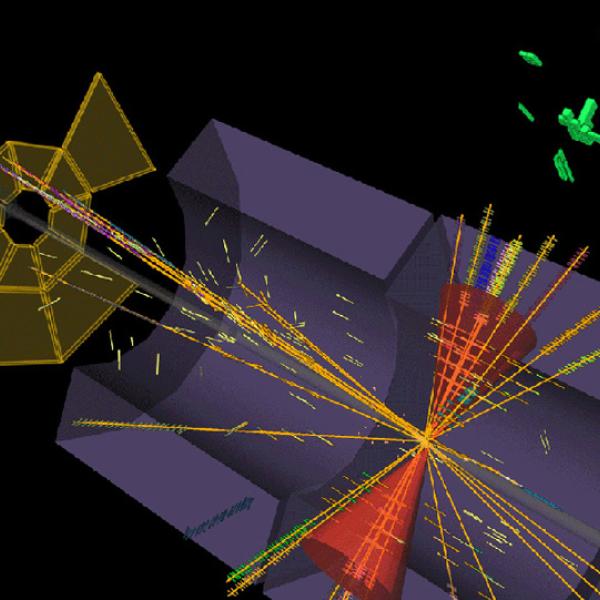
The Large Hadron Collider, at CERN in Geneva, Switzerland, is the largest scientific instrument ever built. For nearly a year now, we have been smashing protons into each other with unprecedented energy, allowing us to peer into nature's most intimate...
Some 150 million years ago, a strange creature died in a tropical lagoon that today is located in Bavaria, Germany. In 1861, a single feather of this creature was discovered. Not long afterward, a complete fossil was found with the...
UPDATE - In the time following this lecture, aspects of the research featured here have been disproven or come into question. See this article from Chemical & Engineering News for important context before viewing this archival SLAC public lecture. -------...
Accelerators are huge, expensive tubes sometimes miles long that produce high energies for smashing protons or making intense X-ray light. 21st-century technology has taken us from the room-sized ENIAC to microprocessors that fit in your pocket. Can the same be...