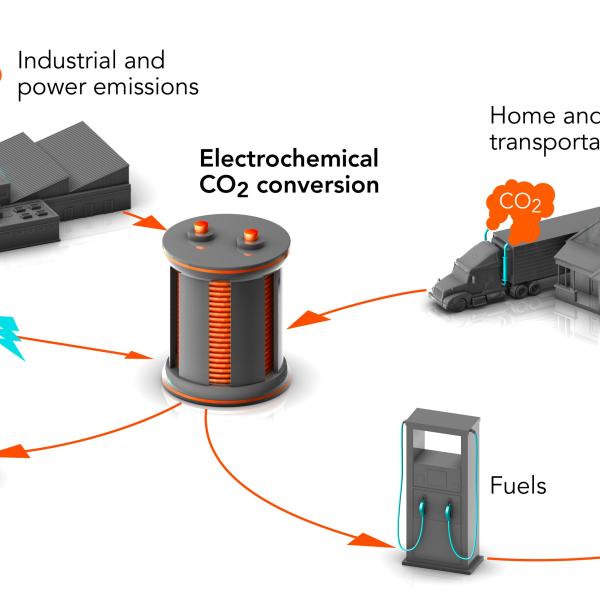
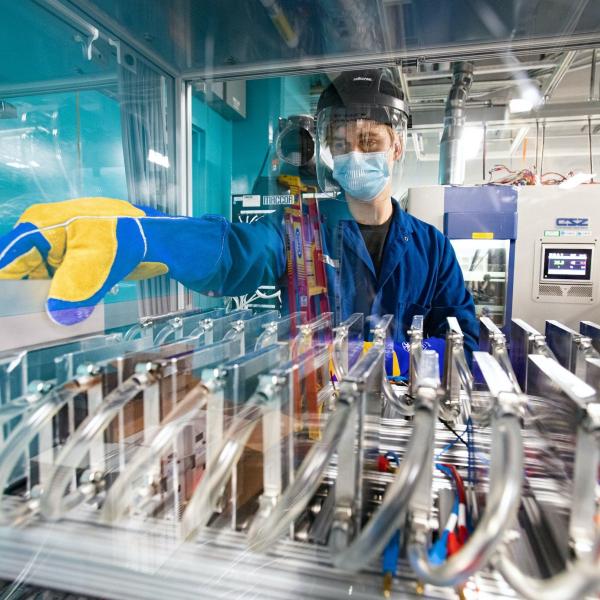
Researchers at Stanford and SLAC are working on ways to convert waste carbon dioxide (CO2) into chemical feedstocks and fuels, turning a potent greenhouse gas into valuable products. The process is called electrochemical conversion. When powered by renewable energy sources...
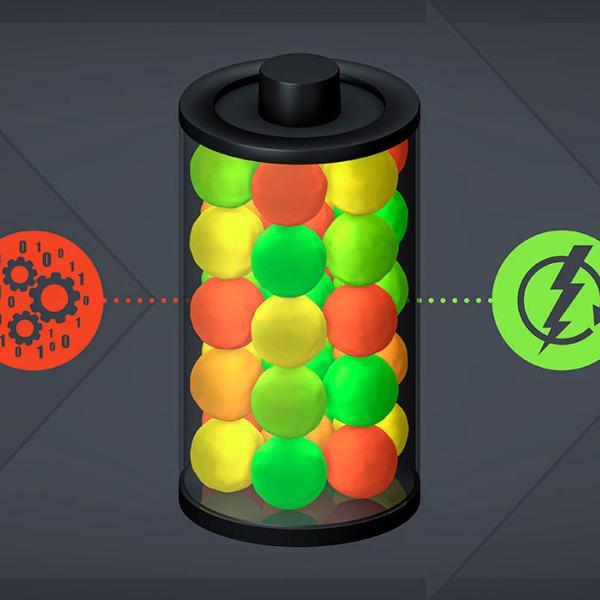
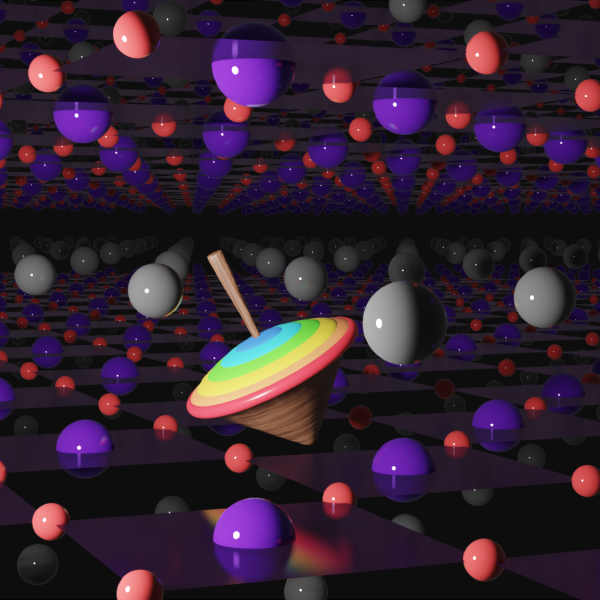
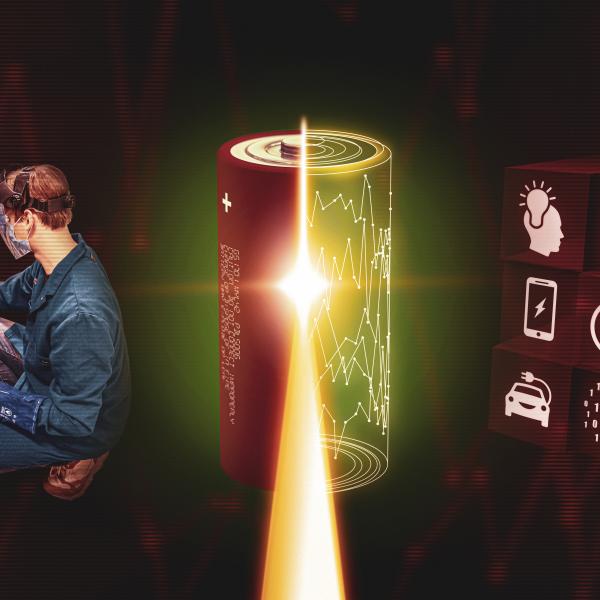
Diagram with icons depicting how X-ray studies, machine learning and lab work (left) were used to study electrode nanoparticles (center) for batteries used in electric vehicles, consumer electronics and solar power (right).
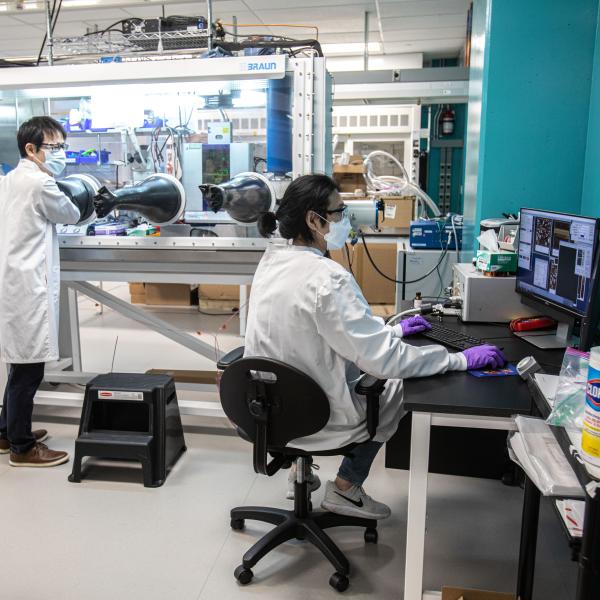
Stanford postdoctoral researcher Stephen Dongmin Kang, left, demonstrates how he works at a modular glovebox workstation while Stanford postdoc Jungjin Park works at a neighboring computer in a SLAC battery lab.
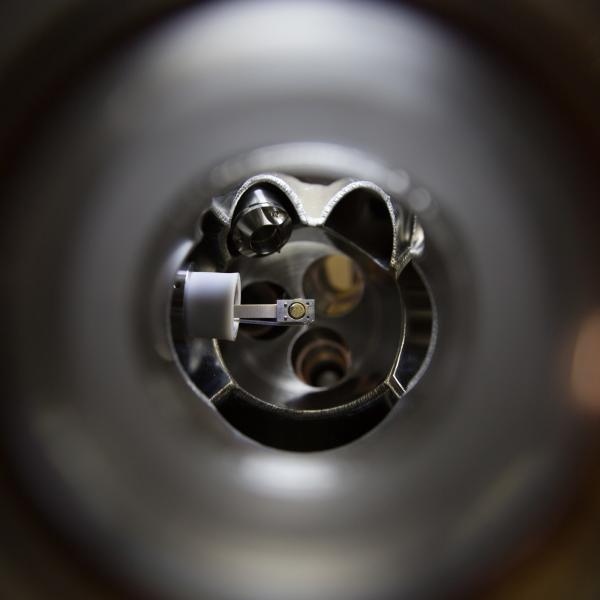
This photo shows a small fuel cell inside of a sample chamber at SLAC's SSRL. This experimental station allows scientists to study fuel cells under more realistic conditions.