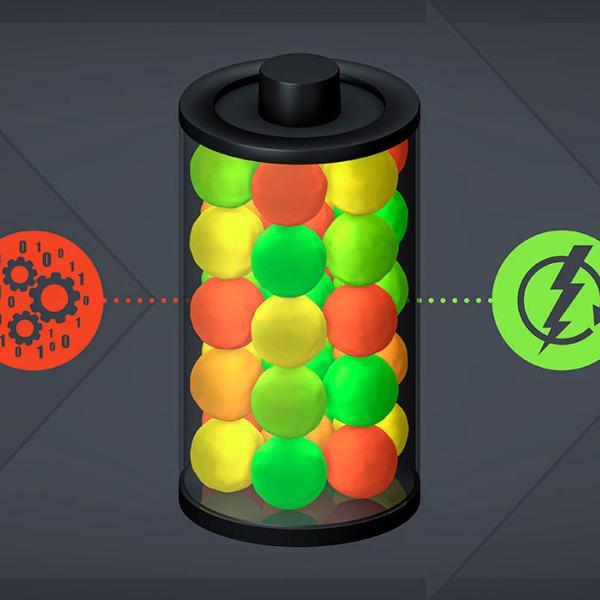
Diagram with icons depicting how X-ray studies, machine learning and lab work (left) were used to study electrode nanoparticles (center) for batteries used in electric vehicles, consumer electronics and solar power (right).
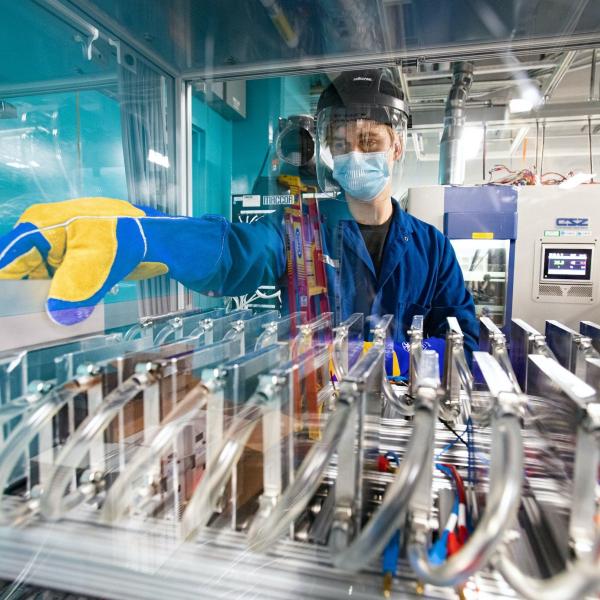
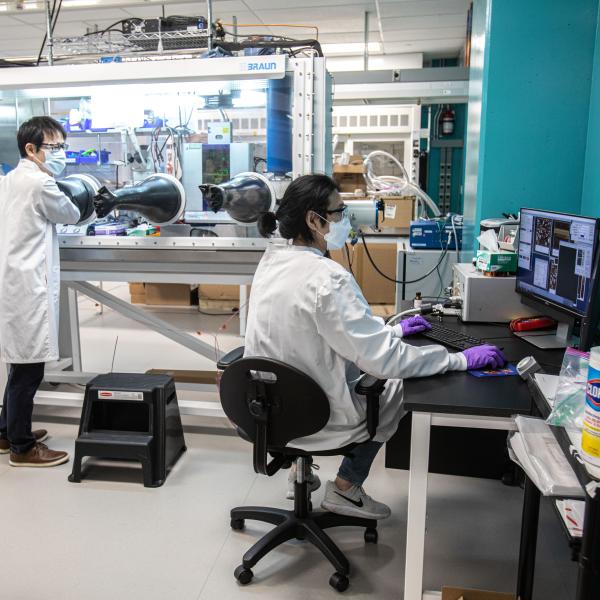
Stanford postdoctoral researcher Stephen Dongmin Kang, left, demonstrates how he works at a modular glovebox workstation while Stanford postdoc Jungjin Park works at a neighboring computer in a SLAC battery lab.
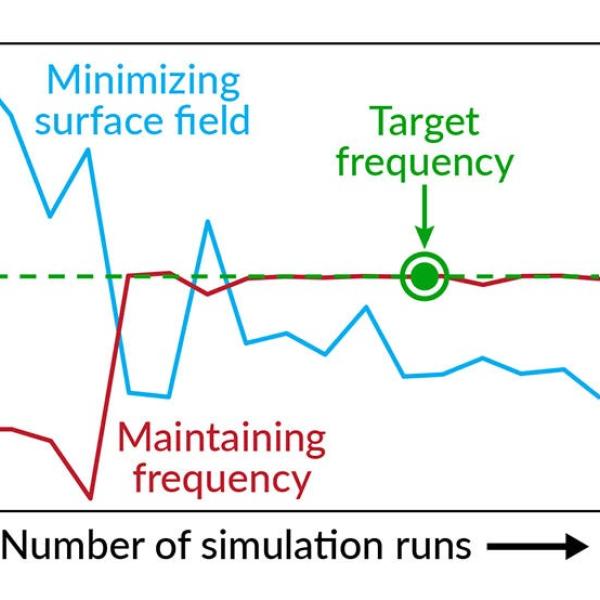
To find the best possible shape for an accelerator component (left), researchers often have to tweak a number of factors at the same time, which would be tedious and time-consuming if done by hand. Software like SLAC’s ACE3P allows them...
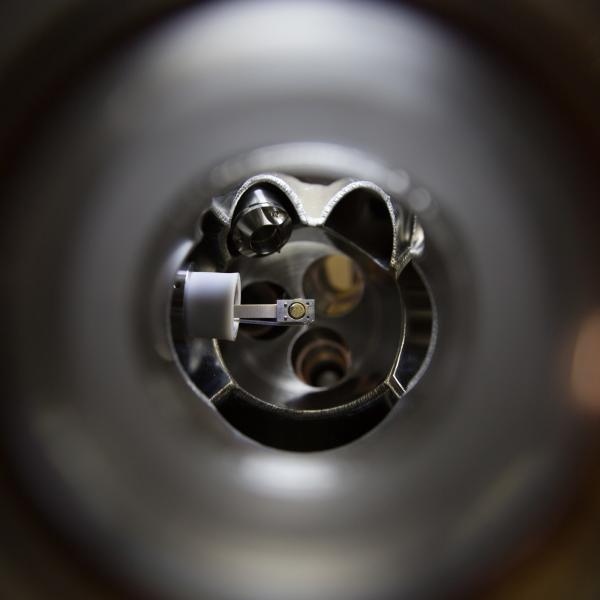
This photo shows a small fuel cell inside of a sample chamber at SLAC's SSRL. This experimental station allows scientists to study fuel cells under more realistic conditions.
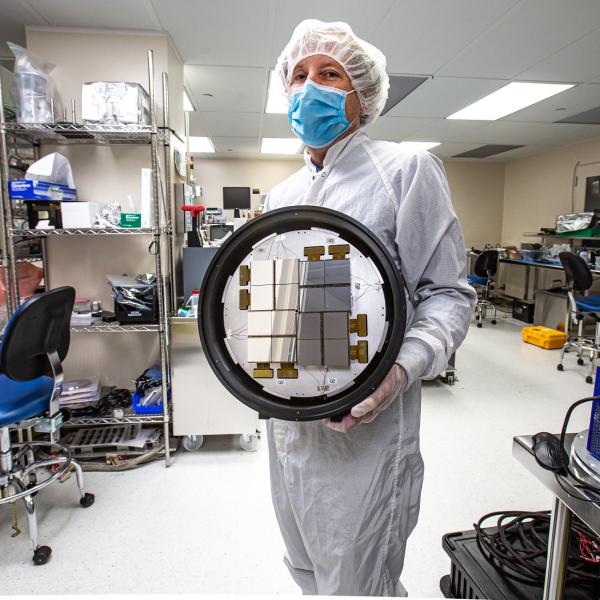
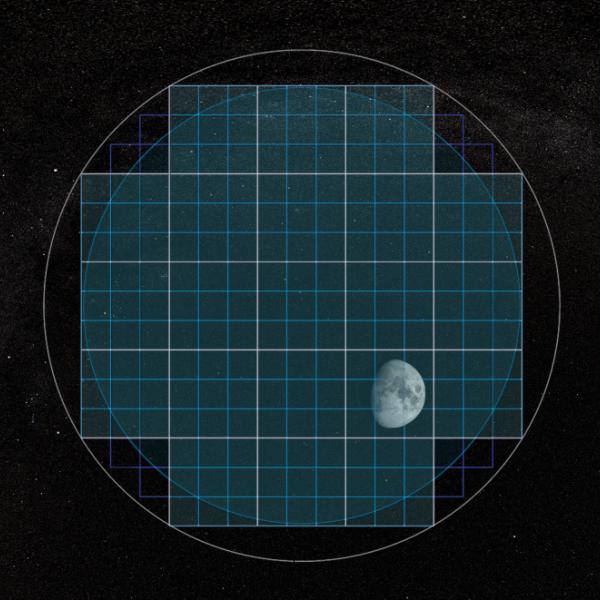
The Legacy Survey of Space and Time (LSST) Camera’s focal plane has a surface area large enough to capture a portion of the sky about the size of 40 full moons.